Few topics in Brazilian equestrian sport generate as much heat as the relationship between vaquejada and animal welfare. On one side: practitioners, governing bodies, and defenders of cultural tradition. On the other: animal protection organizations and part of the veterinary community. In between: a legal system that tried to ban the sport, backed down, and eventually constitutionalized it.
The debate is not simple — and it deserves honest examination, without caricatures from either side.
What’s at Stake in This Debate?
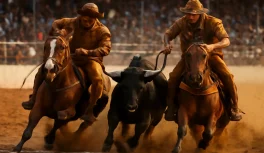
The central question is whether the act of bringing down a bull by its tail — the fundamental technique of vaquejada — constitutes animal mistreatment. The specific concerns raised by critics of the sport include:
- Spinal damage to the bull during the rotational stress imposed by the tail-pull technique
- Limb injuries from the impact of the fall on arena sand
- Psychological stress generated by confinement, pursuit, and repeated takedowns
- Absence of consent: the animal is subjected to a procedure it doesn’t choose
From the defenders’ side, the primary arguments are:
- Historical and cultural context: the practice has more than three centuries of history and is part of Northeastern Brazilian identity
- Regulation: sporting bodies have implemented rigorous animal welfare protocols
- Comparison with other sports: bullfighting, rodeos, horse racing, and other animal-involving practices have comparable or greater physical impacts
- Animal conditions within the broader livestock industry: vaquejada bulls generally have significantly better management conditions than most beef cattle
The STF Ruling: A Legal Turning Point
The most dramatic chapter in the vaquejada debate was Brazil’s Supreme Court (STF) ruling in 2016. By a vote of 6 to 5, the STF struck down a Ceará state law that regulated and protected vaquejada — finding that the practice caused animal mistreatment incompatible with Article 225 of the Federal Constitution.
The decision was a major shock to the sector. Not because it immediately banned the sport across all of Brazil — unconstitutionality rulings on state laws have more limited immediate effect — but because it created a real threat to the sport’s continuity.
How Did Vaquejada Survive the Supreme Court Ruling?
The response came from the National Congress. In October 2017, Constitutional Amendment No. 96 was approved, amending Article 225 of the Constitution to include:
“Sporting practices that use animals shall not be considered cruel, provided they are cultural manifestations (…) registered as an intangible heritage element of the Brazilian cultural heritage.”
Vaquejada, already recognized as intangible cultural heritage by IPHAN since 2014, fit precisely within that definition. With the Constitutional Amendment, the sport gained explicit constitutional protection.
The decision was controversial among legal scholars: for some, constitutionalizing a practice to circumvent a Supreme Court ruling set a problematic precedent. For others, it legitimately represented the interests of a specific cultural region.
What Changed in Practice After Regulation?
The legal process, despite its turbulence, had one concrete positive effect: it pushed governing bodies to improve their animal welfare protocols. Current ABVAQ and ABQM regulations include:
Mandatory tail protection: all bulls competing in regulated events must have the base of their tail wrapped with padded bandaging — a requirement that was not universally applied before the legal debate.
Limits on runs per animal: each bull has a maximum number of runs per day and per event. The exact limits vary by regulation, but their existence is mandatory.
Veterinary presence at events: the presence of a licensed veterinarian during competitions is required for events to be sanctioned by governing associations.
Animal size and weight selection: regulations establish weight and size ranges for competing bulls to avoid extreme incompatibilities with horses — which could increase injury risk.
What Does Science Say About Vaquejada Injuries?
The scientific literature on the topic is limited but exists. Brazilian veterinary studies have documented occurrences of musculoskeletal injuries in cattle used in vaquejada — particularly tail and hindlimb injuries.
These findings are real and shouldn’t be dismissed. The question the debate raises is about proportion and context: how frequently do documented injuries occur? Are they permanent or temporary? How do they compare with documented injuries in other cattle uses?
The absence of large-scale comparative studies keeps this debate partially emotional on both sides. What the available science indicates is that the sport, without regulation and welfare protocols, has the potential to cause harm. With adequate regulation, risk exists but is reduced.
Is Vaquejada More Harmful Than American Rodeo or Bullfighting?
Comparison with other cultural practices involving animals is frequently used in the debate. Bullfighting — still practiced in Portugal, Spain, and some Latin American countries — invariably results in the bull’s death or serious injury. American rodeo, particularly bull riding and bronc riding events, documents high injury rates in both horses and bulls.
These comparisons don’t eliminate concerns about vaquejada, but they place the sport in a broader context: the relationship between sport and animal use raises ethical questions across many cultures, not only in Brazil.
The Position of Veterinary Bodies
Brazil’s Federal Council of Veterinary Medicine (CFMV) has historically taken cautious positions on vaquejada, acknowledging both animal welfare concerns and the cultural and economic reality of the sport.
International animal welfare organizations like World Animal Protection oppose the practice on the basis of the Five Freedoms — the international animal welfare standard that includes “freedom from fear and distress.”
How the Debate Sits in the Contemporary World
The vaquejada and animal welfare debate is part of a broader societal shift in how humans relate to animal use for entertainment. In many countries, practices accepted for centuries are being reconsidered in light of new scientific evidence about animals’ capacity for suffering.
This movement isn’t specific to Brazil or to vaquejada. Cockfighting, bullfighting, certain circus formats — all of these practices are under cultural review in different parts of the world.
For vaquejada, the sustainable path appears to lie in the direction already started by the sport’s governing bodies: serious regulation, honest scientific research on real impacts, and a willingness to adapt practices when evidence requires — without abandoning the cultural identity the sport represents.
The debate won’t end. But it can become more productive if conducted with rigor, honesty, and mutual respect for the very different perspectives in play.