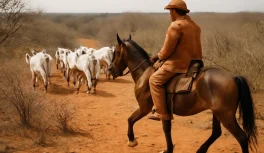
Imagine being three meters from a zebra that is grazing. Not in a jeep, not in a balloon, not behind a zoo fence. You are mounted on a horse, at the animal’s eye level, and the zebra didn’t flee because it didn’t recognize you as a threat. Horses and zebras are relatives, and in the evolutionary scheme of the African savanna, a rider on a horse doesn’t trigger the same alarms as a motorized vehicle or a person on foot.
That is the fundamental argument for horse safari in Kenya: you move within the ecology, not observing it from outside. And what that allows — in terms of physical proximity to animals that would flee any vehicle — is simply without parallel in any other form of safari.
Why Horse Safari Is Different from Any Other Safari Experience
The jeep safari is the most common way to see African wildlife — comfortable, efficient, technically well-served by guides and radio coordination between vehicles. But it has a structural limitation: the jeep is tall, noisy and doesn’t exist in the savanna’s ecology. Animals that can tolerate human presence at ten meters in a jeep flee at fifty meters from anyone on foot. The horse sits somewhere between the two — and that “between” makes all the difference.
Wildebeest in migration, zebra herds, grazing giraffes, elephants at a waterhole, sometimes even resting lions — all of these animals react far less alarmingly to a rider than to any other human presence. The horse is read by animal instinct as a herbivore, potentially of a herd, potentially harmless.
The Best Horse Safari Destinations in Kenya
Masai Mara
The Masai Mara is Kenya’s most famous safari destination — and the continent’s. Part of the world’s largest terrestrial ecosystem, the Great Migration happens here between July and October, when approximately 1.5 to 2 million wildebeest cross the Mara River in circular migration between the Serengeti (Tanzania) and the Mara (Kenya). It is considered one of the most impressive natural spectacles on the planet.
Specialized horse safari operators in the Mara offer routes that allow following the migration from within — riding alongside the wildebeest column, with the savanna stretching in all directions and animals in movement all around. The experience is comparable to very little else that world tourism has to offer.
Laikipia Plateau
The Laikipia Plateau, north of Mount Kenya, is less visited than the Mara and has a different quality. With large-scale private conservation properties, the region hosts elephants, black rhinos (critically endangered), lions, leopards, giraffes and dozens of other species.
Some Laikipia operators offer what they call “wilderness trails” — multi-day routes with no roads or fixed camps, sleeping under tents in different locations each night, with horses close to camp and wildlife all around. It is one of the most immersive experiences available in world equestrian tourism.
Amboseli
Amboseli National Park, with Kilimanjaro as backdrop, is famous for its elephant populations — the largest in Kenya. Horse safaris in the Amboseli surroundings allow approaches to elephants that jeeps rarely achieve.
What Riding Experience Is Required?
Horse safari in Kenya is, unambiguously, the equestrian tourism experience with the highest skill requirements in the world. All serious Kenya operators require at minimum that participants:
- Be fully comfortable at sustained open-field canter
- Be able to quickly stop a horse that reacts to something
- Maintain balance in unexpected situations — such as a wild animal that suddenly appears nearby
This doesn’t mean horse safari requires competition-level riders — it means it’s for riders who ride regularly and confidently. If you ride at least once a week and are comfortable cantering with confidence, most operators will accept you.
What Safari Horses Are Like
Horses used in African safaris are animals specifically trained for wildlife work. This training begins from young age — gradual exposure to the smells, sounds and movements of wild animals until the horse doesn’t react with flight or panic to the proximity of predators.
A well-trained safari horse can remain relatively calm ten meters from a resting lion. “Relatively calm” means it will be alert, tense, and clearly communicating to the rider that it has noticed something — but won’t bolt in panic.
Kenya horse safari guides are generally Kenyan with decades of experience in both riding and reading animal behavior. The knowledge they carry — at what distance to behave near which species, when to advance and when to stop, how to position the group — is what makes the safari safe.
Cost
Horse safari in Kenya is a premium experience. Three to five-day routes at the main operators in the Masai Mara or Laikipia cost between USD 700 and 1,500 per person per day, including camp accommodation, food and guides.
The Savanna That Changes Your Perspective
Those who return from a horse safari in Kenya don’t talk about the experience the way they describe other trips. It’s not nostalgia — it’s a kind of reference recalibration. The closeness to animals that existed long before human history, the scale of the savanna, the silence that exists when the engine is off and the only sounds are hooves on earth and birds in the distance — all of this creates something that most forms of tourism cannot create.