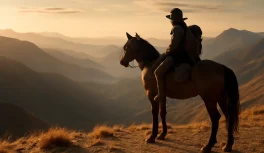
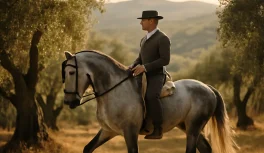
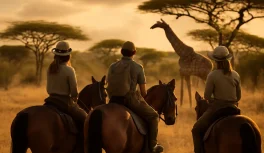
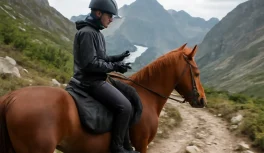
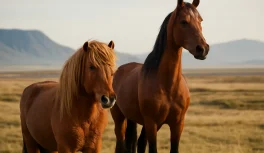
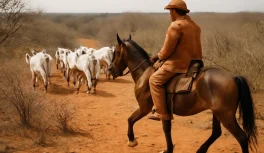
There is an image that American cinema has exported to the entire world for decades: the lone rider, the felt hat, the red prairie stretching as far as the eye can see, and the horse carrying them through that landscape without hurry. It seems made of fiction — but it isn’t. Horseback riding in the American West is, literally, that. The scenery exists, the horses exist, and the experience is available.
The American West has one of the world’s most developed equestrian tourism infrastructures, with hundreds of guest ranches, dude ranches and specialized operators scattered across Wyoming, Montana, Colorado, Utah, Arizona and New Mexico.
What Are Guest Ranches?
Guest ranches (also called dude ranches) are operational or semi-operational farms that receive tourists as guests. The key difference from a themed hotel is fundamental: in a good guest ranch, the horses are not just tourist attractions. They are working animals that participate in farm operations, and the guest participates in that routine — you can help drive cattle, work with horses in the corral or simply ride across the ranch pastures.
The first American guest ranches emerged in the 19th century, when Wyoming and Montana farmers began hosting urban visitors who wanted to experience country life. The business grew alongside railroad tourism and never stopped. Today, over 700 guest ranches operate in the United States, organized under the Dude Ranchers’ Association, with options ranging from modest family operations to high-end resorts with spas, pools and chefs.
The Horses of the West: Quarter Horse and Paint Horse
The dominant breed at American guest ranches is the Quarter Horse — literally the “quarter mile horse,” so called because it was developed for 400-meter races in the southern United States in the 18th century. The Quarter Horse is stocky, muscular, with a low center of gravity and a generally calm and responsive temperament that makes it ideal for beginners.
The Paint Horse — recognizable by its white-patch coat pattern over bay, chestnut or black base — is another common ranch breed. Both breeds are ideal for cattle work — agile, responsive to light aids and with a natural “cutting” instinct that cowboys and cowgirls still exploit daily on ranches that continue to operate as cattle farms.
Best Destinations for Equestrian Tourism in the West
Wyoming: the Heart of the Old West
Wyoming is the most iconic state for guest ranching in the United States. The combination of Yellowstone National Park, Grand Teton and the Sheridan plains — with the Big Horn Mountains as backdrop — creates a landscape that is literally what the Western imagination describes. Historic family ranches that arrived in Wyoming in the 19th century still host guests the same way they did a hundred years ago, but with updated comforts.
Montana: Rocky Mountain Peaks and Pines
Montana has more varied landscapes than Wyoming — river beaches, conifer forests, alpine meadows — and ranches operating on properties of a scale hard to imagine for those from land-expensive countries. Glacier National Park in northern Montana has alpine equestrian trails rivaling any mountain destination in the world.
Utah: the Red Canyons
Utah has the most photographically spectacular scenery in the West. The complex of national parks in southern Utah — Zion, Bryce Canyon, Arches, Canyonlands — is a series of red sandstone formations that create landscapes that seem painted. Riding among the hoodoos of Bryce Canyon is a visual experience no other region on Earth replicates.
Arizona and New Mexico: the Southwest Desert
The American Southwest has a different character. The Sonoran Desert with its giant saguaro cacti, the canyon country of the Grand Canyon, and the ancestral lands of the Navajo create a landscape with a spiritual quality that has attracted artists and seekers for decades. Operators in the Sedona, Arizona area offer short and long trails with guides who know the geological and cultural history of the region.
What Kind of Experience to Expect
American guest ranches are designed to work with guests of all equestrian levels. On a typical ranch, in the first day guests go through a skill evaluation with the wrangler (the ranch horse manager). Each guest receives a horse that will be “theirs” for the entire stay.
Ranch horses are generally trained to stop completely when a rider falls or drops the reins — a safety precaution developed over decades of receiving inexperienced riders.
The Rodeo: Watch and Understand
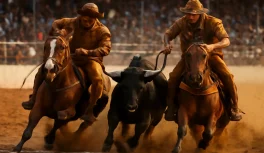
Any equestrian visit to the American West is incomplete without seeing a rodeo. Events cover traditional cowboy skills: calf roping, bull riding, bareback bronc riding, barrel racing and other disciplines that arose directly from the practical needs of cattle work.
What the Cowboy Experience Really Is
Those who go to the American West expecting a theme park are surprised. Life on a guest ranch that still operates as a farm has real rhythms: up at five-thirty to feed the horses, hours in the saddle in weather that changes fast, arriving at dinner smelling of horse with a hunger that no other tourist activity produces.