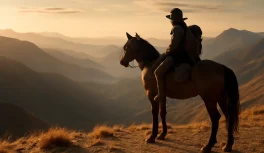
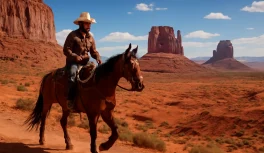
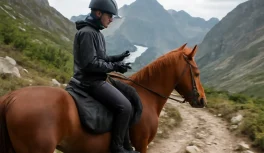
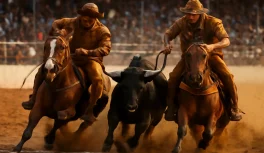
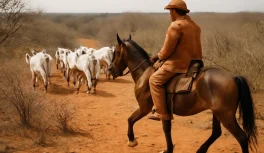
There are destinations that impress in photos. And then there’s Patagonia — which impresses even those who’ve seen hundreds of photos and still weren’t prepared for what they found. A horseback trail in Patagonia is one of the most intense experiences equestrian tourism worldwide can offer: landscapes of impossible scale, horses bred for that specific terrain, and guides who carry centuries of gaucho and Andean tradition in their blood.
If there is one place on the planet where the horse still makes sense as a primary mode of transport, Patagonia is one of the strongest candidates — not for lack of technology, but because certain Patagonian regions simply have no roads.
Why Patagonia Is a Unique Destination for Horseback Trails
Patagonia spans the southern regions of Argentina and Chile, roughly divided by the Andes. On the Argentine side, the provinces of Neuquén, Río Negro, Chubut and Santa Cruz concentrate the main equestrian routes. On the Chilean side, the Aysén and Magallanes regions offer even more remote and less-visited trails.
What sets Patagonia apart from other equestrian tourism destinations is the combination of scale, isolation and landscape diversity within a single route. In three days on horseback, you can pass through high-altitude fields covered in mist, descend into valleys with glacial rivers of turquoise water, cross lenga beech forests — the southern beech that turns orange and red in autumn — and arrive at a lake where the only human presence is the camp the guide sets up for the group.
The Horses of Patagonian Trails
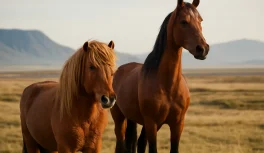
The Argentine Criollo is the dominant breed in Patagonian trail routes. Developed over centuries from Spanish horses brought by colonizers and shaped by the natural selection of the region’s extreme conditions, the breed is recognized for its endurance, balance on irregular terrain and ability to work on limited feed.
Patagonian horses used in tourism are not refined show horses — they are working animals. They have hard hooves that need no shoeing on many terrains, impressive topographic memory and a self-preservation instinct in slippery terrain that often surpasses the rider’s own judgment.
The Best Horseback Trail Routes in Patagonia
Lake District, Neuquén (Argentina)
The Lake Region of Argentine Patagonia, between San Martín de los Andes and Bariloche, offers routes from two to ten days departing from historic estancias. The most sought-after routes pass through Lanín National Park, with the volcano of the same name as backdrop, and through lakes Lácar, Espejo and Nahuel Huapi.
The ideal period is November through April. Autumn (March to May) offers the most spectacular colors but requires preparation for unstable weather.
Chalten Valley, Santa Cruz (Argentina)
El Chalten is the epicenter of Patagonian trekking, but horseback routes in the area are still little known outside the local circuit. The proximity to Los Glaciares National Park and the view of Cerro Torre and Fitz Roy make the area’s equestrian routes extraordinary.
Aysén, Chile
The Aysén region in Chile is one of the least populated on the planet. Without roads in large stretches and with a dense river network, horseback riding is still the most natural way to explore the region. Operators from Coyhaique offer five to twelve-day routes with complete regional crossings.
What Experience Level Is Required?
The honest answer: more than for most equestrian tourism destinations. Multi-day trails in Patagonia involve daily hours in the saddle, irregular terrain, river crossings and rapidly changing weather conditions. Absolute beginners can do one to two-day routes from estancias — but for the major crossings, prior comfortable experience with trot and canter in open terrain is recommended.
What no experience level can replace is physical conditioning. Riding for hours is demanding on the muscles of the legs, back and core — especially on rugged terrain.
Logistics and Cost
Most Patagonian routes are organized by estancias or by specialized equestrian tourism operators. In multi-day camp routes, it’s common for a packer to advance with mule loads carrying tents, food and equipment while the rider group follows the main route with the guide.
Costs in general: two to three-day ranch routes range from USD 400–800 per person. Week-long pack trips typically cost USD 1,200–2,500, including horses, guide, food and field equipment.
Patagonia Lives Up to the Dream
There’s a reason why travelers who have ridden horseback in Patagonia rarely manage to talk about it without emotion. It’s not tourist nostalgia — the place has a quality that goes beyond the visual. The silence, the scale, the wind, the complete absence of any human sign except the group and the guide: all of this creates an experience that stays with you.