Not every horse is built for miles. An English Thoroughbred bred for speed racing may have extraordinary cardiovascular endurance — but put it on a six-hour trail in irregular terrain with an inexperienced rider and the result will be problematic for both. On the other hand, an Argentine Criollo, a Mongolian horse or an Icelandic horse — developed over centuries in conditions that selected exactly the characteristics needed for long journeys in difficult terrain — transform that same trail into something completely different.
Understanding which breeds are naturally suited to trail riding and equestrian tourism — and why — is useful both for travelers who want to know what to expect at the destinations they visit and for those thinking about owning their own trail horse.
What a Breed Needs to Be Good on Trail
Metabolic endurance — ability to sustain work for many hours with efficient energy replenishment. Breeds developed in environments with scarce food resources tend to have more efficient metabolism.
Hoof and limb soundness — long trails on irregular terrain put enormous stress on the limbs. Hard hooves, robust tendons and solid joints are naturally selected in working breeds.
Balanced temperament — in trail riding, temperamental unpredictability is dangerous. Breeds selected for work with humans in difficult conditions tend to have more reliable temperament under pressure.
Comfortable gaits — eight hours on the back of a hard-trotting horse are physically exhausting. Breeds with naturally smooth gaits — whether through intrinsic comfort of walk and canter, or additional gaits like the tölt — are advantageous on long trails.
Climatic adaptability — ability to work in temperature and altitude extremes, tolerate varied diets and recover well from prolonged physical exertion.
Argentine Criollo: the Americas’ Specialist
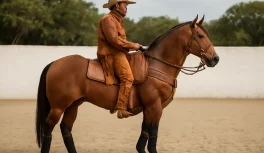
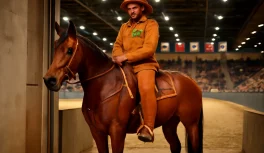
The Criollo is probably the most versatile trail breed in the Americas and one of the most resilient in the world. Developed from Iberian horses brought by 16th-century colonizers and shaped by centuries of natural selection in the extreme conditions of South American pampas, the Criollo was molded by exactly the characteristics needed for long journeys in difficult terrain.
The Criollo’s most famous endurance test is the Argentine Resistance March — the most demanding equine endurance competition in the world, with horses covering 750 km in 75 days, carrying rider and equipment, feeding only on what they find in the field. Criollos have consistently dominated this event.
For equestrian tourism, the Criollo is found throughout South America — especially on Patagonian trails, the Argentine and Uruguayan pampas and Brazilian mountain ranges. Medium sized (1.40 to 1.50 m at the withers), generally dapple grey, chestnut or bay, with a sturdy build and firm movement.
Icelandic Horse: Five Gaits, a Thousand Years of Purity
The Icelandic horse stands at only 1.35 to 1.45 m at the withers — technically a pony by Western classification. But it has the temperament, carrying capacity and endurance of a horse. The defining difference is the tölt: the natural four-beat gait that eliminates trot impact and allows covering ground at 20–30 km/h with the comfort of a fast walk.
The robustness of the Icelandic horse for work in extreme climatic conditions — developed over centuries of isolation on one of the Atlantic’s most climatically challenging islands — also makes it extremely reliable in situations other horses would find challenging.
Quarter Horse: the American Worker
The American Quarter Horse is the most numerous horse breed in the United States and one of the most versatile working breeds in the world. Originally bred for short-distance racing in the 18th century, it was subsequently selected for cattle work on Western farms.
For equestrian tourism, the Quarter Horse has important advantages: it generally has a calm and reliable temperament, responds well to riders of different experience levels and has a firm step on varied terrain. It is not the most resilient breed in the world for multi-day journeys — it was not bred for that — but for one to three-day routes at a moderate pace in the American West, it is ideal.
Arabian Horse: Ancestral Endurance
The Arabian is one of the oldest breeds in the world and, in terms of pure endurance, one of the most impressive. Developed on the Arabian Peninsula thousands of years ago by nomadic peoples who selected animals capable of long distances with little water and food, the Arabian has a cardiovascular and respiratory structure that still has no parallel among horse breeds.
In modern endurance — races of 50 to 160 km in a single day — the Arabian dominates completely. The caveat is temperament: the Arabian tends to be more sensitive and reactive than breeds like the Criollo or Quarter Horse. For experienced riders, this sensitivity is a pleasure. For beginner riders, it can be challenging.
Mangalarga Marchador: the Brazilian Walker
The Mangalarga Marchador is Brazil’s definitive horse breed — and in the context of comfort trails, has a unique credential: the marcha. The Marchador’s specific gait is a four to five-beat marcha — producing a smooth lateral rocking motion in the rider, without the vertical impact of the trot. For long-distance riding in Brazil’s tropical climate, it is the ideal local option.
Mongolian Horse: Survival as Selection
The Mongolian horse developed over millennia on the Central Asian steppes with almost no conscious human selection. The result is an animal that survives because it is genetically robust: hooves that need no shoeing, ability to dig through snow for vegetation in winter and resilience to temperature variations that would kill Western breeds.
For trails on the Mongolian steppes, the Mongolian horse is irreplaceable — not by tourist choice but by practical necessity. No other animal can do what it does in that specific environment.
Choosing the Right Breed for Your Destination
In most world equestrian tourism destinations, the locally available breed was selected over centuries specifically for that environment. You’ll ride a Criollo in Patagonia, an Icelandic horse in Iceland, a Quarter Horse in the American West and a safari-trained horse in Kenya.
A rider who knows why the Andean Criollo has certain reflexes on rocky terrain, or why the Icelandic horse shifts into the tölt without being asked at certain speeds, is experiencing a different layer of the journey.