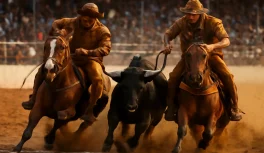
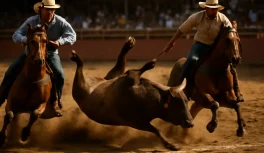
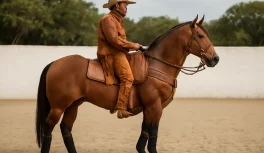
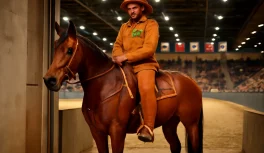
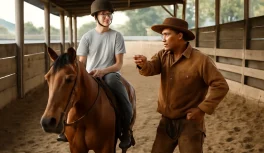
In a vaquejada arena, the horse is not just the rider’s vehicle — it is a co-athlete. Rider skill counts for a great deal, but a horse without the right attributes for the sport makes the task impossible. That’s why the selection and training of vaquejada horses is one of the most sophisticated areas of the Brazilian equestrian sector.
What qualities make a horse stand out in vaquejada? Which breeds dominate the sport — and why? And how are these animals prepared to compete?
What Vaquejada Demands of a Horse
Before talking breeds, it’s important to understand the physical and behavioral profile the sport requires. Vaquejada is a short-speed, lateral-work, emotionally intense event — and these three demands, together, define an animal of very specific requirements.
Starting speed: the run lasts 8 to 15 seconds across 150 meters. The horse must hit maximum acceleration from the very first strides — there is no room for an animal that needs 50 meters to find its rhythm.
Lateral strength and maneuverability: during the chase, the horse must respond to the bull’s directional changes at high speed without breaking rhythm. This lateral maneuverability is rare and not what conventional racehorses train for.
Controllable temperament under pressure: the vaquejada arena is loud, full of animals and humans, with unpredictable movements. An excessively nervous or reactive horse makes the ride dangerous. The animal must be energetic enough for the sport and balanced enough to obey in the middle of controlled chaos.
Recovery under repeated effort: in multi-round events, a horse runs several times in the same day. Recovery between runs matters — horses with a solid aerobic base sustain performance throughout the event.
Quarter Horse: the Dominant Breed
The American Quarter Horse is, without question, the most-used breed in high-level vaquejada. And the reason isn’t fashion — it’s performance. The breed’s genetics, developed over centuries for short-distance racing, fit the demands of the Brazilian sport with precision.
Why Does the Quarter Horse Dominate Vaquejada?
The breed was developed in the United States for races of exactly one quarter of a mile — about 400 meters — from the 17th century onward. That selection produced an animal with extremely developed hindquarter musculature capable of generating explosive acceleration over short distances. That is precisely the profile vaquejada demands.
Beyond speed, the Quarter Horse has other characteristics that make it well-suited to the sport:
- Balanced temperament: the breed has a strong reputation for trainability and responsiveness — an essential quality for working in tandem with another horse
- Compact physical structure: the Quarter Horse has balanced proportions, a solid base of support, and a low center of gravity that favors lateral maneuvers
- Powerful hindquarters: the developed rear end is the horse’s engine in vaquejada — it generates acceleration and sustains the effort through the chase
The Quarter Horse arrived in Brazil in significant numbers starting in the 1960s and 1970s. Its adoption in vaquejada was rapid, and today the breed is inseparable from the sport in the minds of practitioners.
Crossbred Horses: the Versatility of Crosses
Not only purebred Quarter Horses compete in vaquejada. Crossbred horses — especially Quarter Horse crosses with other breeds — are common and competitive, particularly in amateur categories and regions where the purebred is less accessible.
Quarter Horse × Mangalarga Marchador
The cross between Quarter Horse and Mangalarga Marchador (a Brazilian breed developed on Minas Gerais ranches) produces animals that combine the former’s explosiveness with the latter’s endurance and climate adaptability. The result tends to be a horse with competitive speed, good maneuverability, and better stamina across a full day of competition than a purebred Quarter Horse.
Quarter Horse × Criollo
The cross with the Criollo adds rusticity and terrain adaptability. The Criollo, an Iberian-origin breed developed on South American pampas, has tough hooves, efficient metabolism, and a stable temperament. In regions with less controlled track conditions, animals with this cross can have an edge.
How Is a Vaquejada Horse Trained?
Training begins early. Horses destined for vaquejada start the initial work process around two years of age — beginning with light conditioning and gradual exposure to the competition environment.
The Training Phases
Phase 1 — Basic conditioning (2–3 years): track work, obedience training, gradual exposure to the noise and activity of arenas. The goal is to create a mentally stable animal for the competitive environment.
Phase 2 — Technical training (3–4 years): introduction to lateral work, short-speed exercises, training with young and smaller cattle. The horse begins learning the specific movements of vaquejada.
Phase 3 — Development competitions (4–5 years): participation in lower-level events to accumulate competition experience. The rider works on developing the animal’s instinct for working with cattle.
Phase 4 — High performance (5 years and older): participation in main circuits. Fine-tuning of training based on weaknesses identified in competition. Intensive veterinary monitoring.
How Long Can a Vaquejada Horse Compete?
Well-maintained horses can compete for 10 to 15 years, depending on competition frequency, physical conditioning, and veterinary care. The best animals typically reach their peak between ages 6 and 10, when accumulated experience combines with still-high physical condition.
Veterinary Care for the Vaquejada Horse
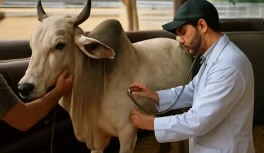
A high-competition vaquejada horse is closely monitored by specialized veterinarians. The physical demands of the sport — especially the impact on the limbs and spine during the chase — require constant monitoring.
Typical protocols include:
- Regular tendon and ligament examinations
- Precise dental and farrier work for performance on sand tracks
- Specialized nutrition to maintain muscle mass
- Physical therapy and recovery work between competitions
The investment in top-level veterinary care is significant — and is part of the ongoing cost of maintaining a competitive animal.
The Vaquejada Horse Market
The market for vaquejada horses is one of the most dynamic segments of the Brazilian equestrian sector. Elite animals regularly exceed R$500,000 in value — and champion breeding stallions have their services sought by farms across the entire region.
Specialized auctions for vaquejada horses take place regularly throughout the Northeast and Center-West. A horse’s genetic reputation — not just its track record, but the performance history of its offspring — is a determinant factor in market value.
The professionalization of the market reflects the sport’s maturity: selective breeding farms, sponsorship contracts for top horses, and an evaluation system that goes well beyond a single owner’s eye.