Vaquejada is a team sport. There is no solo protagonist — there is a partnership between two cowboys, their horses, and a shared reading of what happens inside the arena. The best pairs in the sport’s history are celebrities in the world of the northeastern Brazilian sertão, with a type of recognition that transcends sport and enters the territory of popular culture.
This article looks at some of the pairs and athletes who left their mark on vaquejada — and tries to understand what made each of them special.
What Defines a Legendary Pair?
Before talking names, it’s worth establishing criteria. In vaquejada, a pair becomes a reference when it combines at least three of the following:
Technical consistency: one brilliant round isn’t enough. The pairs who enter the history books have stable performance across full seasons, on different tracks, with different bulls, and under varying conditions.
Exceptional synchronism: the best pairs develop near-telepathic communication inside the arena. The closer knows when the puller is about to make his move. The puller knows exactly how far the closer will press. That nonverbal coordination is built over years of competing together.
Composure in decisive moments: great athletes in any sport distinguish themselves in finals. In vaquejada, the memorable champions are those who, with the crowd at full volume, maximum pressure, and a difficult bull, execute with the same composure they’d show in an empty training session.
Longevity: partnerships that sustain high-level performance across more than one season are rare. When they happen, they enter the sport’s memory.
Pairs That Marked Vaquejada’s History
Adriano Borges and Marcos Costa
Among the most decorated pairs in the northeastern circuits, Adriano Borges and Marcos Costa built a partnership that held consistently high performance across multiple seasons in the region’s major championships. The pair’s defining characteristic was their anticipatory reading of the bull: both riders rarely needed abrupt corrections inside the arena — execution was fluid, almost slow-looking from the outside, because everything was under control before it needed to be forced.
Their partnership’s longevity — uncommon in a sport where lineup changes are frequent — is itself a performance indicator.
Cícero Pereira and Érico Lima
Recognized across the northeastern professional scene, Cícero Pereira and Érico Lima are an example of how riders with complementary technical profiles produce above-average results. Cícero as puxador was known for the precision of his timing — his runs rarely missed the chalk because of a mistimed pull. Érico as batedor had the ability to close the bull in minimal space, even with animals trying to escape laterally.
The pair accumulated state circuit titles and notable national championship performances.
The Family Pair Phenomenon
A recurring pattern in high-level vaquejada is the formation of pairs within the same family — brothers, father and son, cousins. The explanation is straightforward: riders raised together, who trained on the same farm since childhood, develop synchronism that is nearly impossible to build from competition alone.
Several of the most successful pairs in northeastern circuits have this family history behind them — and their success reinforces the generational transmission character that is central to vaquejada’s identity.
The Cowboy as a High-Performance Athlete
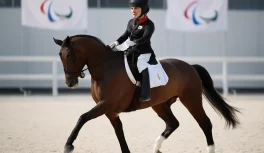
An aspect frequently underestimated by non-practitioners is the physical demand vaquejada places on the human rider. Controlling a horse at maximum speed, maintaining balance through sudden maneuvers, executing the pull with correct force and timing — all of this requires physical conditioning that goes well beyond simply “knowing how to ride.”
Today’s professional vaquejada athletes train strength, balance, and endurance. Some work with specialized conditioning coaches. Managing fatigue across a multi-round event is a real performance factor.
The Horse’s Role in a Pair’s Success
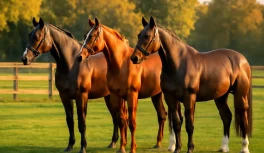
No discussion of vaquejada’s greatest pairs is complete without mentioning the horses. In many cases, what separates a good pair from a memorable one is the quality of the animals — and the genetics behind them.
Champion vaquejada horses have names as well-known among circuit followers as their riders’ names. Animals remembered by evocative nicknames — evoking speed, fire, dominance — are recalled by generations of sport enthusiasts. The combination of an experienced rider and a talented animal is what produces the runs that stay in people’s memories.
The Categories That Reveal New Champions
The sport has a category structure that serves as a talent pipeline. The mirim and infantil (youth) categories reveal children with exceptional natural talent — young people raised inside the vaquejada world who demonstrate from an early age the instinct and track reading that only years of experience build.
The Youth Circuit as a Talent Nursery
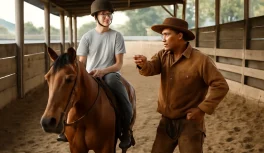
The youth circuits are where the next generations of vaquejada champions are being formed right now. Competitions for different age groups — from six years old, with smaller animals and adapted tracks — create progressively more experienced athletes.
Vaquejada is one of the rare sports where generational transmission happens in an almost literal sense: the son accompanies the father to competitions from the time he can walk, mounts his first horse before he’s ten years old, enters the youth circuit, and moves up in categories as experience accumulates.
What Made the Great Champions Immortal?
Beyond titles and statistics, what truly makes a pair legendary in vaquejada is the creation of moments — runs the attending crowd will never forget, executions still talked about years later.
Vaquejada, being a sport of speed and irreducible unpredictability, has a quality few disciplines can claim: every run is unique. The bull never behaves exactly the same way twice. Track conditions vary. The animal is faster or slower, more agitated or calmer. It is this variable — which can never be fully controlled — that makes the perfect execution, when it happens, something genuinely extraordinary.
The great vaquejada champions are those who found a way to make the extraordinary happen regularly. And that is why the crowd remembers them, decades later, with the same warmth they felt watching those runs live.