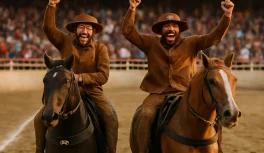
Vaquejada can look like a closed world to anyone observing from the outside. Arenas have their own language, riders have known each other for decades, and the sport carries a family tradition that can feel intimidating to a newcomer. But the reality is different: vaquejada, a traditional Brazilian cattle-pulling rodeo sport, is one of the most accessible equestrian disciplines in Brazil for anyone who wants to learn — and the amateur circuit is a genuinely welcoming space for beginners.
This guide is for anyone who wants to take a first step — whether as a spectator wanting to understand what they’re watching, a rider who wants to compete, or someone simply exploring whether the sport is right for them.
First Step: Watch Before You Compete
It sounds obvious, but many people skip this. Before investing in equipment or a horse, attend vaquejada competitions. Observe, have conversations, ask questions. The culture inside vaquejada arenas is a welcoming one — especially at smaller rural events, where organizers and participants typically receive newcomers with genuine interest.
What to focus on during your first visits:
The runs: pay attention to each rider’s role — the puxador (puller) on the right side, the batedor (closer) on the left. Watch how the bull is boxed in, where the takedown happens, and how the judges score each run. The rules make far more sense once you’ve seen them played out live.
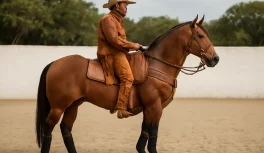
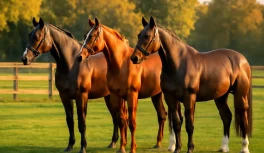
The horses: notice the differences between animals. Most competition Quarter Horses have a recognizable build and musculature. Ask riders about their horses — vaquejada has a culture of pride in its animals that makes this conversation natural.
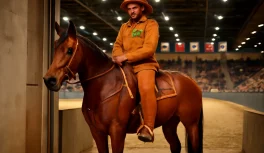
The infrastructure: every arena has its own characteristics. Looser or more compacted sand affects the speed of runs. Understanding the environment will help you when you eventually compete.
Do You Need Your Own Horse to Start?
Not necessarily. Vaquejada training centers and schools — especially in Brazil’s Northeast and Center-West — offer training horses for beginners. This is the most efficient and affordable way to begin: learning the sport on already-trained animals, before committing to owning a horse of your own.
The advantage of using school horses isn’t only financial. Experienced vaquejada horses teach beginner riders: the animal already knows what to do on the track, and the rider can focus on understanding the dynamics without also having to teach the horse.
When to Consider Getting Your Own Horse
When you know you want to stay in the sport for more than a year or two, and when you have some basic competition experience behind you. Owning a horse allows frequent training and the development of a real understanding with the animal — something that can’t be built in just a few months of school lessons.
The investment in a vaquejada horse for a beginner — a trained animal, but not elite — starts at around BRL 15,000–40,000. This is a serious financial commitment, and it should be made with real prior experience in the sport, not initial enthusiasm alone.
Riding Level Required to Start
There’s a common misconception here: the idea that you need to be an experienced rider before entering vaquejada. That’s not true for the training categories.
Never ridden before: this is not the ideal starting point for vaquejada. Learning basic horsemanship first is recommended — at minimum, enough to feel confident at a trot and in short canters in an open field.
Occasional rider, comfortable at walk and trot: you can start in training categories with lessons specifically focused on vaquejada. Most training centers have classes for this level.
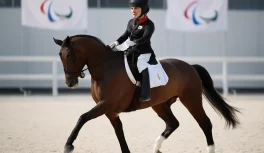
Regular rider, comfortable at canter: ready to enter technical vaquejada training with good results. The most demanding element — keeping balance during the pull at speed — requires canter experience.
Experienced rider: can progress more quickly to the sport’s technical specifics — reading the bull, timing the pull, synchronizing with a partner.
How Technical Vaquejada Training Works
Technical training for beginner vaquejada follows a logical progression:
Foundation work: correct saddle posture, balance control at canter, proper single-handed rein use (the other hand stays free for the pull).
Training with smaller animals: the first contact with chase work is done with calves — smaller, slower, and more predictable than the adult bulls used in competition.
Pull technique training: the technical pull movement is trained separately — sometimes in simulated situations, with the rider practicing the motion without the speed and pressure of a real run.
Pair work: once both riders have sufficient foundation, they begin training together. The synchronism between the puxador and batedor is a skill that requires repetition.
Entry-level competitions: entering lower-level competitions — local events, amateur rounds — is an essential part of the learning process. The pressure of real competition teaches things that training alone cannot.
Finding Training Centers and Arenas
In Brazil’s Northeast, nearly every mid-sized municipality has a vaquejada arena and some form of activity related to the sport. The highest concentration is in Bahia, Pernambuco, Ceará, and Paraíba.
In the Center-West, states like Goiás, Mato Grosso do Sul, and Minas Gerais have active circuits and training centers. In São Paulo state, the northeastern community maintains arenas across the interior.
The best ways to find training centers near you:
- Contact the ABVAQ (Brazilian Vaquejada Association) for recommendations by state
- Search vaquejada groups on social media — Facebook and WhatsApp have active regional groups
- Attend agricultural fairs — these are environments where the vaquejada community is present and contacts form naturally
Starter Costs as an Amateur
For a realistic estimate of the initial cost of entering the sport as an amateur:
| Item | Estimated cost | |—|—| | Lessons at a training center (monthly) | BRL 300–800 | | Basic attire (hat, leg guards, boots) | BRL 800–2,500 | | Entry fees for amateur events | BRL 80–300 per event | | Transportation to competitions | variable by region |
The most significant cost — the horse — can be deferred while you learn on school horses. When the decision to own an animal is made, it should be grounded in real experience with the sport, not just early excitement.
The Vaquejada Community: What to Expect
The vaquejada community has a reputation for hospitality that is, in large part, earned. The sport has a strong family and community dimension — whole families attend events together, children grow up in arenas, and there is a sense of belonging that urban sports rarely manage to create.
For a newcomer who arrives with genuine respect and curiosity, the reception tends to be warm. The sertão’s culture — hospitable, direct, proud of its traditions — is the human fabric that gives vaquejada so much of its identity.