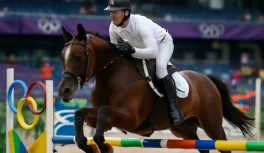
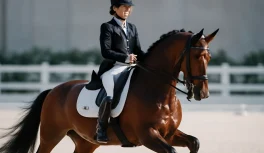
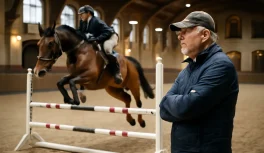
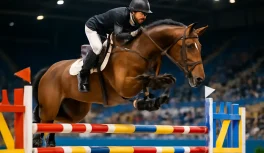
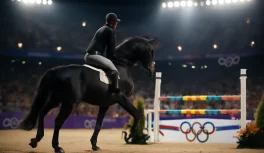
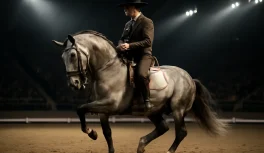
Behind every horse that enters the Olympic arena, there is a story the audience almost never sees. A story that begins well before the years of training, before the qualifying results, before the long-haul flight on a chartered cargo plane. It begins on a farm, with a foal that no one yet knew could become what it would become.
How a horse makes it to the Olympics is one of the most fascinating questions in equestrian sport — because the answer involves genetics, money, patience, luck, avoided injuries, and a series of human decisions spread across eight to twelve years of an animal’s life.
Where It Starts: Genetics and Selective Breeding
An Olympic horse’s journey begins before birth. The leading breeds in elite equestrian sport — Dutch KWPN, German Hanoverian, Oldenburg, Belgian BWPN — maintain rigorous registration and evaluation systems that determine which animals are permitted to breed.
Stallion candidates go through performance tests that assess movement quality, temperament, athleticism, and conformation. At the major Dutch and German breeding programs, approval is a months-long process that includes veterinary evaluation, in-hand gait assessment, free-jumping tests, and behavioral evaluation.
This means a foal born to two approved parents starts with a genuine genetic advantage — not a guarantee, but a significantly higher probability of having the physical and temperamental qualities that Olympic equestrian demands.
Evaluating and Selecting Foals
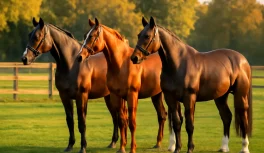
At three to four weeks old, foals can already be assessed on their basic movement. Experienced breeders watch the quality of the walk, trot, and the way the foal uses its joints — especially the hocks and forelegs.
At two years old, sport breed foals are presented at specialized auctions where buyers — including top-level riders and agents for wealthy owners — evaluate them in a controlled setting. The PSI (Performance Sales International) auctions in Germany and the KWPN Select Sale in the Netherlands are the most important in the world, and prices for foals from exceptional bloodlines can reach six figures in euros.
The vast majority of foals identified as promising will never reach the elite level — because between genetic potential and an Olympic horse lie years of work, sustained soundness, and the right partnership with a rider.
Training: From Foal to Olympic Competitor
Formal training typically begins at three years old, with lungeing and in-hand work to develop balance and muscle without a rider’s weight. At four years old, ridden work begins — initially at walk and trot, on flat ground, with an experienced rider.
The progression is deliberately slow. Elite riders and trainers consistently emphasize the importance of not rushing development — each stage must be consolidated before the next. A horse pushed ahead to reach higher-level competition sooner will typically develop technical gaps or behavioral problems that surface at the worst moments.
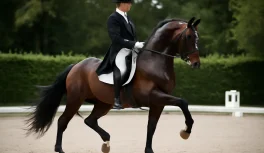
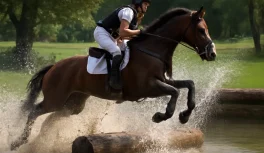
For dressage, the Training Scale progression — rhythm, relaxation, contact, impulsion, straightness, collection — typically takes eight to twelve years to reach Grand Prix level. For show jumping, horses can compete nationally at a relatively young age, but reaching the 1.60m height of the elite level takes five to seven years of careful progression. For eventing, the combination of three disciplines means the development period is among the longest in any sport.
Qualifying for the Olympics: The Horse Needs Points Too
Unlike many sports, Olympic equestrian qualification depends not only on the rider’s performance. The horse also needs to accumulate results to be eligible.
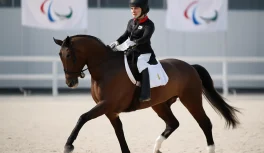
The FEI — Fédération Equestre Internationale — requires that horse-and-rider combinations reach a minimum ranking at qualifying events before being eligible for the Games. This means a potentially Olympic horse needs to compete regularly at the international level — and build a consistent record of results.
The qualification process also protects the sport from combinations arriving at Olympic level without a solid competitive history. A horse with one exceptional result but no consistency is unlikely to pass the selection filters of national federations.
Final Preparation: The Months Before the Games
The months before the Olympics are a period of careful calibration for qualified horses. The goal is not to push training harder — it is to maintain the horse in the best possible physical and mental condition while minimizing the risk of injury.
Many riders report that experienced horses seem to sense when something different is happening. The change in routine, the increased travel to preparatory competitions, veterinarians arriving more frequently — sensitive horses respond to these signals.
Veterinary teams in the pre-Olympic months pay intensified attention to dentistry, shoeing, musculature, and any sign of discomfort that might indicate an emerging injury. Something that in another context would be treated conservatively may here receive immediate attention because the timing with the Games allows no margin.
The Flight: How Do Olympic Horses Travel?
Olympic horses travel by air — in adapted cargo planes with individual stalls that allow the animal to stand during the flight. Each horse travels with its own groom, and flights are planned to minimize stress: nighttime departures when possible, temperature-controlled cargo holds, and technical stops on very long routes.
Adjusting to the time zone and climate of the host country begins weeks before competition. Horses arrive at the Olympics well in advance — typically two weeks — to adapt to the facilities, the climate, the footing, and the local routine before competing.
Every horse goes through a mandatory veterinary inspection at the Games venue. The inspection assesses movement, general condition, and the absence of signs of injury. Horses that fail the inspection are withdrawn from competition — which generates dramatic moments behind the scenes at every Olympics.