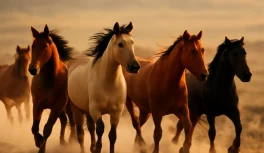
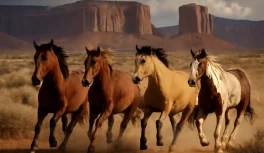
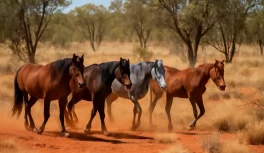
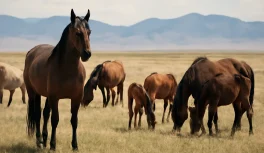
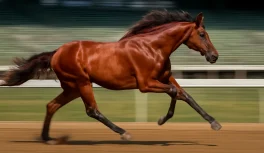
The horse at Semana Farroupilha is not merely a decorative presence. It is a declaration of identity. When riders pass through the streets of Porto Alegre on September 20th, dressed in traditional pilchas and mounted on proudly outfitted horses, they are repeating a gesture their ancestors made in the battles of the Farroupilha Revolution two hundred years ago. The horse was a companion in revolution, in fieldwork, in celebration, and in silence. And during Semana Farroupilha — more than at any other moment in the gaúcho calendar — that partnership takes center stage.
But to truly understand what the horse represents during this September week, it’s worth going a little deeper: into the history, the tradition, and the almost inexplicable bond between the gaúcho people and the animal that has accompanied them for centuries.
What Is Semana Farroupilha — and Why Is the Horse at Its Center?
Semana Farroupilha is the annual celebration of gaúcho culture in Rio Grande do Sul, Brazil, with its high point on September 20th — the date that marks the beginning of the Farroupilha Revolution in 1835. On that day, the farrapos (as the revolutionaries were called) launched one of the longest uprisings in Brazilian history: ten years of fighting for the South’s autonomy against the centralized power of the Empire.
The Rio Grande do Sul Legislative Assembly declared September 20th a state holiday in 1996, but the tradition of commemorating this date had begun much earlier. In 1947, a group of students from Colégio Júlio de Castilhos in Porto Alegre, led by João Carlos Paixão Cortes, founded the Departamento Tradicionalista and began organizing gatherings to preserve gaúcho culture. September 20th was chosen as the highest date in that celebration — the day Porto Alegre fell to the farrapos and the revolution took hold.
And the horse? It was there from the very beginning. The festivities that arose in that context — the parades, the horseback processions, the mounted demonstrations — emerged directly from the memory of a people who built their identity on the land, with a horse by their side.
The Ronda Crioula: The Fire That Brings Gaúchos and Horses Together
One of the most evocative symbols of the Farroupilha celebrations in Porto Alegre is the Ronda Crioula — the vast gathering of CTGs (gaúcho cultural centers), riding groups, and horsemen that takes over Parque Maurício Sirotsky Sobrinho for the entire week.
The name has its roots in the open ranges: when gaúcho cattle drivers needed to calm a herd at night, they would surround the animals — rodear them — singing softly, whistling, strumming guitars to ease the cattle’s restlessness. A fire would be lit at a short distance from the herd, and the men would take turns on watch, keeping the animals quiet. That watch — that ronda — gave the tradition its name.
Today, the Ronda Crioula in Porto Alegre fills more than 400 wooden stalls and pavilions. It is a space where barbecue, chimarrão (traditional mate tea), gaúcho poetry, folk dance, crafts, and horses all coexist — horses tacked up, proudly displayed, carefully tended by their owners. To an outside visitor, it might look like a festival. To a gaúcho, it is something more: the living affirmation that that culture has not died, has not been swallowed by urbanization, has not faded with time.
The horse present at the Ronda Crioula is not there by chance or for decoration. It is there because it belongs to the memory of the people who created that space.
Why Was the Horse Essential in the Farroupilha Revolution?
To understand the horse’s role in Semana Farroupilha, it is necessary to look at what happened between 1835 and 1845 across the fields of the South.
The Farroupilha Revolution brought together more than 20,000 men and women in successive battles that claimed the lives of approximately 3,500 revolutionaries. In a ten-year conflict fought across open fields, rivers, and hill ranges of Rio Grande do Sul and Santa Catarina, mobility was a matter of survival. And in the 19th century, mobility meant horses.
The farrapos fought on horseback. They relayed orders on horseback. They advanced and retreated on horseback. The Imperial forces also rode — but the gaúchos had an advantage that went beyond the quality of their animals: they knew the terrain, and they had been riding since childhood. The gaúcho horse was a war partner, trained to handle difficult ground, cross rivers, and remain serviceable during long campaigns without the logistical support the Imperials commanded.
Leaders like Bento Gonçalves, David Canabarro, and Giuseppe Garibaldi commanded their forces on horseback. Anita Garibaldi — one of the revolution’s most celebrated figures — became a symbol of courage precisely because of the way she rode and led in the field. The horse was not a footnote to the revolution: it was part of the strategy, the identity, and the spirit of those who fought.
When gaúchos parade today on September 20th with their horses, they are not simply celebrating a date. They are symbolically reenacting the presence of that animal in the battles that gave Rio Grande do Sul the character its people carry to this day.
The Mounted Parade: A Living Tradition That Unites Generations
One of the most anticipated moments of Semana Farroupilha is the closing parade — when riders from across Rio Grande do Sul, dressed in traditional pilchas and mounted on carefully outfitted horses, ride through the city streets.
For many gaúchos, participating in this parade is a rite of passage. Children who are not yet steady enough to ride alone go up behind their mother or father. Young riders still learning the basics insist on being there, even if the ride is not yet polished. Veterans who have ridden for decades repeat the procession with the same emotion as always.
The horse chosen for the parade almost always goes through careful preparation: a clean coat, braided or combed mane, well-maintained and polished tack. There is an explicit pride in that presentation. The animal that represents the gaúcho must be worthy of the occasion.
What Breeds Appear in the Farroupilha Parade?
The most common breed in the Farroupilha parades is, unsurprisingly, the Brazilian Crioulo — the breed that was born from the same cultural mix that formed the gaúcho people, adapted to the conditions of the South. But it is not the only one.
Quarter Horses, Mangalarga Marchadors, and crossbreds without registry papers all have a guaranteed place in the parade — provided their riders carry the right spirit. What unites them is not registration or bloodlines; it is the relationship with the rider.
The parade is not a breed competition. It is a demonstration of belonging.
How Do CTGs Celebrate the Horse During Semana Farroupilha?
The CTGs — Centros de Tradições Gaúchas — are the backbone of the Farroupilha celebrations across Rio Grande do Sul. Each center organizes its own events during the week, and horses play a central role in most of them.
Among the most common activities:
- Gineteadas and rodeos — mounted skill competitions that draw riders from across the region
- Dressed rider presentations — demonstrations of traditional gaúcho horsemanship
- Horse auctions — especially of registered Crioulo animals, taking advantage of the season’s movement
- Cavalgadas — collective horseback rides crossing roads, fields, and towns
In the Campanha, Serra, and Vale dos Sinos regions, Farroupilha cavalgadas often cross entire municipalities, gathering hundreds of riders over several days. Some depart from distant towns and arrive in Porto Alegre on the eve of September 20th, closing their route at the official parade.
These are riders who spend hours on the road, sleep under the open sky, and arrive at their destination covered in dust, tired, and wearing a wide smile. It is the kind of experience that is repeated because it forges bonds — between people, and between them and their horses.
The Gaúcho Horse Today: A Tradition That Never Stops Living
Much is said about the risk that traditions fade with time, especially in an increasingly urban state. The Rio Grande do Sul of today is a state of cities, technology, and young people who grew up far from the countryside.
But Semana Farroupilha tells a different story.
Year after year, participation in cavalgadas grows. Young people who have never ridden are introduced to horses through CTGs. Children raised in apartments ask their parents to visit the Ronda Crioula and touch the animals. The horse at Semana Farroupilha functions as a link — between past and present, between countryside and city, between those who lived it and those who are discovering it.
This vitality is not nostalgia. It is a conscious choice to keep alive a relationship that defines what it means to be gaúcho: the relationship with the land, with animals, and with a history that was built on horseback.