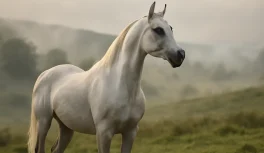
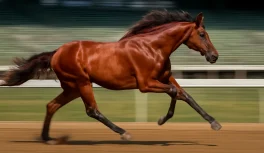
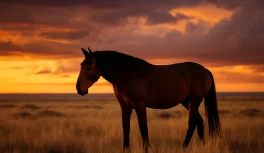
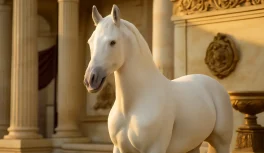
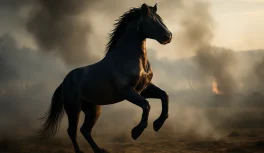
There was a problem with the horse that King Philip II of Macedonia had purchased for thirteen talents — a considerable fortune by any standard of the era. The animal was extraordinary: large, dark, with a white star on his forehead and an unusual blue eye that gave him the Greek name Bukephalos, meaning “ox-head,” a reference to the striking width of his skull. But Bucephalus threw every rider who attempted to mount him. None of Philip’s horsemen could control the animal. He was about to be returned to the seller when a boy of twelve or thirteen asked for a chance.
The boy was Alexander. And what he saw that the others had missed changed the course of history.
What Did Alexander Notice That No One Else Had?
Alexander’s observation was, in hindsight, simple: Bucephalus was frightened of his own shadow. Each time a rider attempted to mount him, the movement cast shifting shadows that the animal could not locate — and the terror made him uncontrollable. Alexander took the reins, turned the horse to face the sun so the shadow fell behind them, and mounted.
According to Plutarch, who recorded the episode centuries later but drew on earlier sources, King Philip wept watching his son handle the animal and said: “My son, find a kingdom worthy of yourself — Macedonia is too small to contain you.”
The scene reveals several things at once. First, an early and precise talent for observation — Alexander did not try to overpower the horse; he tried to understand him. Second, a confidence that bordered on audacity: he did not ask permission, only asked for the chance. Third, the beginning of a loyalty that would last nearly two decades.
What Breed Was Bucephalus — and Why Did It Matter?
Scholars and historians have long debated what breed Bucephalus was. The physical description — large frame, fiery temperament, extraordinary endurance — points to bloodlines from the Akhal-Teke horses of Central Asia, or related breeds, possibly from the region of Thessaly, which was known throughout the ancient Greek world for the quality of its horses.
What is clear is that Bucephalus was not an ordinary animal. The price Philip paid — thirteen silver talents — could have purchased dozens of standard horses. Macedonian warhorses were carefully selected animals, and even among them Bucephalus stood apart.
The relationship between Alexander and Bucephalus became embedded in Macedonian royal propaganda. A horse that no other man could ride reinforced the narrative of the exceptional king, the man who existed beyond ordinary measures. The beast that only the demigod could master.
How Did Bucephalus Behave in Battle?
Ancient historians agree on one consistent detail: Bucephalus refused to be ridden by anyone other than Alexander. The king was the only rider the horse would accept. This created real logistical challenges on long campaigns — guarding the horse required constant vigilance to ensure no one mounted him without Alexander’s knowledge.
In battle, Bucephalus was described as an animal of remarkable composure under noise and chaos. Well-trained warhorses of antiquity were subjected to intensive conditioning — exposure to the sound of weapons, the smell of blood, the disorder of combat. Bucephalus, by all accounts, was exceptional even by those elevated standards.
The Campaigns of Alexander — and the Role of Bucephalus
Bucephalus carried Alexander through the full arc of campaigns that transformed the young Macedonian king into the conqueror of an empire stretching from the Mediterranean to the Indus. The Battle of the Granicus River in 334 BCE, Issus in 333 BCE, Gaugamela in 331 BCE — at the decisive battles that brought down the Persian Empire, Bucephalus was there.
There was an unspoken protocol in the military practices of the era: commanders rode their finest horses during cavalry charges but protected those animals as much as possible. For Alexander, this meant Bucephalus was frequently spared when the battle did not require the king’s personal presence on the front line.
But as Alexander aged and the campaigns grew more ambitious and dangerous, Bucephalus was rested with greater frequency. During the campaigns across what is now Afghanistan and Pakistan, in the final years of the conquest, the horse was already old — and Alexander rode him one last time.
What Happened to Bucephalus in His Final Battle?
The Battle of the Hydaspes River in 326 BCE was fought against the Indian king Porus — a formidable warrior who fought from elephant-back and commanded an army that included dozens of war elephants. For horses with no prior exposure to elephants, the experience was terrifying.
Bucephalus was more than 25 years old — remarkably aged for a warhorse, at a time when most animals were retired far earlier. He survived the battle itself but died in the days that followed — most likely from wounds sustained in combat, though some ancient sources suggest he simply exhausted what remained of his vital strength.
Alexander’s response was profound. He founded a city on the banks of the Hydaspes and named it Bucephala — today identified with the region of Jhelum in modern Pakistan. Alexander founded cities to mark victories and perpetuate his memory. Bucephala was the only one ever named for a horse.
The Legacy of Bucephalus in Art and Culture
The image of Alexander astride Bucephalus became one of the most recurring iconographic motifs in Western art. The Alexander Mosaic discovered at Pompeii — dated to the first century BCE and now in the National Archaeological Museum in Naples — depicts the conqueror in battle mounted on a dark horse, identified as Bucephalus, in direct confrontation with the Persian king Darius III.
Coins, sculptures, reliefs, and paintings across the full reach of the Hellenistic world reproduced the pair for centuries. The image of the perfect rider on the perfect horse became the emblem of ideal power — rational yet overwhelming, human yet mythic.
In medieval Arab and Persian cultures, the stories of Alexander — known as Iskandar in Islamic traditions — were widely retold, and Bucephalus appears in those narratives frequently, sometimes transformed into an animal of nearly magical qualities.
Why Has the Story of Bucephalus Endured So Long?
The survival of Bucephalus in cultural memory across more than two thousand years owes something to Alexander’s own talent for managing his image. The conqueror was acutely aware of the power of narrative and symbolism — and the story of the boy who tamed the horse no man could ride was too perfect not to be told and retold across generations.
But there is something beyond propaganda at work here. The story resonates because it speaks to something universal: the perception that replaces brute force, the patience that succeeds where aggression fails, the bond between two creatures that recognize each other. However much the story was embellished across the centuries, its core is the story of a partnership — improbable, intense, and ultimately irreversible.