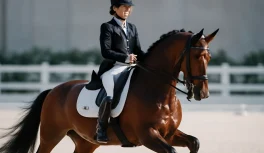
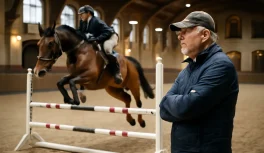
Training a Chilean Criollo for the rodeo is one of the most rewarding experiences in the equestrian world — not because it’s simple, but because the breed responds in a way that surprises riders accustomed to other horses. The Chilean Criollo doesn’t need to be dominated. It needs to be convinced. And when that trust is earned, the horse gives everything it has.
Why Does the Chilean Criollo Respond So Well to Training?
The answer goes back to selection. For over 180 years, the Federación del Rodeo Chileno selected horses based entirely on performance under pressure — and horses that perform well under pressure are, by definition, intelligent, brave, and emotionally stable.
A horse that is nervous, fearful, or erratic simply doesn’t work in the Chilean rodeo. The collera demands that the horse approach a moving steer, hold its position under lateral pressure from another horse and rider, and respond to subtle leg and rein cues in fractions of a second. Only resilience and intelligence together produce that result consistently.
When you begin training a well-bred Chilean Criollo, you already have half the work done. The genetic foundation is solid. The task is channeling it.
The Training Stages for the Chilean Rodeo
Foundation: Desensitization and Early Handling
Training begins before the first ride. The Chilean Criollo foal should be habituated to human presence from birth — consistent handling, daily grooming, and gradual introduction to equipment build the trust that will be essential in the arena years later.
The breaking process must be progressive. Abrupt or force-based methods produce tight, reactive horses — the opposite of what rodeo demands. Experienced Chilean breeders favor methods that use the horse’s natural communication patterns to establish dialogue rather than submission.
Recommended timeline:
- First physical contact and handling: foal stage
- Light groundwork and leading: 1–2 years
- First rides: 2–3 years, very light
- Rodeo-specific training: starting from age 3 onward
Building the Foundation: What Must Be in Place Before Cattle Work
Before introducing any cattle, the horse must have a reliable communication system with its rider. This means:
- Clean stops and departures — control of speed across all gaits without resistance
- Lateral movement — the ability to move shoulder and hindquarters independently, on light leg pressure; this is essential for every maneuver in the media luna
- Leg yields — the horse must move sideways from leg pressure, smoothly, without bracing
- Light rein response — a rodeo horse must respond to the weight of the rein, not to traction; a horse that needs constant pulling is not ready
This phase can take 6 to 12 months before cattle are introduced. Horses that skip it typically develop technical flaws that are difficult to correct later.
Rodeo-Specific Preparation
With the communication foundation in place, the work becomes arena-specific:
Cattle introduction — the horse is exposed to cattle in controlled settings. The goal is calm curiosity, not fear or aggression. The ability to read cattle — to anticipate a steer’s movement before the rider asks — develops quickly in a well-bred Chilean Criollo.
Shoulder and chest pressure work — training the horse to apply controlled pressure with its chest and inside shoulder; the precise, restrained force that is the heart of the volapié.
Collera simulation — training with a second horse and rider to rehearse the coordination and communication that competition demands. The horse must learn to work alongside another horse without distraction or interference.
What Is the Right Age to Start Rodeo Training?
Rodeo-specific work should begin only when the horse is physically and mentally mature. For the Chilean Criollo, that typically means 3 to 4 years of age.
Horses started too young risk tendon, ligament, and joint damage in structures that are still developing. A Chilean Criollo at age 3 is still growing. Rushing the process is always a mistake.
Experienced breeders recommend a horse’s first formal competition between ages 4 and 5 — when the animal is physically strong, mentally formed, and trained enough to handle the stress of a competitive arena environment without shutting down.
Common Mistakes in Chilean Criollo Training
Rushing the foundation — the single most common error. Many people want to get to the cattle too quickly. The result is a horse that “knows” the work but lacks the technical base to execute it with precision.
Overtraining — the Chilean Criollo is resilient, but not indestructible. Long, repetitive sessions create boredom and resistance. Short, varied, positive sessions produce dramatically better results.
Ignoring physical discomfort — dental issues, poorly fitted saddles, incorrect shoeing. A horse in pain will not train well. Period.
Confusing obedience with submission — the Chilean Criollo is not a submissive horse. It works through partnership, not fear. Training methods that rely primarily on punishment produce tense, unpredictable horses in the arena.
What Does a Well-Trained Chilean Criollo Look Like?
A well-trained Chilean Criollo for the rodeo is a study in controlled power. It enters the media luna with confidence, reads the steer before the rider asks, applies pressure with precision, and stops cleanly — without resistance, anxiety, or excess energy.
More than an athlete, it’s a partner. And that partnership — built through patience, method, and years of shared work — is exactly what the Chilean rodeo celebrates every time a collera enters the arena.