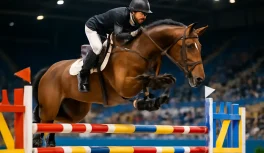
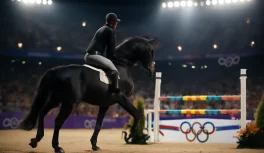
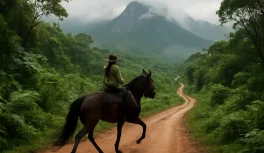
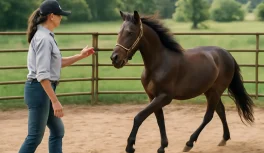
Equestrian is one of the vanishingly rare Olympic sports in which women and men compete directly against each other — in the same events, for the same gold medals, under the same rules. There are no separate categories by sex. And throughout the sport’s history, female Olympic equestrians have not merely participated in this mixed environment — they have dominated it.
This reality did not appear from nothing. It resulted from decades of struggle to have women admitted to Olympic equestrian competition, generations of riders who had to prove repeatedly that they could compete at the highest level, and some performances so extraordinary they made it impossible to ignore that equestrian had become a genuinely equal sport.
When Did Women Enter Olympic Equestrian?
Equestrian made its Olympic debut at the Paris Games of 1900 — and women participated that year, in a demonstration event. But the formal and systematic participation of women in Olympic equestrian events took decades to materialize fully.
In dressage, women’s full participation was permitted from Helsinki 1952. In eventing, the history was longer — for decades, cross-country was considered physically unsuitable for women, a position that the results of those very riders progressively demolished.
At Rome 1960, Swiss rider Helena Dupont was among the first women to compete in Olympic eventing and finished among the top places. From the 1970s onward, women began appearing regularly on the podium — and the argument about physical unsuitability was, slowly, abandoned.
Nicole Uphoff: Dominance That Admitted No Discussion
In the 1980s and early 1990s, Nicole Uphoff was the rider who defined international Olympic dressage. With Rembrandt, her Westphalian stallion, Uphoff won individual gold at Seoul 1988 and Barcelona 1992 — becoming the first female rider to win back-to-back individual golds in the event.
What made Uphoff remarkable was not only her technique — it was the appearance of effortlessness. Uphoff rode with a stillness that made the years of training invisible to the spectator. Rembrandt, under her, seemed to execute the movements of his own will.
Winning back-to-back golds with the same horse — in a sport where anything can happen in a single test — cemented Uphoff as one of the greatest figures in Olympic dressage.
Charlotte Dujardin: The Rider Who Broke Records of Records
If Uphoff defined one era, Charlotte Dujardin defined the next — even more dramatically. With Valegro, the British rider won individual dressage gold at London 2012 and Rio 2016, broke the world record three times, and accumulated more Olympic medals in equestrian than any other British athlete in history.
Dujardin began as a groom — caring for horses — in the stable of Carl Hester, one of the most important dressage riders in the United Kingdom. When Hester decided to leave Valegro with her for development, neither of them imagined that horse would become the highest-scoring in history.
What distinguished Dujardin was the quality of contact — the connection between rein and the horse’s mouth that allows communication without tension. Judges and specialists describe her ride on Valegro as an example of how dressage should look: the horse moving in complete freedom, and the rider guiding invisibly.
In 2024, Dujardin was provisionally suspended by the FEI after controversial training footage surfaced online. The episode opened a discussion about the limits of training methods in elite dressage — a conversation the sport needed to have, whoever stood at the center of it.
Virginia Leng and Women’s Eventing
In eventing, Virginia Leng — later Virginia Elliott — was the rider who demonstrated that women could not only participate in Olympic cross-country, but dominate the discipline at a global level.
World champion in 1986, Leng won bronze medals in individual eventing at Los Angeles 1984 and Seoul 1988, plus multiple team medals. Her technique across country — especially at water obstacles, where most riders lose time — was studied by young riders of both sexes as a technical model.
Leng’s career was also marked by resilience: she suffered a serious eventing accident that kept her away from competition for months, and returned to compete at the highest level — the kind of story eventing produces with a frequency no other equestrian discipline can match.
Why Does Equestrian Produce So Many Great Female Riders?
There is a structural reason for the strong presence of women at the top of Olympic equestrian — and it has to do with the specific demands of the sport.
Elite equestrian demands qualities that are not determined by physical size or raw strength: communication sensitivity, precise timing, balance, patience, and the ability to convey security to an animal that weighs ten times more than the rider.
Heavier or physically stronger riders have no advantage over lighter or smaller ones — because what the horse responds to is not force, but the quality of communication. A rider who uses force to get what they want from a horse typically gets resistance, not cooperation.
This structure of performance has leveled the field in ways other sports are still working to understand. Olympic equestrian has produced women at the top not as exceptions, but as a regularity — which makes the debate about sex separation in sport, whenever it resurfaces, difficult to sustain with the numbers in hand.
The Present: Growing Diversity at the Top
The most recent Olympics showed that women’s Olympic equestrian is more geographically diverse than at any other point in history. Female riders from Latin America, the Middle East, Asia, and Oceania appear on the podium or in contention for it — reflecting the global growth of the sport and the decline of the European monopoly that characterized Olympic equestrian for decades.
This diversity is good for the sport. Each equestrian culture brings different perspectives on training, partnership with horses, and performance styles. The equestrian Olympics of the future will likely be more competitive and less predictable — and women will be at the center of that transformation.