One of the most common questions among people getting to know the Quarter Horse is about coat color: “Is this color accepted in the registry?” or “Can a pinto horse be a purebred Quarter Horse?” The answers are not always obvious — and understanding the breed standard rules can make a real difference when buying, selling, or registering an animal.
The good news is that the Quarter Horse accepts a wide variety of coats. The part that causes confusion is that some colors common in other breeds simply do not qualify for registration. This is not an aesthetic judgment — it has to do with genetics and preserving the breed’s characteristics.
Which Coat Colors Are Accepted in the Quarter Horse?
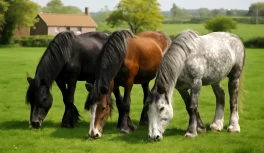
Both the AQHA and the Brazilian ABQM accept a broad color spectrum. Approved coats include:
Most common solid colors:
- Chestnut — reddish coat ranging from golden to dark copper; one of the most prevalent in the breed
- Dark chestnut (alazã tostada) — a deeper, richer chestnut variation, highly valued aesthetically
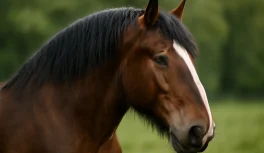
- Bay — brown body with black mane, tail, and leg points; classic and very common
- Light bay — paler tone with less pronounced mane contrast
- Brown — uniform chocolate brown without marked contrast; common across working breeds
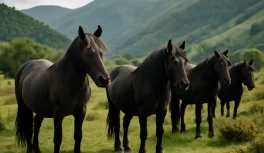
- Black — fully black coat without reddish sheen; less common but accepted
Dilute or special characteristic coats:
- Palomino — golden body with white mane and tail; produced by the cream dilution gene over a chestnut base; very popular visually
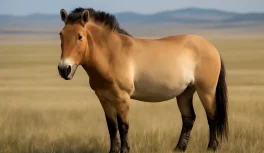
- Dun — sandy-toned body with dorsal stripe; associated with primitive ancestors
- Roan — mixture of white and colored hairs giving a pinkish or reddish appearance
- Gray — black base with mixed white hairs; lightens with age
White markings: Stars, stripes, snips, and leg white are accepted in moderate amounts, without compromising the breed standard.
Which Coats Are NOT Accepted for Quarter Horse Registration?
This is the point that generates the most confusion. The following coats are not accepted for registration as a purebred Quarter Horse in either the AQHA or ABQM:
- Pinto / Paint patterns — horses with large, irregular white patches over a colored base. There is actually a dedicated American breed for these horses: the American Paint Horse, which has Quarter Horse origins but is registered separately
- White horses — fully white horses, including cremello, perlino, and blue-eyed whites
- Appaloosa pattern — the characteristic circular spots belong to a different breed entirely
The reason is not that these horses are “inferior.” Many are exceptional animals. The issue is that these coats, from a genetic standpoint, indicate the presence of genes outside the breed’s established standard — and registration functions as a guarantee that the animal meets the set of characteristics the breed’s founders defined across generations.
A paint-patterned horse may have every physical trait and temperament of a Quarter Horse — but cannot be registered as one.
What Is the Most Common Quarter Horse Coat?
In Brazil and the United States, the most frequent coats in the registry are chestnut, bay, and brown — the three historically predominant colors in the breed. Together, they likely represent more than half of all registered animals.
Palomino is one of the most sought-after from a visual standpoint — golden horses with light manes have tremendous appeal — and as a result they tend to hold good market value even among animals without a strong competition record.
Gray has significant presence and is particularly valued in certain bloodline families, especially those linked to reining and western events.
Does Coat Color Affect Performance?
There is no scientific evidence that a horse’s color affects its athletic performance. Speed, strength, instinct, and temperament are determined by other genes — not by coat color genes.
What coat color may indicate, in the context of registration, is the presence or absence of certain genes in the pedigree. For breeders selecting for reproduction, this can be relevant — not because of the individual animal’s performance, but because of the possibility of producing offspring outside the registration standard.
For anyone who simply wants a good horse for work, sport, or leisure, coat color is practically the last selection criterion that should matter. Before that: conformation, temperament, aptitude, and family history.