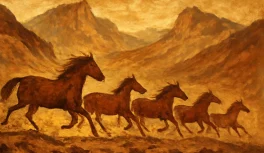
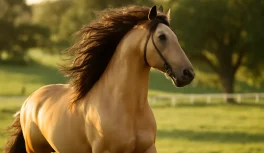
Europe is not the continent that comes to mind when you think of wild horses. The standard image is of Asian steppes or North American prairies — vast landscapes that seem built for free animals. But there are two places in Spain where horses have lived in freedom for so long that separating them from the land would mean separating part of that land’s soul.
One is in the far south, where the Guadalquivir and Guadiamar rivers form a delta of marshes and forests before emptying into the Atlantic. The other is in the far north, in the mountains that separate the Basque Country from the Castilian Meseta. These are completely different worlds — in landscape, in climate, in history. But in both, horses continue to live as they lived before any human documentation.
The Marismeño: Ghost of the Doñana Marshes
Doñana National Park is one of Europe’s most important ecosystems. Protected since 1969 as a national park — after decades of pressure from conservationists fighting development projects that threatened to transform the delta — it shelters more than 300 bird species, the world’s largest population of Iberian lynx, and a system of marshlands, sand dunes, and cork oak forests that has no parallel on the continent.
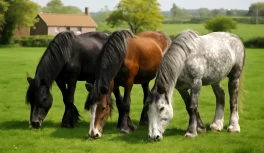
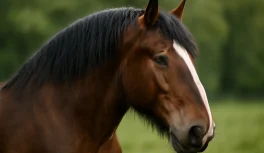
This is where the Marismeño horses live (marismeños, or marsh horses). They are medium-sized animals, usually dark-coated — bay, chestnut, or black — with an expressive head that recalls the morphology of ancient Iberian horses. Their build suggests kinship with the primitive Iberian breeds that inhabited the Peninsula before centuries of crossbreeding with Arabian and Barb horses reshaped the regional gene pool.
Where Do the Marismeño Horses Come From?
The documented history of the Marismeños is fragmented and uncertain — which, paradoxically, strengthens the hypothesis that their presence in the delta predates any records. Medieval documents contain references to horses in the marshes. Iberian iconography of primitive horse breeds depicts animals morphologically similar to the Marismeños of today.
DNA analysis conducted in recent years confirmed that Marismeños display a genetic composition distinct from modern Iberian domestic breeds — including the PRE (Pura Raza Española), broadly considered the Iberian equine standard. This points to a degree of genetic isolation that may be very old — possibly centuries without significant outside contributions.
Some researchers propose that Marismeños represent a primitive lineage that preserved characteristics of pre-Roman equine populations on the Iberian Peninsula. If that hypothesis holds, the horse galloping through the marshes of Doñana is literally a genetic window into the horses that Carthaginians and Romans encountered when they first arrived in Iberia.
Life Inside Doñana Park
The park’s environment is challenging in specific ways. The marshes flood in winter and dry in summer, creating dramatic swings in the availability of pasture and water. Andalusian summer heat is intense; Atlantic winds in winter can be cutting. Coexisting with lynx, vultures, wild boar, and an exceptional density of wildlife creates constant pressures and interactions.
The Marismeños have fully adapted to that environment. Their grazing behavior is highly seasonal — moving to higher ground during the winter floods, descending into the marshes as they dry out in spring, tracking the availability of fresh pasture. The senior mare of each band knows those routes and leads the group’s movements.
The population is small and vulnerable. Recent estimates put the total at somewhere between 200 and 400 animals, distributed among multiple bands throughout the park. Severe droughts — like those that have struck the Iberian Peninsula in recent years — cause elevated mortality. In an exceptionally dry year, losses can number in the dozens.
Do Iberian Lynx Prey on the Marismeño Horses?
It’s a reasonable question, given that the park holds the world’s largest lynx concentration. The answer is: rarely. The Iberian lynx (Lynx pardinus) is a highly specialized predator — its diet is more than 90 percent European rabbit, and its morphology and hunting behavior are optimized for that prey. Very young foals or weakened animals may occasionally be targeted, but lynx do not represent a significant predation pressure on the horse population.
The greatest threat to the Marismeños doesn’t come from inside the park — it comes from the edges: agricultural expansion, water diversion from the rivers that feed the marshes, nitrate pollution from the intensive farming operations surrounding the park. All of these factors affect the quantity and quality of the marshland that the horses depend on.
The Pottoka: Horse of the Basque Mountains
Roughly 500 miles (800 km) to the north of Doñana, the mountains of the Basque Country rise sharply from the Cantabrian coast and create a damp, green, cold microclimate that couldn’t be more different from the dry heat of the Andalusian marshes. This is where the Pottoka lives (pottok in Basque, pronounced “potok”) — a small pony that has grazed the slopes of the Western Pyrenees since time immemorial.
The Pottoka is a small animal — between 47 and 58 inches (120 to 147 cm) at the withers, classified as a pony by international standards — with a compact body, thick mane, and short, strong legs adapted to rocky terrain. The coat is typically dark: black, chestnut, or dark bay, often with minimal markings. The head is light and expressive, with short ears and alert eyes.
Is the Pottoka Truly Wild?
The distinction between wild, semi-wild, and free-range breed is especially nuanced in the case of the Pottoka. Historically, populations lived free in the mountains year-round, descending occasionally to villages for the annual roundup — where they were counted, branded, and excess foals selected for sale or use.
This model — called extensive high-altitude ranching — existed in several mountainous regions of Europe and represented a way of harvesting high-mountain pasture resources that domestic cattle could not efficiently use. The horse, more cold-hardy and capable of pawing through snow to reach buried grass, was the ideal animal for those environments.
In recent decades, the modernization of ranching and the abandonment of traditional mountain practices have dramatically reduced both the number of animals and the number of breeders who maintain the traditional system. The Pottoka grazing free on the peaks of the Cantabrian Cordillera is rarer today than it was at the start of the 20th century.
Cave Paintings and the Ancient Record of the Pottoka
Some of the most compelling evidence for the Pottoka’s antiquity comes from an unexpected direction: the Paleolithic cave paintings of the Basque Country and Cantabrian region. Altamira, Ekain, Lascaux — the horse depictions in these paintings, dated to between 15,000 and 30,000 years ago, show animals with morphological characteristics strikingly similar to the modern Pottoka.
The same relatively broad head, short muscular neck, upright mane, compact body. Researchers who compared these images with photographs of living Pottokas have been struck by the resemblance. That doesn’t prove the Pottoka is genetically identical to the Paleolithic horse — but it does suggest that the adaptive pressures of the Cantabrian environment have favored similar morphologies across millennia.
What the Pottoka’s DNA Reveals
Genetic analyses published in the last decade identified that the Pottoka carries mitochondrial haplotypes — DNA patterns transmitted through the maternal line — that are rare in modern domestic breeds. These haplotypes may represent a connection to pre-domestication equine populations of Western Europe.
If that interpretation is correct, the Pottoka is not merely an ancient breed — it is a repository of equine genetic diversity that may have been lost across nearly all of Europe as modern breeds spread and selective breeding standardized the gene pool.
Cultural Presence: The Pottoka in Basque Identity
For the Basque people, the Pottoka is far more than a horse. It is a symbol of identity and of the resilience of a culture that has survived millennia of external pressures while maintaining its unique language, traditions, and ways of life. The mountain horse that endures cold and isolation without human help resonates with something deep in the Basque collective identity.
Traditional fairs and markets feature Pottoka exhibitions, sales, and competitions. The Pottoka race is a traditional event. The image of the horse on the mountain appears repeatedly in Basque art and literature.
Conservation programs for the breed have the backing of the Basque autonomous government and of breeder associations that recognize both the genetic and cultural value of the animal.
Two Horses, One Shared Challenge
The Marismeño and the Pottoka are different animals in almost every respect — size, morphology, habitat, documented history. But they face the same fundamental challenge: surviving in the 21st century as genetically vulnerable populations, on land pressured by competing uses, without the numerical scale that would make extinction unlikely.
Both also share a value that goes beyond biological conservation: they are living witnesses to histories that Spain — and Europe — took millennia to write. And they are animals that, when seen free in their own landscapes, remind you that some parts of the world still belong to things older than us.