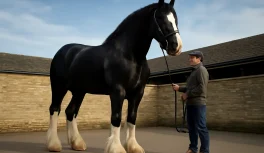
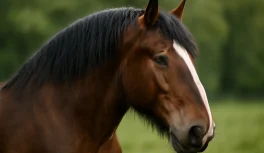
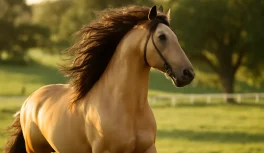
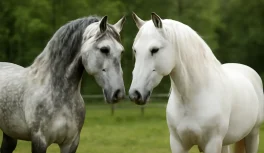
Someone visiting a Shire horse breeding farm for the first time rarely leaves without a feeling that is difficult to name — something between admiration and privilege. There is something extraordinary about being near these animals: the combination of overwhelming size and gentle manners, the beauty of watching a creature that weighs close to a ton move with unhurried grace. The modern Shire horse has survived near-extinction and found its place in the contemporary world — a different place from the one it occupied in the 19th century, but no less meaningful.
The Modern Breeder’s Profile
Who breeds Shire horses today and what motivates them?
The 21st-century Shire breeder rarely raises horses for heavy work. The demand for agricultural or urban draft horses has essentially disappeared in the countries where the breed is most actively bred. What motivates modern breeders is a combination of historical preservation, competitive showing, genuine passion for the breed, and in some cases, alternative uses like equine therapy and agritourism.
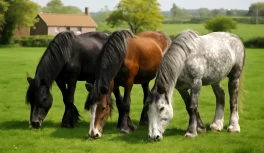
In the United Kingdom, most Shire breeders are farmers with a passion for the breed and enough land to support it. Keeping a Shire requires serious space — an animal that consumes 35 to 45 pounds of hay daily, plus concentrated feed, needs generous pasture. Stabling must be large — a standard stall sized for medium breeds is uncomfortable for an adult Shire.
What role does the American Shire Horse Association play in the breed’s global survival?
In the United States, the American Shire Horse Association maintains the American stud book and organizes regional and national shows. The American market was part of what saved the breed during the 1970s and 1980s, and it continues to be one of the world’s most active in terms of new annual registrations.
Registration and Genealogy
What does it take to register a Shire horse in the official stud book?
For a Shire to be officially recognized, it must be registered in the stud book of the Shire Horse Society (for animals born in the United Kingdom) or the equivalent association in its country of birth. Registration requires both parents to be registered Shires and includes documentation of genealogy, registration number, and the animal’s physical characteristics.
The British stud book is among the oldest in the world — it has existed since 1878. This longevity has significant scientific and historical value: it is possible to trace a modern Shire’s genealogy more than 100 years back, identifying the bloodlines that most influenced the breed’s development.
Why is inbreeding such a critical concern for Shire horse breeders today?
Genetic diversity is monitored with increasing care. Following the 20th-century population bottleneck — during which the breed fell from over a million animals to fewer than 1,000 — the available gene pool is smaller than would be ideal. Responsible breeders consult genealogies before deciding on breeding pairs to avoid excessive inbreeding.
Shows and Competition: Where the Best Meet
What makes the Shire Horse Spring Show the most important event for the breed?
The Shire Horse Spring Show, held annually in the United Kingdom, is the world’s largest event dedicated to the breed. It brings together hundreds of animals from across the country and abroad, evaluated by certified judges in categories ranging from young foals to mature animals.
Judging categories include: young males (yearling and two-year-old colts), young females (yearling and two-year-old fillies), stallions aged three and over, mares aged three and over, and pairs — two animals presented together. Beyond conformation, there are in-hand and turnout classes that evaluate not only the animal but the complete presentation of horse, harness, vehicle, and handler.
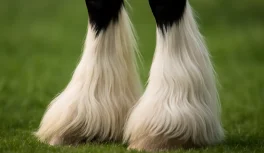
Show preparation begins weeks in advance. Feathering is washed and treated. The coat is brushed to a mirror finish. Hooves are oiled. Harness — if the animal is being presented in a turnout class — is cleaned and treated with leather conditioner. Show day begins hours before any class, with the final preparation of the animal in its stall.
What do championship results mean for a Shire horse’s commercial value?
Class winners receive ribbons, trophies, and the designation of Champion or Reserve Champion. More significantly, a show champion’s market value increases substantially, and its offspring are sought by breeders working toward genetic improvement.
Contemporary Uses Beyond Competition
How are Shire horses used in equine-assisted therapy and why are they suited for it?
The modern world has found new and unexpected functions for the Shire that extend well beyond showing.
In equine-assisted therapy — therapeutic programs that use the horse-human relationship for medical and psychological benefit — the Shire has interesting characteristics. It is large enough to support the weight of adults with physical disabilities, and its walk movement — broader and more rolling than smaller horses — produces specific sensory stimuli with documented therapeutic value. Equine therapy centers in the United Kingdom, Canada, and Australia use Shires or Shire crosses regularly.
Where can visitors encounter working or ceremonial Shire horses today?
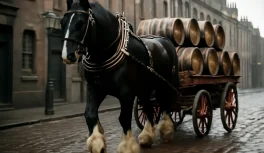
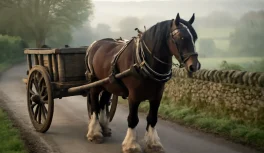
Agritourism is another niche. Carriage rides pulled by Shires are popular attractions at heritage farms, country estates, and historic events. Some traditional breweries maintain one or two Shires for marketing events, parades, and celebrations that reinforce brand identity.
In niche agricultural contexts — organic production, sustainable viticulture, selective forestry — draft horses are returning in small numbers. In these applications, the strength and ability to work terrain where tractors cannot go makes the Shire and other heavy horses a practical alternative, not merely a nostalgic one.
A Breed With a Future
Is the Shire horse on a path toward genuine long-term recovery?
The Shire will not return to a million animals — that era is gone. But the breed is no longer on a trajectory toward extinction. The breeder community is more aware and better organized than at any previous point in history. Public interest is genuine and growing. And the animals themselves, through their physical grandeur and characteristic gentleness, continue to win new admirers whenever someone encounters them for the first time.
The future of the Shire is not in agricultural fields or industrial docks. It is in the hands of passionate breeders, in equine therapy programs, in conformation shows, in heritage parks, and in agritourism farms. It is a different future from the past — but it is a real one.