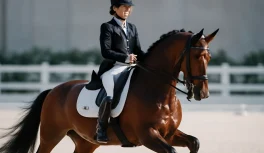
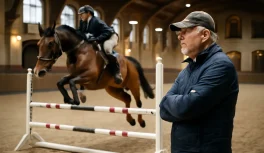
There is a persistent misconception about polo: that all the physical work is done by the horse. Anyone who has played — even at beginner level — knows this is not so. Polo demands from the rider a combination of strength, coordination, spatial awareness, and endurance that few equestrian sports can replicate. And the polo pony, for its part, is one of the most physically tested athletes in the animal world. Understanding what polo demands of each is understanding why the sport transforms those who practice it.
Polo is athleticism disguised as elegance
The image of polo — British elegance, uniformed riders, spectators with champagne — can be misleading about the sport’s physical nature. A session of four chukkers of polo represents physical effort comparable to an intense functional training session, with the additional demands of dynamic balance, reflexes, and decision-making under constant pressure.
Studies on polo’s physical demands show that players reach heart rates of 150 to 180 bpm during chukkers — an intense aerobic zone for most adults. This is before accounting for the isometric muscular effort of maintaining position on a horse at speed.
What polo demands from the rider
Core and stability: The polo rider spends each chukker in constant balance on an animal that accelerates, decelerates and changes direction abruptly. The core — deep abdominals, lumbar, and hip — is the central stabilization system. Without a strong core, the rider loses balance when executing the swing and compromises both performance and safety.
Leg strength: The legs are the rider’s “seat” — the anchor that keeps them in the saddle during sudden movements. Inner thighs, glutes, and quadriceps work continuously. Polo players frequently cross-train with pilates, yoga, and functional fitness to strengthen these structures.
Coordination and limb dissociation: Holding the reins with one hand while executing the swing with the other, simultaneously adjusting leg position to guide the horse — this is an exercise in limb dissociation that challenges the nervous system even in experienced athletes.
Peripheral vision and game-reading: At speed, the rider must simultaneously locate the ball, teammates, opponents, and surrounding horses. Peripheral vision and the ability to process information while in motion are skills that polo trains intensely and continuously.
Pressure resistance: Polo is decision-making under stress — physical, temporal and competitive. The ability to maintain clarity and control when the horse is at maximum speed and the score is tight is a mental skill that the sport develops progressively over time.
Cardiovascular demand
A seven-minute chukker at match pace puts the rider in continuous cardiovascular effort. The alternation between high-intensity sprints and strategic positioning resembles the pattern of a futsal or basketball game — intervals of high intensity interspersed with periods of lower effort.
Players who arrive at polo in good cardiovascular condition adapt more quickly to the sport’s pace. Running, swimming, and cycling are common supplementary activities among polo practitioners looking to improve performance.
Conditioning the polo pony
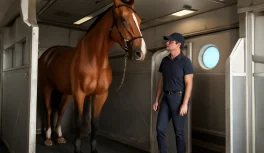
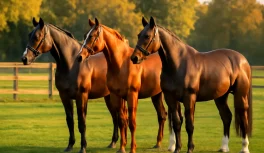
The polo pony is a sprint athlete — the demand is for intense short-duration explosions, not long-distance endurance. Conditioning reflects this:
Cardiovascular preparation: Before the season, horses go through weeks of aerobic work — long canters at moderate pace to build cardiovascular base and gradually strengthen tendons and ligaments.
Sprint work: Progressively, training incorporates short sprints that simulate the game’s accelerations. The horse’s cardiovascular system and anaerobic metabolism are engaged progressively, never abruptly.
Maneuverability and responsiveness: Beyond physical conditioning, horses work on maneuverability — quick stops, controlled turns, response to one-handed commands. This technical work must be maintained throughout the entire season.
Monitored recovery: Between training sessions and matches, recovery is tracked — limb temperature, post-exertion heart rate, muscle quality. Top-level polo ponies have veterinarians and physiotherapists dedicated to their care.
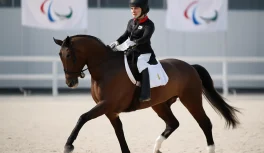
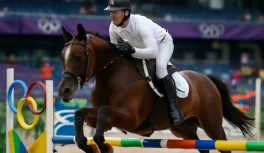
The relationship between polo and other equestrian disciplines
Polo has an interesting side effect: it improves riding in other disciplines. Riders who practice polo regularly report improvements in:
Balance and seat: The demand to maintain position in high-speed, unpredictable situations trains seat independence in ways classical dressage exercises rarely replicate.
Lightness of hands: Using one hand to guide a horse at speed develops contact sensitivity and communication nuance that benefits any equestrian discipline.
Reading the horse: Polo exposes the rider to high-intensity situations that quickly reveal nuances of the animal’s temperament and behavior — and trains rapid response to those nuances.
Polo as human development
Beyond the physical dimension, polo builds characteristics that transcend sport: patience with the process of development — one’s own and the horse’s —, the ability to work as a team under pressure, and the skill of moving on from mistakes quickly. In polo, dwelling on an error for more than two seconds means losing the next play.
It is a sport that demands real commitment — and that gives back, in equal measure, real development.