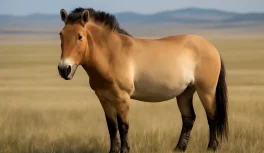
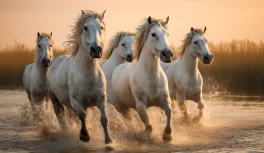
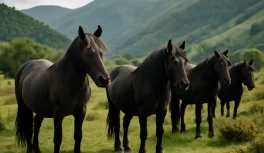
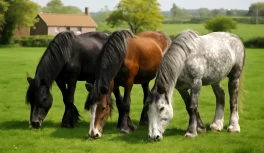
Part of what makes the mustang so visually striking is the range of colors and patterns you encounter across different herds. There is no single “type” of mustang coat color — and that’s not a flaw. It’s exactly what tells the genetic story of these horses: five centuries of crossbreeding, natural selection, and the mark of different breeds written in coat, mane, and hide.
Why Are Mustangs So Diverse in Color?
The answer lies in origin. Mustangs descend from horses brought to the Americas by European colonizers — primarily Spanish, starting in the 16th century — that over centuries mixed with other escaped or released horses from settlers, ranches, and Native American tribes.
Each wave of introduction brought new coat-color genes. Spanish horses (with strong presence of duns, grullos, and Sorraia-type coloring), working horses (darker, heavier builds), Thoroughbreds (contributing bay and chestnut genes), Quarter Horses (compact and uniform) — all of it blended over generations, creating the phenotypic spectrum visible today.
The Most Common Coat Colors in Mustang Herds
Bay
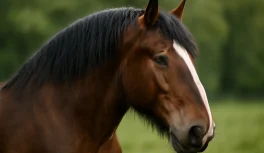
Brown to reddish body with black mane, tail, and lower legs. One of the most frequent colors in the horse world broadly, and it appears regularly throughout mustang herds.
Sorrel / Chestnut
Copper to orange tones, with mane and tail of similar or lighter color. Very common in populations with Quarter Horse influence.
Black
Relatively less frequent but present. Solid black from body to mane, with no markings.
Gray
Born dark and lightening progressively over the years — sometimes nearly white by maturity. Often confused with “white,” though true white is rare in mustangs.
Roan
A mix of white and colored hairs — bay roan, strawberry roan, blue roan. The result is a distinctive, highly valued pattern among breed enthusiasts.
Rare and Highly Prized Colors
Grullo
A blue-gray tone, with zebra stripes on the legs and a dorsal stripe running down the back. Strongly associated with Spanish heritage. It’s one of the most sought-after colors among collectors and enthusiasts of colonial Spanish horse bloodlines.
Dun
Sandy-gold body with leg stripes, a dorsal stripe, and dark mane and tail. The Kiger Mustang of Oregon is globally recognized for its high proportion of dun coloring — and its connection to original Spanish bloodlines. The character Spirit from the DreamWorks film was based on the Kiger type.
Pinto / Tobiano
Irregular white patches over a base color. The influence of pinto-colored horses from Native American tribes — who selectively bred for this pattern — explains its consistent presence in certain herds.
Palomino
Golden coat with white mane and tail. Present in herds, though less common. Highly valued aesthetically.
Herds With Unique Genetic Characteristics
Kiger Mustangs (Oregon)
Discovered in the late 1970s, Kigers drew attention for their unusual homogeneity and the strong presence of dun and grullo coloring. Genetic studies suggested a connection to original Spanish colonial bloodlines, sparking significant scientific and cultural interest.
Pryor Mountain Mustangs (Montana / Wyoming)
Another population with strong evidence of colonial Spanish heritage. Smaller in stature, with coats including dun, grullo, and Iberian-type patterns.
Sulphur Horses (Utah)
Also known for visual characteristics linked to the Colonial Spanish Horse. Many display dun markings and a conformation that traces back to the Iberian type.
What Coat Color Reveals About a Herd’s History
For researchers and enthusiasts, a mustang’s coat isn’t just aesthetics — it’s historical data. Populations with high concentrations of dun and grullo suggest connection to older Spanish bloodlines, while herds dominated by uniform sorrel and bay may reflect more recent influence from modern American breeds.
It’s not an exact science — coat genetics are complex and phenotypic expression can mislead. But the combination of genetic analysis, conformation, and coat pattern helps researchers trace the origins of each herd.
Color Draws You In — Character Keeps You
For anyone considering mustang adoption, the wide range of coat colors is part of the search. But experienced hands offer this advice: the coat is what catches your eye, but temperament, conformation, and herd history are what determine the horse you’ll actually have.
Color calls from a distance. Character is what lasts.