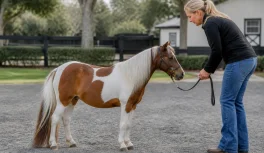
The idea of keeping a miniature horse as a companion animal has an undeniable appeal. These are intelligent, affectionate, beautiful animals — and unlike what many people assume, they don’t require the same monumental space as a full-sized horse. This is precisely why, over the past decade, the miniature horse has firmly established itself as one of the most sought-after choices for people who want an equine but live on smaller properties, in semi-rural areas, or who are simply looking for a more accessible alternative to a traditional horse.
But keeping a miniature horse as a pet is not at all like keeping a dog or a cat. These animals have complex physical, social, and medical needs that require planning, dedication, and a long-term commitment. Understanding those needs before adopting can make the difference between an extraordinary experience and a mistake that harms the animal.
Why People Fall for the Miniature Horse as a Companion
Before getting into the requirements, it’s worth understanding what makes miniature horses so compelling as companion animals:
A genuine bond with humans: well-socialized miniature horses develop real emotional connections with the people who care for them. They recognize voices, respond to their names, seek out physical contact, and communicate clearly when they’re happy or uncomfortable. It’s a level of interaction that most common pets simply don’t offer in the same way.
Intelligence and trainability: these animals learn commands, routines, and even tricks with surprising ease. Many owners describe their miniatures learning to open gates, follow verbal cues, and execute behavioral sequences with minimal reinforcement.
Longevity: miniature horses can live between 25 and 35 years — a different kind of commitment than dogs or cats, but also one that means decades of companionship with the same animal.
Suitability for children: the reduced size and docile temperament make miniature horses especially well-suited for interaction with children. Many owners describe their miniature as “the childhood horse dream that finally became accessible.”
What the Law Says
Before anything else practical, it’s essential to verify local regulations — and these vary significantly:
United States: rules vary by county and municipality. In many suburban American areas, miniature horses are classified as livestock with different requirements than household pets. Some cities explicitly permit mini horses as pets on lots of a minimum size (typically around 1 acre / 4,000 m²). Check local zoning ordinances before investing in an animal and infrastructure.
United Kingdom: miniature horses require an equine passport regardless of size. Transport, movement records, and veterinary requirements follow standard equine regulations.
Europe: regulations vary by country. In many European nations, keeping equines in residential areas is restricted by animal welfare rules requiring minimum space per animal.
Practical advice: consult your local authority, rural council, or homeowners’ association before committing to the purchase.
How Much Space Does a Miniature Horse Actually Need?
This is probably the most important question — and the one that most often generates unrealistic expectations.
The minimum recommended by equine welfare specialists is roughly 5,400 square feet per animal, with covered shelter of at least 65 to 97 square feet. That space must allow the animal to walk, trot, and move freely — not simply stand still.
For two animals (the minimum recommended, since horses are herd animals), the ideal is 8,600 to 10,800 square feet of available area.
This translates to a modest property in a rural or semi-rural setting — but not to an apartment or a typical urban backyard. Miniature horses kept in excessively small spaces develop both physical problems (muscle atrophy, metabolic disorders) and behavioral issues (stereotypies such as circle-walking, wood-chewing, or head-bobbing).
Real pasture — with actual grass — is ideal but not mandatory. A dirt or sand paddock works as long as the diet is supplemented with quality hay.
The Companionship Question: Two Is the Minimum
One point frequently overlooked by people new to miniature horses is the need for companionship. Horses are herd animals — social at the most fundamental level of their nature. A miniature horse kept alone can develop anxiety, depression, and stereotypic behaviors that compromise health and well-being.
The most natural solution is to keep two miniatures. But it’s not the only one: goats and sheep are widely used as companions (inexpensive to keep, easy to manage); other small ponies also work well.
Companionship does not replace human interaction — but the reverse is equally true. An animal whose owner is present for one hour a day and alone for the other 23 needs some form of animal company.
Feeding: Simple but Demanding
The diet of a miniature horse kept as a pet is simpler than that of a competition horse, but still requires consistent attention:
Low-energy hay (Timothy, Bermuda, or similar grass hay): the foundation of the diet. Offer in controlled amounts — roughly 1.5 to 2% of body weight in dry matter per day. For a 220-lb (100 kg) miniature, that’s about 3.3 to 4.4 lbs (1.5–2 kg) of dry hay daily.
Mineral salt: loose or block mineral salt available at all times.
Fresh clean water: a minimum of 2–4 gallons (10–15 liters) per day, more in hot weather or after exercise.
No concentrate without a reason: a healthy miniature horse in maintenance doesn’t need grain or pelleted feed. Giving unsupervised feed or treats is the most direct route to obesity and laminitis.
Avoid: high-sugar grass (especially lush spring pasture), excess fruit, bread, sugar, cookies. These apparent “treats” are real metabolic risks.
Veterinary Care That Cannot Be Skipped
Even as a pet, the miniature horse requires regular medical care that must be factored into any responsible owner’s budget:
Hoof trimming: every six to eight weeks, regardless of shoeing. Untrimmed hooves grow unevenly, causing pain and serious orthopedic problems.
Dental care: evaluation and floating by an equine veterinarian every six to twelve months. Teeth that don’t wear correctly cause difficulty eating and weight loss.
Vaccinations: maintain a complete equine vaccination schedule (influenza, tetanus, rabies, and others as regionally recommended).
Deworming: every three to six months, rotating active compounds. Parasites are one of the leading causes of digestive problems in equines.
Annual veterinary checkup: full examination including weight, body condition score, and overall health assessment.
Are Miniature Horses Good with Children?
Generally yes — with the appropriate caveats. A well-socialized, well-trained miniature horse is an extraordinary companion for children. They learn routines quickly, tolerate handling, respond to commands, and rarely display aggressive behavior when treated correctly.
The important caveats:
- Never leave a young child unsupervised with the animal, even a miniature. A kick or bite from an 180-lb (80 kg) animal can injure a child.
- Teach children to respect the animal’s space: no running around, no shouting, no touching unexpectedly from behind.
- Involve children in daily care (offering hay, brushing, cleaning hooves with supervision): this builds responsibility and strengthens the bond.