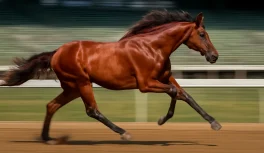
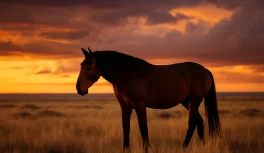
Between the world tours, the recording sessions, and the stadium performances, some of the biggest names in music have built a second life that almost nobody talks about. These are the famous musicians who raise horses — artists who exchange the noise of the studio for the quiet of a barn, who found in horses something that no stage, however large, can replicate.
The connection between music and horses isn’t new, and it runs deeper than a shared aesthetic. It has roots in American country and folk traditions, where land, animals, and authenticity have always been central. But it extends far beyond any single genre: rock legends, pop icons, soul artists, and R&B pioneers have all developed relationships with horses that define who they are when the cameras aren’t rolling.
Lady Gaga: The Most Theatrical Artist Finds Stillness in the Barn
Lady Gaga built one of the most elaborately constructed public personas in the history of popular music. The costumes, the performance art, the constant boundary-pushing between provocateur and pop star — all of it defines an artist who seems perpetually in motion.
Off stage, the reality is different. Lady Gaga keeps horses as a central part of her private life — a fact she rarely discusses publicly, which makes the choice more revealing, not less. For an artist who shapes every detail of how she’s perceived, the barn is one of the few spaces where none of that applies. The horse doesn’t know her name. It responds to her energy, her steadiness, her presence — not her discography.
Why Do High-Performance Artists Connect So Deeply With Horses?
The answer may be structural. Riding demands full attention in a way that performing — for all its intensity — doesn’t demand in quite the same way. On stage, you can lose yourself in the rehearsed arc of a show. In the saddle, a momentary loss of focus is immediately communicated to a 1,200-pound animal. The horse is the most honest mirror available.
For artists who spend their working lives performing and managing perception, that kind of unfiltered feedback is both uncomfortable and irreplaceable.
Lenny Kravitz: Taking It All the Way to Bahia
Lenny Kravitz didn’t just develop a fondness for horses — he built a life around the principles that drew him to them. His property in Bahia, Brazil, is where horses are part of a daily routine deliberately constructed as an alternative to the world he’s most famous in.
Kravitz has spoken in interviews about Brazil as a space of reconnection — with land, with slowness, with what’s essential. Horses appear in that context not as luxury accessories but as part of a philosophy he actually lives. A musician who spent decades fusing rock, soul, and funk in ways that continue to influence artists worldwide chose, for his private life, a place where the most important relationship is with an animal that won’t respond to fame.
Willie Nelson: Country’s Patriarch, Country’s Way of Life
Willie Nelson is perhaps the musician who most completely embodied the fusion of art and rural life. The patriarch of American country music doesn’t just sing about ranches and horses — he has them, tends to them, and has integrated them into an identity that makes it impossible to separate the artist from the man.
Nelson built his life deliberately outside the Nashville machinery, on a Texas ranch where the daily rhythm includes horses, friends, music, and a kind of peace he’s insisted on for decades. Well into his nineties, that connection to land and animals has never weakened.
What Nelson’s example suggests is something that younger musicians often discover later: the connection to animals and to nature isn’t a counterpoint to the artistic life — it’s frequently what sustains it. The silence of the barn at dawn is often exactly where the next song begins.
Shania Twain and the Canadian Countryside She Never Left Behind
Shania Twain grew up with horses in rural Canada, in conditions that were anything but glamorous. On subsistence farms, horses work — the relationship was functional before it was affectionate. When her career launched her into one of the biggest names in country music of the 1990s, she didn’t leave that world behind. She returned to it.
The Swiss property where she lived for years after achieving global success included horses. The image isn’t that of a celebrity who acquired an expensive hobby — it’s a woman who recognized in the countryside and in animals something that success hadn’t replaced, and made sure it stayed in her life.
Bruce Springsteen: The Boss of the Farm
Bruce Springsteen is, in almost every musical sense, an urban artist. His most iconic songs speak of industrial towns, factories, and a specifically American working class. But his actual daily life happens, in significant part, on a New Jersey farm where horses are a constant presence.
His wife, Patti Scialfa, is an active rider. The family’s farm isn’t a backdrop — it’s where they live. For the Boss, horses entered as part of a life built to deliberately contrast with the scale and noise of stadiums, and they stayed.
What Music and Horses Share
The parallels between music and riding go beyond surface aesthetics.
Music, at its core, is nonverbal communication — it transmits emotion and state through sound, bypassing the rational mind. The interaction between rider and horse is also fundamentally nonverbal: posture, rhythm, breath, intention. Musicians who work in improvisation describe riding in terms almost identical to how they describe jazz: you propose, the other responds, the conversation develops in real time.
There’s also the question of listening. Musicians trained to hear with precision — the pitch of an instrument, the dynamics of a band, the timing of a phrase — develop a sensitivity that transfers naturally to horsemanship. Many high-level riders describe what they do as “listening to the horse with your body.” That kind of embodied listening is something musicians already know. They just recognize it in a new context.
What connects Lady Gaga, Lenny Kravitz, Willie Nelson, and Bruce Springsteen isn’t fame — it’s the capacity to recognize, outside the spotlight, what actually keeps them grounded.