One ball, a mallet, eight riders on the field — and a game with more than two millennia of history. Equestrian polo is one of the oldest team sports still played today, born on the steppes of Central Asia and now contested in over 80 countries, from the grass fields of Argentina to the floodlit arenas of the United Arab Emirates.
Calling it “the sport of kings” is no mere metaphor. Alexander the Great played polo. Persian and Mughal emperors competed on royal grounds. Prince Harry was one of the most recognizable faces of British polo for over a decade. But polo is also a sport that has evolved, broadened its reach, and found new formats — reaching riders and spectators in contexts ancient emperors could never have imagined.
An origin more than 2,000 years old
The earliest evidence of polo comes from Persia — present-day Iran — around the 6th century BC. The game was played by nomadic horsemen of the Central Asian steppes as a form of military training and competition. The name “polo” is derived from the Tibetan word pulu, meaning ball.
The sport spread rapidly across the region: from Persia to India, from India to China and Japan, and into Turkey and the Middle East. At royal courts of the era, polo was a symbol of prestige and discipline — and competition between royal teams was common.
In the 10th century, the Persian poet Ferdowsi described polo matches in his epic Shahnameh. In the 11th century, the historian Biruni documented its rules. Polo was not just a sport — it was part of the culture and identity of entire empires.
Polo reaches the Western world
The modern story of polo begins in India, with British military officers who discovered the sport during the 19th century. The Silchar Polo Club, founded in 1859 in the state of Assam, is considered the oldest polo club still in operation in the world.
The British did not just adopt polo — they codified it. The first formal rules were written in 1874, and the sport arrived in England around the same period. From there, it spread to the United States, Argentina, Australia and the rest of the world.
In Argentina, polo found particularly fertile ground. The gaucho tradition, the quality of Criollo horses, and the abundance of land created ideal conditions for developing the sport. Argentina would become, within less than a century, the dominant power in world polo — a position it holds to this day.
How the game works
Polo is played on a grass field measuring up to 270 meters long by 180 meters wide — the largest field in any team sport. Two teams of four players compete for possession of a rigid plastic ball, 8 to 8.5 centimeters in diameter, using mallets with bamboo or carbon fiber shafts and wooden heads.
A match is divided into periods called chukkers — generally six to eight chukkers of seven and a half minutes each in high-level competition. Between each chukker, players change horses: a single animal cannot sustain more than two consecutive chukkers at competition pace.
Players hold positions numbered 1 through 4. Number 1 is the primary attacker; number 4 (or back) is the anchor defender. Numbers 2 and 3 share offensive and defensive roles as the game unfolds.
The handicap system is central to polo. Each player carries a handicap ranging from -2 to +10, where +10 represents the pinnacle of excellence — rarely achieved. The team handicap is the sum of its four players, and the difference between teams determines a goal head start at the opening, ensuring competitive balance.
The polo pony — heart of the game
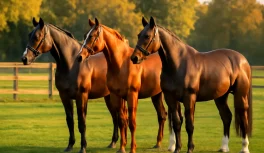
Despite the name, the horses used in polo are full-sized animals — the term “pony” is historical, dating from when a height limit existed that was abolished in 1919. The modern polo pony is typically a cross between a Thoroughbred and local breeds, especially the Argentine Criollo.
What defines a great polo pony is not speed alone — it is the combination of explosive acceleration, the ability to stop instantly, agility through tight turns, and a temperament that responds to the rider without stress. It is a complete athlete.
In high-level matches, a player may use four, five or even six different horses throughout a game. The welfare and conditioning of the animals are as critical as human skill — and the best players invest considerably in building and maintaining their string of horses.
The world’s great tournaments
Polo has a rich international calendar, with tournaments that bring together the finest teams in the world.
The Argentine Open, held each November at Palermo in Buenos Aires, is considered the most prestigious polo tournament on earth. The Cowdray Gold Cup in England and events at the Guards Polo Club near Windsor define the British polo summer. In the United States, the US Open Polo Championship, held in April at Wellington, Florida, is the premier American event and attracts teams from across the globe.
The culture of polo
Polo has a culture of its own that extends beyond the game. The best-known tradition among spectators is the divot stomp — during the half-time break, the public is invited onto the field to replace the chunks of turf (divots) lifted by horses’ hooves. It is as much a social ritual as a practical one.
The polo shirt — which owes its name to the sport — the helmet, boots and white breeches form a uniform that blends function with cultural identity. The grandstands at high-level events are stages for social gatherings, fashion and networking, which historically contributed to the sport’s elite image. That image, however, increasingly coexists with more accessible formats like arena polo, which opens the sport to new audiences.
Polo today: between tradition and expansion
21st-century polo navigates the tension between preserving its heritage and broadening its reach. Arena polo — played indoors or in enclosed venues, with three players per team on a smaller field — has made the sport viable in urban settings and regions without a tradition of large open fields.
China, the United Arab Emirates, Mexico and South Africa are among the countries that have significantly expanded their polo bases in recent decades. Newer formats such as beach polo and snow polo attract audiences who had never previously considered the sport.