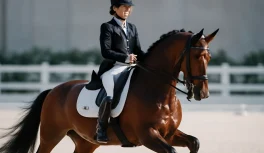
To truly understand the Chilean Criollo horse, you need to understand the Chilean rodeo first. This isn’t just a competition — it’s the test that shaped the breed over centuries and remains the ultimate measure of partnership between horse and rider. While the term “rodeo” may conjure images of bucking bulls and lasso tricks, the Chilean version is something entirely different: a precise, team-based discipline built on control, timing, and an almost silent communication between two athletes — one human, one horse.
Where Did Chilean Rodeo Come From?
The sport has its roots in colonial-era farming. By the 19th century, large Chilean haciendas needed to round up and brand cattle before winter, and they needed horses fast enough, agile enough, and brave enough to do it. What started as a practical task evolved into a structured competition.
In 1844, the Federación del Rodeo Chileno was established — making Chilean rodeo the oldest organized equestrian sport in the Americas. From that point on, every generation of breeders used performance in the arena as their primary selection tool: only the best horses won, and only the best passed their qualities on to the next generation.
Today, Chilean rodeo is recognized as Intangible Cultural Heritage of Chile. The competitive season runs from September to May, with the national championship in Rancagua drawing tens of thousands of spectators each year.
How Does a Chilean Rodeo Actually Work?
The fundamental unit of competition is the collera — a pair of riders who work together to control a young steer around the arena. If you’re watching for the first time, forget everything you know about rodeo. There are no timers, no individual events, and no lasso. Everything here is collective, controlled, and scored on precision.
The arena where it all happens is the media luna — a crescent-shaped track with cushioned pads installed along the inside wall. The shape isn’t accidental: it replicates the natural curves of ranch fencing where real livestock work occurred.
What Is the Collera?
The collera is the partnership at the heart of Chilean rodeo. Two riders must work in synchronized silence to guide the steer down the track and press it, with controlled force, against the cushioned wall. The pressure is applied with the horse’s chest and shoulder — never with any rope or physical restraint.
Scoring is based on the quality of each stop: where on the steer’s body the pressure was applied, how cleanly the horse moved, and how well the two riders coordinated. A perfect stop is precise, smooth, and powerful — the result of years of training and trust.
The Volapié and Key Moves
The volapié is the most celebrated move in Chilean rodeo. It happens when the horse surges forward at precisely the right moment to intercept and stop the steer, making contact with the animal’s rear shoulder with controlled force. It demands courage from the horse, perfect timing from the rider, and a level of trust between the two that takes years to build.
Other scored maneuvers include:
- La atajada — a lateral block that prevents the steer from escaping the inside track
- El cambio — a controlled position switch between the two riders without losing contact with the steer
- El quite — a strategic pullback to reset without penalty
Each move is scored by judges who evaluate execution, synchronization, and the overall quality of control.
Why Does the Rodeo Define the Chilean Criollo as a Breed?
The question the sport answers is simple and unforgiving: is this horse functional? Not beautiful — functional. The horse that wins in the media luna has proven:
- Lateral agility — the ability to change direction instantly
- Rear-end power — the strength to absorb hard, precise stops
- Courage — the willingness to approach a moving steer without hesitation
- Intelligence and responsiveness — the ability to read the situation and react to subtle cues
Because selection was always based on arena performance rather than conformation shows, the Chilean Criollo developed into one of the most genuinely functional breeds in the world. Its physical structure was built by the work it performs — not by judges deciding what a horse should look like.
Where Can You Watch a Chilean Rodeo Today?
The official Chilean rodeo calendar spans September through May, with regional championships held across the country before the national finals. The Campeonato Nacional de Rodeo takes place at the Medialuna Monumental in Rancagua, typically in April or May, attracting crowds of over 15,000 spectators.
For international audiences, the Federación del Rodeo Chileno offers live streams and recorded footage of major events through digital channels. Occasional exhibitions and organized demonstrations are also held in Argentina, the United States, and other countries with Chilean immigrant communities.
Has Chilean Rodeo Reached Brazil?
Yes — and its presence is growing. Since the first Chilean Criollo horses were imported to Brazil in the 1970s, a dedicated community of breeders in the southern states has kept the tradition alive, building proper media luna arenas and competing under original Chilean federation rules.
For Brazilian breeders who raise Chilean Criollos, entering a rodeo isn’t just a sporting event — it’s the most honest evaluation of their horses they can get. The same test that Chilean breeders have used for more than 180 years is still the gold standard for the breed, wherever in the world those horses happen to be.