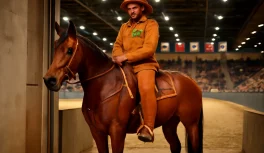
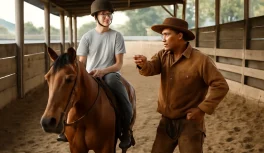
Every great tradition has a practical origin. Vaquejada wasn’t born as a sport — it was born as a solution. In the northeastern Brazilian scrubland, where free-ranging cattle needed to be controlled, branded, and separated, the mounted cowboy was the most efficient tool available. And where there is skill and pride, competition follows naturally.
The history of vaquejada is the story of how a work necessity became a sport, how the sport became culture, and how that culture has resisted — and continues to resist — attempts to erase it.
The Northeastern Sertão and the Birth of the Vaqueiro
To understand the history of vaquejada, you need to understand the environment that created it. The Brazilian semiárido is one of the world’s most demanding territories for cattle ranching. The open caatinga scrubland, water scarcity, extreme temperatures, and thorny vegetation produced cattle that were wild and difficult to manage.
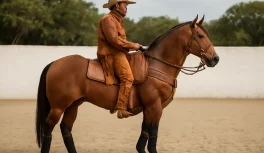
The Portuguese brought cattle to the Northeast in the 16th century, and with them came the first vaqueiros — specialists in handling cattle across open terrain. The northeastern vaqueiro’s skill set was shaped entirely by the sertão: a rider who could chase, corner, and bring down a wild bull with his hands and his horse was a genuinely valuable professional.
Why Did the Bull Need to Be Brought Down?
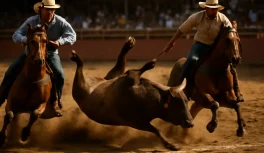
Bringing down a bull wasn’t gratuitous roughness — it was technical necessity. On ranches without adequate handling facilities, wrestling cattle to the ground was the standard way to brand them, treat injuries, and perform basic veterinary procedures. A vaqueiro who could efficiently bring down a wild bull on his side was worth his weight in gold.
The skill was passed from father to son, from rancher to worker. And like any valued technical skill, it inevitably became the subject of competition: who’s the best? Which ranch has the better cowboys?
The First Competitions: Bets Between Ranches
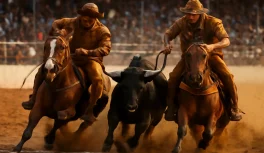
The oldest vaquejada competitions on record were direct challenges between neighboring ranches. Two owners bet against each other: my pair of cowboys can bring down more bulls than yours. The contest ground was open — no arenas, no chalk lines, no formal rules. What mattered was the result.
These informal contests had a celebratory dimension beyond the competitive one. They were held during festive occasions — the June festivals, harvests, feast days of patron saints — and brought workers from multiple ranches together. The sport and the celebration were intertwined from the beginning.
Over time, rules were built through use. The chalk line emerged as a way to objectify scoring: the bull needed to fall within a defined space. The distinct roles of the puxador and batedor developed as the technique of two-person teamwork was refined through repetition.
Formalization: From Open Fields to Regulated Arenas
The process of formalizing vaquejada as an organized sport unfolded progressively through the 20th century. Urbanization in the Northeast — which brought rural workers to the cities — didn’t eliminate the connection to vaquejada; it transformed competitions into urban events that brought the sertão to the city.
The first permanent arenas appeared in the second half of the 20th century, initially in mid-sized interior towns. Standardization of track dimensions — length, width, sand type — was gradual and is now regulated by the governing associations.
The founding of the ABVAQ (Brazilian Vaquejada Association) and the involvement of the ABQM (Brazilian Quarter Horse Association) were milestones in professionalization. With them came regulations, categories, circuits, and a ranking system that turned vaquejada into a viable career path for dedicated athletes.
The Arrival of the Quarter Horse and the Sport’s Transformation
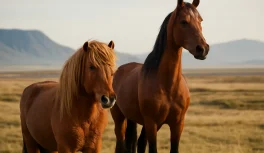
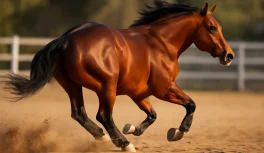
One of the decisive moments in vaquejada’s history was the widespread adoption of the American Quarter Horse in Brazil, beginning in the 1960s and 1970s. The American breed, developed for short-distance racing, revealed qualities ideally suited to the sport: explosive starting speed, powerful hindquarter musculature, high-speed maneuverability, and a manageable temperament.
The Quarter Horse’s adoption raised the sport’s technical level significantly. Faster horses made races quicker and more demanding. Selecting horses specifically for vaquejada became its own industry, with specialized breeding farms, auctions, and growing market values.
Vaquejada on Television and in Popular Culture
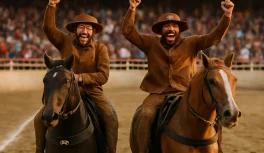
The expansion of vaquejada beyond the Northeast was significantly aided by media coverage. Regional television brought competitions into homes across Brazil, creating fan bases and producing stars. Champion pairs became regional celebrities — with sponsors, fans, and appearances on entertainment shows.
Sertanejo music and forró accompanied the expansion. Compositions celebrating the vaqueiro, the horse, and the sertão created a soundtrack for the sport that reinforced its cultural identity. Vaquejada isn’t just an equestrian sport — it’s part of a broader cultural ecosystem.
Recognition as Cultural Heritage
In 2014, IPHAN (Brazil’s National Historical and Artistic Heritage Institute) recognized vaquejada as an intangible cultural heritage of Brazil. The recognition formalized what practitioners and fans had always known: this practice holds historical, identity-based, and cultural value that goes far beyond sport.
The recognition also had legal consequences. When Brazil’s Supreme Court (STF) questioned the constitutionality of state laws regulating vaquejada in 2016, Congress’s response was Constitutional Amendment No. 96/2017 — which placed vaquejada under explicit constitutional protection alongside other cultural practices involving animals.
How Did Vaquejada Survive Attempts at Prohibition?
Vaquejada survived significant legal pressure through a combination of factors: the depth of its cultural roots in the Northeast, the organizing capacity of its practitioners, and the political and economic weight of the equestrian sector in the national legislature.
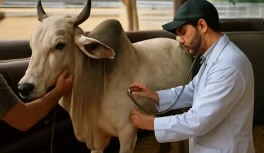
The process also led to concrete improvements in animal welfare protocols. Governing bodies implemented stricter rules on bull protection, mandatory veterinary treatment during events, and limits on the number of runs per animal.
Vaquejada Today: Expansion and Transformation
The sport born on northeastern ranches is now practiced in virtually every Brazilian state. Its expansion into the Center-West, Southeast, and North reflects both northeastern migration patterns and genuine interest from other regions in a sport that combines equestrian skill, cultural tradition, and spectacle.
Modern vaquejada arenas are not rustic: venues with capacity for tens of thousands, electronic timing systems, live broadcasts across multiple channels, and horse facilities comparable to the country’s best equestrian centers.
Today’s professional vaquejada athlete is a high-performance sportsperson who invests in personal physical training, in conditioning their horses, in state-of-the-art equipment, and in competitive strategy. The history of vaquejada is still being written — one championship at a time.