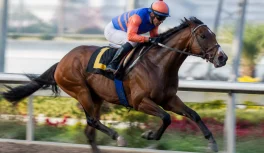
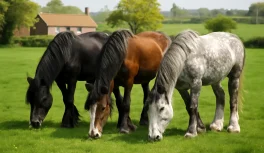
At the Paris 2024 Olympics, as in Tokyo, Rio, London, and every Games before them, the podiums of all three equestrian disciplines — show jumping, dressage, and eventing — were dominated by a specific type of horse. Not a single breed, but a family of breeds created with the same purpose: maximum performance in modern equestrian sport. These are the Warmbloods. And they do not dominate Olympic equestrian sport by accident — they are the product of decades of scientific selection, rigorous performance testing, and massive financial investment.
Understanding what a Warmblood is, how each national bloodline differs, and why this breed family has become the absolute standard of elite equestrian sport means understanding how modern equestrian competition works.
What Is a Warmblood? The Logic Behind the Name
The name “Warmblood” creates confusion because it seems to refer to body temperature. In equestrian terminology, however, the term has a specific historical meaning:
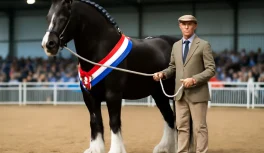
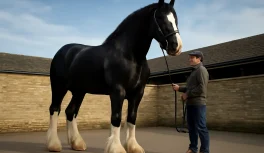
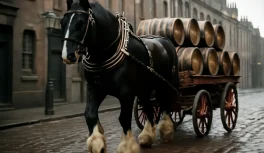
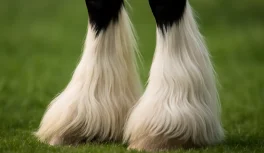
- Coldblood: heavy draft horses — Clydesdale, Percheron, Shire. Slow, powerful, very calm temperament.
- Hotblood: light breeds of Arabian and North African origin — the Arabian and the Thoroughbred. Fast, sensitive, energetic.
- Warmblood: the deliberate crossing of cold blood and hot blood, seeking the balance between power and refinement.
The European Warmblood emerged in the 18th and 19th centuries when European armies began crossing their heavy war horses — local Coldbloods — with imported Arabian and Thoroughbred stallions. The initial goal was to create a better cavalry horse: more agile than the Coldblood, more robust than the Hotblood.
With the 20th-century decline of cavalry, the goal shifted to equestrian sport. And breeding programs became progressively more scientific, more rigorous, and more focused on measurable performance in the arena.
The Major European Studbooks: Each With Its Own Identity
The Warmblood world is complex because there is no single breed — there are multiple national studbooks, each with specific characteristics, but all sharing the central philosophy of selecting for sport. The most influential in the international scene:
Hanoverian (Germany): arguably the most famous and influential studbook in the world. The state of Hanover in Lower Saxony developed its breeding program in the 18th century. The Hanoverian is the “reference standard” for the Warmblood — strong and expressive in jumping, elegant and expressive in dressage, with collaborative temperament. Hanoverians have appeared on Olympic podiums for decades.
KWPN — Koninklijk Warmbloed Paardenstamboek Nederland (Netherlands): the Dutch studbook is recognized for systematically producing horses with exceptional elasticity and movement, especially for dressage. The KWPN has a notably rigorous stallion approval process — only a fraction of tested stallions are approved for breeding.
Westphalian (Germany): from the Westphalia region, the Westphalian shares very close pedigrees with the Hanoverian but maintains its own identity. It has produced some of the most successful dressage and jumping horses of the past decades.
Oldenburg (Germany): historically heavier than other Warmbloods, the modern Oldenburg was progressively refined with Thoroughbred blood and has become one of the most popular bloodlines in high-level show jumping.
Trakehner (Germany): the only studbook that requires all approved stallions to descend from Trakehner lines — it does not accept free “infusion” from other studbooks. This makes the Trakehner the most genetically “closed” among Warmbloods, with a distinct identity: more refined and sensitive than others, with a higher proportion of historical Arabian and Thoroughbred blood.
Selle Français (France): the French equivalent, with strong tradition in show jumping. France has produced some of the best jumpers in history, and the Selle Français is the genetic engine behind many of them.
Swedish Warmblood: recognized especially for dressage, the Swedish horse combines robustness with elevated movement and has been consistently represented at the Olympic Games.
The Evaluation System: How a Warmblood Gets Approved
What differentiates the Warmblood from virtually every other breed in the world is the system of scientific, systematic evaluation of breeding stallions. Any stallion can be presented as a candidate — but the approval process is demanding enough to exclude the vast majority of candidates.
A candidate stallion typically goes through:
1. Conformation inspection: judges evaluate bone structure, proportionality, joint angles, hoof quality, and general conformation. Stallions with structural faults that may be heritable are eliminated.
2. Movement evaluation in hand: the horse is presented in a straight line and on a circle, demonstrating quality of walk, trot, and (sometimes) canter. Extension, regularity, impulsion, and knee action are assessed by experienced judges.
3. Under saddle evaluation: for stricter studbooks, the stallion is ridden by a professional test rider who assesses trainability, impulsion, balance, and athletic aptitude.
4. Provisional approval and performance test: in many studbooks, initial approval is followed by an observation period and then a formal performance test — where the stallion demonstrates aptitude for jumping, dressage, or both.
5. Genetic evaluation: the progeny test — evaluation of the stallion’s offspring — is the ultimate judgment. A stallion who consistently produces superior offspring becomes extremely valuable; one who produces inconsistent results quickly loses value, regardless of appearance.
This system means the Warmblood stallions in breeding are, for the most part, proven athletes or sons of athletes — not merely handsome animals.
Dressage: The Warmblood and the Art of Movement
In international dressage, Warmbloods — especially Hanoverians, KWPN, and Westphalians — are so dominant that their presence on the podium is virtually guaranteed. The explanation lies in the type of movement that elite equestrian sport demands.
Dressage at the highest levels — Grand Prix, Freestyle — requires movements such as piaffe (trot on the spot), passage (highly expressive elevated trot), canter pirouettes, and flying changes. These movements require a horse that naturally elevates its front limbs, has natural lumbar flexion that allows weight transfer to the hindquarters, and maintains metronomic rhythm under high competitive tension.
The Warmblood was selected specifically to produce these qualities. A foal with naturally elevated movement, natural back swing, and a temperament that allows intensive training is the product of the decades-long selection process described above.
Show Jumping: Power, Bravery, and Eye for a Fence
In high-level show jumping, the equation is different but equally dominated by Warmbloods. A jumping horse needs three main qualities: propulsive power (especially from the hindquarters), bravery (willingness to attack tall obstacles without hesitation), and “eye for a fence” — the ability to calculate distances and adjust strides with precision.
The Oldenburg, Selle Français, and KWPN consistently produce horses with these characteristics. Some of the most famous jumpers of the past twenty years are names any equestrian enthusiast recognizes, and they are, invariably, Warmbloods.
Prices in the high-level Warmblood market reflect this. A young horse with excellent bloodlines and promising movement can cost hundreds of thousands of euros. Proven Grand Prix horses in dressage or show jumping can reach values above one million euros — and the most famous have commanded several million.
Eventing: The Triple Discipline
Eventing requires horse and rider to demonstrate competence in dressage, cross-country (field obstacles with varied speed and terrain), and show jumping. It is the most demanding discipline in equestrian sport — and for many, the most exciting.
Cross-country in particular requires almost irrational bravery: horse and rider traverse fields at speed jumping fixed obstacles — ditches, logs, combination fences, water complexes. A horse that miscalculates pays a steep price.
In this discipline, Warmbloods share the podium with horses that carry higher proportions of Thoroughbred blood — especially British and Irish lines — because the Thoroughbred’s bravery and cardiovascular endurance are obvious advantages in cross-country. But at the highest levels, Warmbloods with some Thoroughbred infusion are the norm.
Olympic Equestrian Sport: The Numbers Don’t Lie
Looking at the Olympic equestrian results of recent decades produces a pattern so consistent it is almost monotonous: Hanoverian, KWPN, Westphalian, Oldenburg, Selle Français, Swedish Warmblood — these names fill the medals tables in all three disciplines.
The dominance is not the result of chance, tradition, or national prestige. It is the direct result of applying scientific selection methods to horse breeding for generations — measuring, testing, selecting, and repeating the cycle until the animal produced is the most reliable athlete available for each discipline.
No other breed family has replicated this system at this scale. And until another approach achieves comparable consistency, the Warmblood will continue to define what an Olympic horse looks like.