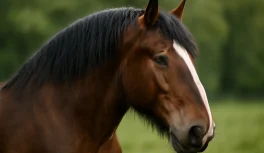
The name misleads. “Polo pony” suggests a small animal, but the horses used in modern polo are full-sized, typically standing between 15 and 16 hands — called “ponies” by historical convention, not by stature. And inside each of these animals is a carefully formed athlete capable of explosive speed, abrupt stops, and directional changes that few horses can execute with the same precision.
Why “pony” when they are full horses?
Until 1919, polo rules set a maximum height limit for competing horses: animals exceeding 15 hands (152 cm) were disqualified. The term “pony” was technically accurate in that period.
When the height limit was abolished, the terminology remained. Today “polo pony” is synonymous with “polo horse” — regardless of size. Tradition prevailed over precision.
The profile of the ideal polo pony
There is no single polo pony breed — what exists is a set of functional characteristics that define the ideal animal for the sport:
Speed and acceleration: Polo demands explosive short-distance bursts, not long-distance endurance. The horse must reach top speed in a few strides and sustain it in sprints of 20 to 60 seconds.
Stopping ability: As important as speed is braking. A polo pony that cannot stop with precision is dangerous for the rider and for the other horses on the field.
Lateral agility: Turning 180 degrees while maintaining control, tracking the ball through zigzags, evading other horses — all require exceptional agility and balance.
Temperament: The polo pony works at speed, surrounded by other horses, under constant pressure. Excessively reactive or fearful animals are dangerous on the field. The ideal temperament combines alertness, courage, and willingness to respond to the rider without stress.
Mouth sensitivity: The rider needs control with one hand — the other holds the mallet. Responsiveness to the bit is essential.
The breeds most commonly used
Thoroughbred: The genetic foundation of most high-level polo ponies. The Thoroughbred brings speed, aerobic capacity, and athletic structure. Racehorses with suitable temperament are frequently converted to polo.
Criollo: A native breed from the South American pampas, the Criollo is renowned for extraordinary stamina, solid feet, and the ability to maintain performance in demanding conditions. Crossed with a Thoroughbred, it produces what many consider the ideal polo pony.
Anglo-Arab: A cross between an Arabian and a Thoroughbred, the Anglo-Arab combines endurance and speed with a light frame. Popular in European contexts.
Warmblood: European saddle breeds such as the Hanoverian and Oldenburg have a smaller presence in polo but are used in some regions.
Argentina’s role in shaping the modern polo pony
Argentina is the world benchmark for polo pony breeding. The systematic crossing of Thoroughbreds with Criollo mares, carried out by generations of Argentine breeders, has produced a population of horses with exceptional characteristics — and an export trade that supplies teams around the world.
The finest Argentine polo ponies are exported to the United States, England, the UAE, and other markets at prices that reflect their quality. Top-level animals can sell for tens or hundreds of thousands of dollars. Adolfo Cambiaso, considered the greatest polo player of all time, is also a respected breeder — his program includes cloning of his finest mares to replicate proven genetics.
The training process
The formation of a polo pony begins after basic breaking, generally when the horse is 3 to 4 years old. The process has defined phases:
Phase 1 — Physical conditioning: Cardiovascular and muscular conditioning before any polo-specific work. The animal needs the stamina to sustain the intensity of chukkers.
Phase 2 — Maneuverability work: The horse learns to respond to one-handed commands, to stop quickly, and to execute controlled turns in balance.
Phase 3 — Introduction to the ball: The animal is desensitized to the swinging mallet, the sound of the ball being struck, and the noise of the field. Many horses initially react with fear — desensitization is gradual and patient.
Phase 4 — Field practice: Training matches with progressively greater intensity, exposure to other horses at speed, and real match situations.
The full process takes two to three years to form a functional polo pony. An elite animal may take longer — and its value grows in proportion to quality and accumulated experience.
Multiple horses per match
In high-level polo, a player uses a different horse for each chukker. An eight-chukker match may require four to six horses per player. Managing the string is as strategic as tactical team formation.
The best teams in the world employ veterinarians, fitness trainers, and grooms dedicated exclusively to the horses’ care during competition. Animal welfare is not merely ethics — it is performance.
The bond between player and horse
In polo, the horse is not an instrument — it is a partner. The best players speak of specific horses as team members, with distinct personalities, strengths, and preferences.
Polo is, at its heart, a conversation between two intelligences: the player who reads the game and directs, and the horse who executes with precision what has been asked. When that conversation works, the result is one of the most impressive spectacles in equestrian sport.