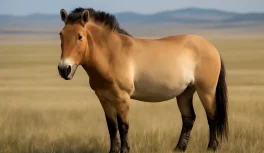
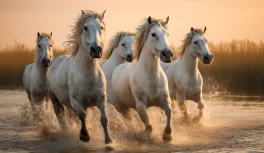
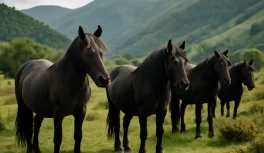
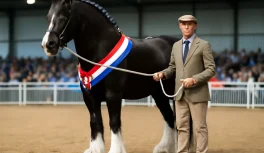
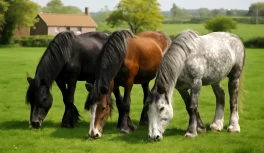
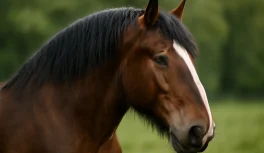
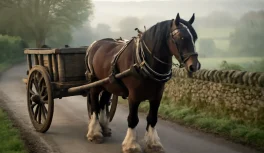
One of the first things that strikes visitors at a Mangalarga Marchador show is the variety of colors in the lineup. Grey horses in different tones, chestnuts ranging from golden to dark mahogany, bays with and without markings, roans, browns — and among them, animals with coat patterns that stop conversation mid-sentence.
Mangalarga Marchador coat colors are one of the breed’s most discussed topics at farms and competitions alike. Not just for aesthetics, but because certain colors are genetically rare, visually prized, and can significantly influence an animal’s market value.
What determines a horse’s coat color?
All equine coat color results from the expression of two pigments: eumelanin (producing black and brown) and phaeomelanin (producing red and yellow). The combination of these pigments, controlled by specific genes, generates all possible color variations.
Beyond base color, distribution patterns — including white markings, mixed hairs, and patches — add complexity. The result is an extensive palette — which in the Mangalarga Marchador includes everything from simple, common colors to rare, highly valued combinations.
The most common Mangalarga Marchador colors
Grey (Tordilho): the most prevalent color in Mangalarga Marchador breeding programs. A grey horse is born colored (bay, chestnut, brown, or black) and progressively lightens with age through a depigmentation process. By 10-12 years, many grey horses are nearly white.
Within grey, variations include: rose grey (reddish base with white hairs mixed in), dapple grey (grey base with white mixing), and flea-bitten grey (dark spots persisting through the depigmentation process). At shows, well-conformed grey horses are reliably among the top finalists.
Chestnut (Alazão): produced by phaeomelanin without eumelanin, chestnut ranges from golden-yellow to dark mahogany. Mane and tail can match the body or be lighter (flaxen chestnut). It’s one of the most aesthetically appreciated colors — especially dark chestnut with the intense shine of a well-conditioned coat.
Bay (Baio): yellow to golden body with dark (black or dark brown) mane, tail, lower legs, and ear tips. Bay is one of the most widespread colors across horse breeds globally, and appears in the Mangalarga in numerous gradations — from light bay (near yellow) to dark bay (close to brown).
Brown (Castanho): uniformly reddish-brown coat throughout, including mane and tail. There is no contrast between body and extremities, as in bay. Brown varies in intensity from light to very dark.
Black (Preto): rare in the Mangalarga Marchador but present. Uniformly black coat throughout, including mane, tail, and legs. Truly black horses (without brownish tones or reddish reflections) are uncommon in the breed and tend to attract attention at shows.
The rare and most prized coat patterns
Roan (Ruão): produced by an even mixture of colored and white hairs distributed uniformly across the body. Unlike grey, which lightens with age, roan maintains the same pattern throughout the horse’s life. Three variations exist: chestnut roan (reddish and white hairs mixed), bay roan (yellowish and white hairs mixed), and black or blue roan (black and white hairs mixed, producing a silvery visual effect).
Blue roan in particular draws significant attention at shows — under certain lighting conditions it produces a metallic sheen that is genuinely striking.
Paint/Pinto (Pampa): characterized by irregular white patches over any base color. The pampa can have oval, rounded, or jagged-edged patches distributed across the body. It is a high visual-impact pattern and frequently commands premium prices at auctions. In the Mangalarga Marchador, pampa is rare — which only increases interest in animals displaying this pattern.
Tobiano: white patches with clean, well-defined edges that extend across the horse’s back. The tobiano has a specific patch distribution distinguishing it from the pampa by its more regular pattern and cleaner borders. Also rare in the breed and highly valued.
Palomino: golden body with white or very light mane and tail. Produced by a specific gene (cream/cr) over chestnut base. True palomino in the Mangalarga is uncommon and aesthetically prized.
White markings on legs and face
Beyond the base color, horses may carry white markings with their own specific terminology:
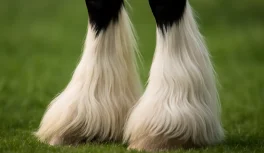
Leg markings: coronet (at and around the hoof), pastern, sock (below the knee), stocking (to the knee or higher). Higher white markings are more visible and opinions among breeders are divided on aesthetics.
Face markings: star (white patch on the forehead), stripe (narrow white line down the face), blaze (broad white stripe from forehead to muzzle), snip (small marking on or near the muzzle), bald face (very wide marking covering much of the face).
In shows, white markings are recorded in the identification certificate but don’t contribute positively or negatively to scoring — they are descriptive elements only. In the market, they are purely a matter of personal preference.
Does coat color affect performance?
This is a common question, and the answer is: not directly. Coat color is determined by pigmentation genes that have no known influence on gait quality, physical endurance, or temperament.
One minor management note: horses with extensive white areas (especially on the legs and belly region) may be slightly more susceptible to moisture-related dermatitis in those areas, which contain less protective melanin. This is a management consideration, not a structural issue.
The premium placed on certain coat colors in the market is essentially aesthetic and cultural. A pampa or tobiano with a mediocre marcha is worth less in practical terms than a grey with an exceptional gait. But in the visual market of social media and high-impact auctions, a rare coat pattern unquestionably attracts more initial attention — and attention is the door to business.
The coat is the packaging. As any experienced Mangalarga breeder will remind you, the gift is inside — in the marcha.