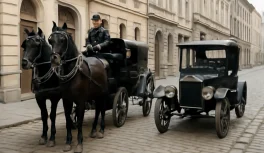
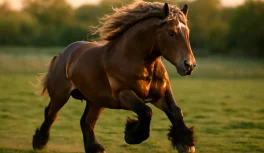
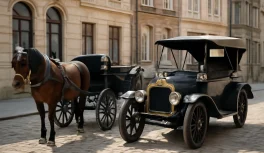
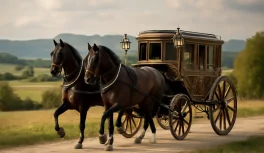
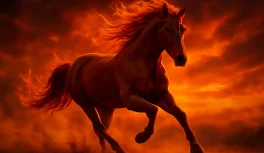
There is a curious pattern in the history of the automobile: the most iconic cars in the world have horse names. It is not coincidence, and it is not passing nostalgia. It is a deliberate strategy, repeated over decades by marketing engineers who understood something fundamental about human psychology — and about what people really want when they buy a car.
Why Horses Became the Vocabulary of Cars
How was the name ‘Mustang’ chosen and why did it work so well as a marketing strategy?
When Ford Motor Company was developing a new compact model in the early 1960s, the project internally known as “T-5” needed a market name. Hundreds of suggestions were studied. The marketing team investigated animal names, place names, invented names. The name that won was Mustang — the wild horse of the American prairies.
The choice was not random. The Mustang had to evoke speed, freedom, the spirit of the American West. It had to be masculine without being aggressive, accessible without being cheap, youthful without being juvenile. The wild horses of Nevada and Montana, who existed in the American collective imagination as a symbol of unrestrained independence, delivered all of that in a single word.
What were the commercial results of the 1964 Ford Mustang launch?
Launched in April 1964, the Ford Mustang sold 22,000 units on its first day. By the end of the first year, it had sold more than 400,000 — the most successful automobile launch in North American history to that point. The name had worked beyond any expectation.
Ford’s Equine Universe
What other Ford models were named after horses besides the Mustang?
The Mustang opened the floodgates. Ford built, over the decades, a portfolio of equine names that became part of global automotive culture.
The Bronco, launched in 1966, honored the bronco horse — semi-wild animals that resisted domestication. It was a rugged utility vehicle built for difficult terrain, and the name communicated exactly that. Discontinued in 1996 after becoming involuntarily famous during the O.J. Simpson chase in Los Angeles, the Bronco was relaunched in 2021 to enormous commercial success. The name had survived the notoriety and came back stronger.
What do the Ford Pinto and Ford Maverick have in common with American wild horses?
The Ford Pinto, launched in 1971, honored pinto horses — the spotted-coat animals so common in the American West. The intent was to evoke youth, color, and personality. The model ended up marked by serious mechanical problems, but the name survived in cultural memory as testament to the original ambition.
The Ford Maverick — a name that designates both an unbranded animal and an individual who acts independently — was launched in 1969, discontinued in 1977, and relaunched in 2021 as a compact pickup. Two versions, six decades apart, the same equine name as anchor.
Dodge, Chevrolet, and the Race for Equine Names
How did Dodge and Chevrolet compete in using equine names for their models?
Ford was not alone. Dodge placed its bets on the Colt in the 1970s — a compact model designed to be economical and agile as a young foal. Chevrolet also had a Colt, before licensing agreements redefined who could use which name.
The Dodge Charger, launched in 1966, does not use an animal name but that of a warhorse rider — the equine reference was in the subtext. The model was revived in 2006 and still exists today, maintaining the historical association with speed and raw power.
Where does the horse on the Ferrari emblem come from?
In Europe, Ferrari chose the prancing horse as its emblem — not as a model name, but as brand identity. The cavallino rampante (prancing horse) that appears on every Ferrari was borrowed from the emblem of Count Francesco Baracca, an Italian flying ace in World War I who featured a black prancing horse on his aircraft. Baracca’s mother suggested Enzo Ferrari use the symbol as a good-luck talisman. Enzo accepted, changed the color to yellow (the color of Modena), and created one of the most recognizable logos in the world.
Porsche and the City of Horses
Where does the horse on Porsche’s emblem come from and why does Stuttgart mean ‘stud farm’?
The Porsche emblem is one of the most fascinating in the automotive industry, because it has two possible stories — and both involve horses.
The official version: the Porsche shield combines the arms of Stuttgart (a prancing horse) with the colors of Württemberg (red and black stripes) and the Swabian lion. Stuttgart, the city where Porsche was founded, takes its name from the Old German “Stuotgarten” — meaning “mares’ garden” or, more loosely, “horse stud farm.” The city was born from a tenth-century imperial stud farm, and the horse on its coat of arms is not a metaphor, but history.
Did the Porsche and Ferrari emblems come from the same origin?
The alternative version, denied by historians but persistent in popular culture: the horse on the Porsche emblem was inspired by the same black horse that appeared on Enzo Ferrari’s aircraft — both would have taken the image from Francesco Baracca. The story is unlikely (the origins of Stuttgart’s coat of arms are well documented), but remarkably persistent.
What Equine Names Sell
Why do horses evoke speed in a way that no engineering adjective can match?
From a marketing standpoint, the choice of horse names for automobiles responds to a consistent set of psychological associations.
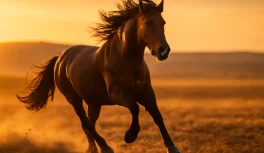
Horses evoke speed — not the cold speed of a machine, but the organic, powerful speed of something with a will of its own. A running horse has a quality that a stopwatch cannot capture: the impression that it could run faster if it wanted to. That is the same quality buyers want to feel in their cars.
Naming a car ‘Mustang’ borrows what historical symbolic capital for the product?
Horses evoke freedom — especially wild or semi-wild horses like the Mustang and the Bronco. In a world increasingly regulated, congested, and predictable, the name of an animal that lives on the open plains communicates something no engineering adjective can match: the promise that this car could go wherever it wanted, whenever it wanted.
Horses evoke nobility. In human history, horses were for millennia a symbol of status — only the wealthy could own them. Naming an accessible car “Mustang” or “Colt” borrows that historical symbolic capital for a mass-market product.
It is an old verbal trick. And it keeps working.