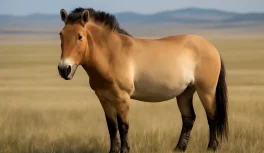
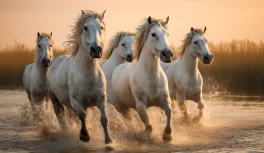
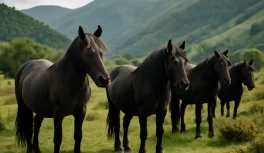
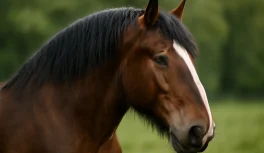
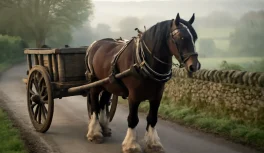
Coat color in the Chilean Criollo is more than an aesthetic detail — it carries information about the breed’s genetics, its official standard, and centuries of selection focused on function rather than fashion. For breeders, buyers, and enthusiasts, understanding which colors are accepted, which are common, and what the standard actually says is an important part of knowing the breed.
Does the Standard Prioritize Color?
The Federación del Rodeo Chileno has held firm to one principle across its nearly two centuries of existence: color is secondary to conformation and function. No horse is disqualified purely on the basis of its coat. Performance in the arena — the volapié, the atajada, the synchronized work of the collera — is what determines the breed’s future.
That said, certain colors are more historically associated with the pure Chilean Criollo type, and experienced breeders read coat color as one indicator among many when evaluating potential breeding stock.
Which Coat Colors Are Most Common?
Gray (Tordillo)
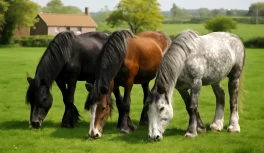
In Chile, the tordillo — a gray horse that is born dark and lightens progressively with age — is widely considered the most traditional and representative coat of the Chilean Criollo. The breed has produced many of its most celebrated champions in this color.
Gray comes in several variations within the Chilean Criollo:
- Tordillo rodado — dapple gray, the most visually striking variation
- Tordillo mosqueado — fleabitten gray, with small dark specks on a light background
- Tordillo negro — dark gray, retaining significant black pigmentation
Chestnut (Alazán)
Chestnut coats — ranging from pale gold through copper to deep liver — are among the most common in the Chilean Criollo. The alazán tostado, a rich golden-copper tone, is considered one of the most aesthetically valued variations. Mane and tail generally match the body color or run slightly lighter.
Bay (Baio)
The bay coat — a brown or golden body with black mane, tail, and leg points — is classic and widely present in the breed. Variations include:
- Baio clásico — clear body-to-point contrast
- Baio amarillo — paler, more yellow body tone
- Baio oscuro — dark bay, approaching brown
Brown and Dark Variations (Castanho)
Brown coats — ranging from warm tan to deep seal brown — are also common across all Criollo breeds. In the Chilean Criollo, dark brown and near-black individuals appear regularly and are fully accepted by the standard.
Black (Morcillo)
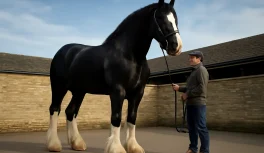
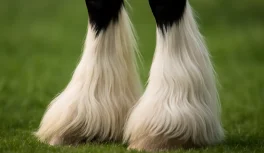
True black horses with no reddish sheen — the morcillo — are less common in the Chilean Criollo than in some other breeds, but fully accepted. White face markings and leg white are permitted within the limits set by the standard.
Pinto and Marked Patterns
Horses with large white patches — picazo or pinto patterns — appear in the Chilean Criollo and are officially accepted, though some traditional breeders prefer solid coats. Tobiano and overo patterns both occur and are registered without restriction, provided the animal otherwise meets conformation and performance standards.
Are Any Colors Restricted or Discouraged?
The official standard doesn’t explicitly prohibit specific colors, but breeders are cautious around coat types that suggest crossbreeding with outside blood. Certain diluted colors — particularly double-dilute cremello horses with blue eyes, or unusually light palominos with very pale eyes — may raise flags during registration as potential indicators of non-Criollo genetics.
The underlying logic is straightforward: because the breed was built on function and purity of type, anything that suggests genetic dilution from outside sources is examined carefully.
Does Coat Color Affect Performance?
No scientific evidence links coat color to athletic ability. In the arena and on the ranch, what counts is what’s inside: muscle, bone, temperament, and training.
However, experienced Chilean Criollo breeders draw a practical distinction: in breeds built entirely on functional selection, an atypical coat pattern may signal outside crossbreeding — and crossbreeding may have diluted the functional qualities that generations worked to establish. Color functions as a marker of genetic identity, not a predictor of individual capability.
The consistent advice from breeders: evaluate conformation, temperament, and pedigree first. Coat color is the introduction — important context, but never the deciding factor.