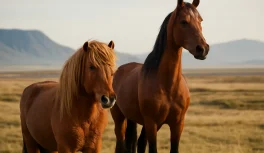
There’s a moment that experienced trail riders describe with remarkable consistency after their first time on a Missouri Fox Trotter. They ride for a while in silence, then say something like: “Why didn’t anyone tell me about this breed sooner?” It’s a reaction that happens often, particularly among riders who have spent years absorbing the impact of a conventional trot across miles of backcountry.
The Missouri Fox Trotter isn’t just a comfortable horse to ride. It’s a horse built — through more than two centuries of deliberate and natural selection — to do exactly what trail riding demands: cover ground efficiently, safely, and comfortably, for hours, in variable conditions. The combination of those qualities is what makes this breed stand out so consistently in trail contexts.
What Trail Riding Actually Demands from a Horse
To understand why the Missouri Fox Trotter excels on the trail, it helps to break down what trail riding genuinely requires of a horse.
Distance and endurance: recreational trail rides range from 6 to 50 miles (10–80 km) or more in a single day. The horse needs to maintain a sustainable pace without depleting too early. Metabolic efficiency of the gait matters.
Surefootedness: real trails are rarely flat and well-maintained. Exposed roots, rocks, stream crossings, irregular slopes and climbs are part of the terrain. The horse needs to navigate all of it confidently and safely, continuously adjusting balance.
Rider comfort: on long rides, cumulative impact matters. A rider who arrives at the end of 30 miles exhausted and aching will eventually quit the sport. One who arrives relatively comfortable will want to go out again next weekend.
Temperament: the trail presents unpredictable situations — wildlife, vehicles, other horses, unfamiliar sounds. A nervous or reactive horse makes trail riding dangerous. A calm, confident horse makes it enjoyable.
Adaptability: the trail horse needs to cross streams without panicking, pass under low branches, climb rocky slopes, and work alone or in groups with equal willingness.
The Missouri Fox Trotter meets every one of these criteria with a consistency that explains why the breed has such strong representation in both recreational and competitive trail riding.
Surefootedness: The Ozark Legacy
The Ozark highlands where the Missouri Fox Trotter was developed are unforgiving terrain. The limestone plateau — covering much of southern Missouri, northern Arkansas, and parts of Oklahoma — features deep valleys, steep slopes, countless stream tributaries, and an irregularity of terrain that made every day of travel a negotiation with geography. Horses that stumbled, that refused crossings, or that failed on difficult ground created dangerous situations that busy farmers, doctors, and rural workers simply couldn’t afford.
The result of that natural selection over generations is a horse with a body awareness and terrain-reading ability that surprises observers from conventional breed backgrounds. The Missouri Fox Trotter seems to analyze the ground before each stride, adjusting weight and foot placement almost automatically.
This surefootedness is amplified by the breed’s physical structure. Missouri Fox Trotter hooves are famously hard and durable — a heritage from the rocky Ozark environment — and the legs have an angulation that distributes impact efficiently over uneven ground. The horse has a relatively low center of gravity compared to more refined breeds, which contributes to stability on slopes.
The Fox Trot in Difficult Terrain
The fox trot gait has a characteristic that becomes especially valuable in rough terrain: the near-absence of suspension. In a conventional trot, there is a moment of flight when all four hooves leave the ground simultaneously. In difficult terrain, that moment of suspension introduces an uncertainty variable — when the hooves return to the ground, they may land exactly as expected, or they may find something slightly different.
In the fox trot, there are always at least two feet in contact with the ground, and frequently three. That continuous ground coverage makes the gait inherently more stable in irregular terrain. The horse has more simultaneous points of support, which means more information about the footing and more options for weight adjustment in real time.
For riders, this translates to a greater sense of security in technical terrain. The horse reads the ground continuously rather than committing its balance to each stride in isolation.
The US Forest Service Endorsement
One of the most eloquent endorsements of the Missouri Fox Trotter on the trail doesn’t come from competitors or breeders — it comes from professionals who depend on horses for real work: US Forest Service rangers.
In numerous federal wilderness areas across the United States — especially in the Rocky Mountains, the Ozarks, and national parks where motor vehicles are prohibited — the Forest Service maintains horse and mule units for patrol, equipment transport, and trail maintenance. The breed choices in those units reflect decades of practical field experience with what actually works.
The Missouri Fox Trotter is consistently among the breeds chosen. The qualities rangers cite are precisely those that define the breed: comfort for long daily patrols, surefootedness in technical terrain, reliable temperament in unpredictable situations, and physical endurance that sustains weeks of work with minimal maintenance.
That’s not a show ring endorsement — it’s an endorsement from utility.
Competitive Trail: Long-Distance Performance
In competitive trail, the Missouri Fox Trotter has significant representation in leading American organizations, including the North American Trail Ride Conference (NATRC) and the American Competitive Trail Horse Association (ACTHA). These events evaluate both horse performance and rider horsemanship over courses that can reach 100 miles (160 km) in two days.
The Missouri Fox Trotter’s advantage over long distances is multi-layered. The metabolic efficiency of the fox trot means the horse expends less energy covering the same ground as a conventional trotting horse. The near-absence of concussive impact reduces accumulated joint stress over hours. The calm temperament keeps the horse in more controlled physiological states — lower heart rate and body temperature — which facilitates faster recovery at veterinary check points.
Competitive trail riders frequently report that their Missouri Fox Trotters arrive at vet checks in faster recovery states than conventional trotting horses, particularly at distances beyond 20 miles (30 km).
Water Crossings and Obstacles
One of the situations that most clearly reveals differences between horses on the trail is navigating obstacles — especially water. Many horses hesitate at streams, puddles, or mud, creating situations that range from inconvenient to genuinely dangerous on trails where there’s no way around.
The Missouri Fox Trotter, with its heritage of working the stream-filled valleys of the Ozarks, typically demonstrates notable tolerance for water crossings. Well-socialized individuals cross streams, shallow mud, and small creeks with a naturalness that riders accustomed to battles at water hazards find striking.
This isn’t universal — individual temperament and training matter in any breed — but the tendency is part of the behavioral profile that consistently distinguishes the breed.
Solo and Group Trail Riding
The Missouri Fox Trotter performs equally well on solo and group trail rides. For solo riding — where the horse and rider are without the psychological support of other horses — the breed’s calm temperament and self-confidence are especially valued. A horse that becomes anxious away from the herd can make solo trail riding stressful. The Missouri Fox Trotter has a reputation for being safe and steady in both configurations.
In groups, the fox trot’s working speed (5–7.5 mph / 8–12 km/h) is compatible with the animated walk of conventional horses, making it easy to keep the group together without the Fox Trotter needing to canter to keep up or jog while others walk.
For the Rider Who Wants to Ride More
Ultimately, the appeal of the Missouri Fox Trotter on the trail is straightforward: the breed makes it possible to ride more, go farther, and arrive in better shape — for both horse and rider. For someone who loves trail riding but is running into physical barriers, the Missouri Fox Trotter often represents the continuation of something that seemed to be ending.
And for riders without those limitations, the breed represents a quality of experience that’s genuinely hard to give up once you’ve had it.