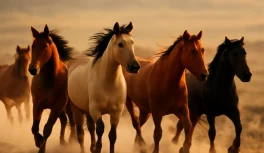
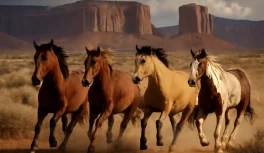
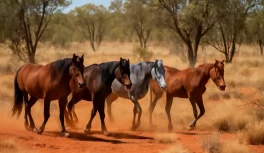
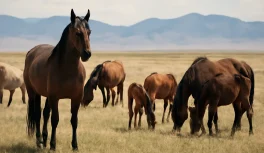
There is a moment that regular equestrians and equine therapists describe with surprising consistency: a point during quiet interaction with a horse when something in the body settles — a kind of physiological release that doesn’t feel produced or chosen. For a long time this was classified as subjective, emotional, and ultimately unverifiable. Then researchers gave it a name, started measuring it, and discovered it had a biological basis: cardiac coherence between horse and human.
What sounds like a metaphor is, in fact, a documented physiological phenomenon with a traceable mechanism. And it’s reshaping how we understand what happens inside the nervous system during human-animal interaction.
What is cardiac coherence?
Cardiac coherence is a specific pattern of heart rate variability (HRV) — the variation in time between consecutive heartbeats — in which those intervals follow a regular, rhythmic, wave-like pattern, associated with synchronization between heart activity and breathing.
Under stress or chronic anxiety, the HRV pattern becomes irregular and chaotic: the variation between beats is erratic, without rhythm. In a state of relaxation, presence, and safety, the pattern becomes organized: intervals follow a smooth, sinusoidal wave, typically around 0.1 Hz. This is coherence — and it has measurable physiological effects, including on the quality of the electromagnetic field the heart generates.
A coherent heart emits a more regular, expansive field. An incoherent heart — beating in a chaotic or fragmented pattern — emits an irregular, contracted field. The difference is not just quantitative (how big the field is) but qualitative (the organization of the signal it carries).
Can a horse and human reach cardiac coherence together?
Yes — and this is what HeartMath Institute research established, along with subsequent studies at other institutions.
The documented phenomenon involves what researchers call bioelectromagnetic synchronization or cross-species cardiac coherence entrainment. When a human in low cardiac coherence enters the physical proximity of a horse in high cardiac coherence — typically within a couple of feet — something measurable begins to happen in the human’s nervous system.
The horse’s coherent field, detectable at up to 6 feet from the animal’s body, interacts with the human’s autonomic nervous system. The rhythm the horse’s heart is emitting is received by the human system. And the human system, if not under extreme activation, tends to organize itself toward that rhythm. HRV patterns in humans near calm horses have been shown to shift toward greater coherence within 10 to 15 minutes of proximity — without physical contact, without deliberate breathing exercises, and independent of the person’s prior familiarity with horses.
Is this truly synchronization, or just correlation?
It’s a critical distinction, and the research has been careful about it.
Correlation would mean that both systems change simultaneously without one causing the other — perhaps both responding to the same environmental factor (quiet, space, absence of stimulation). Synchronization means that one system is driving the other’s rhythm, or that both are mutually entraining.
The most rigorous studies used control conditions in which humans were placed in the same environment, under similar conditions, without horses present. The HRV shifts observed in horse-present conditions were not replicated in control conditions. More importantly, studies that measured the temporal relationship between the horse’s HRV peaks and the human’s HRV peaks found that the horse’s rhythms preceded the human’s rhythms — suggesting a directional effect, from animal to person.
This doesn’t mean humans are passive. When a human reaches a state of high cardiac coherence themselves — through deliberate breathing techniques, for example — horses in their presence have been shown to shift toward even greater coherence. The relationship is bidirectional and dynamic.
What does this mean for equine therapy?
Equine-assisted therapy has documented clinical results for decades — with anxiety, PTSD, depression, autism, and recovery from trauma — but was long challenged on one front: the absence of a specific biological mechanism explaining why it works.
Cardiac coherence provides a partial but concrete answer. If a horse’s coherent field can reorganize the autonomic nervous system of a person in distress within minutes of proximity, that’s not a placebo effect. It’s a biophysical mechanism. The horse isn’t a symbol or a prop — it’s a functional part of the therapeutic process at the level of the nervous system.
This reframing has implications for how programs are designed and evaluated. A therapy horse that is stressed, poorly cared for, or housed in conditions that suppress cardiac coherence is not a neutral therapeutic tool — it’s an animal emitting an incoherent field. The wellbeing of the horse is not just an ethical concern; it’s a clinical variable.
Can the horse’s coherence be deliberately cultivated?
This is an open research question, but there is preliminary evidence that yes, management conditions significantly affect horses’ average cardiac coherence patterns.
Horses kept in conditions that match their species needs — appropriate social contact with other horses, regular access to pasture, predictable routines, low-stress handling — show consistently higher baseline HRV and more frequent coherent HRV patterns than horses in chronically stressful conditions (isolation, irregular feeding, harsh training methods, excessive stabling).
This suggests that a high-coherence therapy horse is not just a matter of choosing the “right” animal — it’s the product of management choices that support the animal’s nervous system over time. The field the horse brings to the therapeutic context is shaped by everything that preceded that context.
What does this mean for riders and handlers?
The synchronization goes both ways. Riders who begin a session in a state of low coherence — stressed, distracted, emotionally activated — carry a field that the horse receives and processes. Horses respond to incoherent human fields with increased nervous system activation: they become more vigilant, more reactive, harder to settle.
Riders who begin a session in a state of coherence — after deliberate breathing practice, a period of quiet presence, or simply a good night’s sleep — find horses that settle faster, respond more fluidly, and appear genuinely more at ease.
The implication is that the rider’s internal preparation isn’t just psychological — it’s electromagnetic. The field they arrive with precedes the first aid, the first word, the first touch. It’s the real opening move of every session.