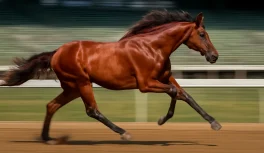
Hollywood loves horses — but sometimes reality is so extraordinary that the screenplay needs no invention. Some of the most impactful horse films based on true stories leave any work of fiction in the dust: horses that won when no one bet on them, survival stories that defy logic, animals that became national symbols during moments of collective crisis.
This article brings together the great equestrian films inspired by real events — and also reveals what cinema changed compared to the original facts.
Why True Horse Stories Move Us So Deeply?
There is something about knowing “this actually happened” that completely changes the experience of watching. When Secretariat crosses the Belmont Stakes finish line with 31 lengths of advantage, audiences know: that time is in the record books. When Seabiscuit defeats War Admiral in 1938, an entire country was listening on the radio.
The emotion of live sport — the unpredictability, the tension of not knowing the outcome — reappears in cinema when we know we are watching something that actually occurred. We cannot change the past. And paradoxically, that makes the narrative more powerful, not less.
Seabiscuit (2003): The Horse That Healed a Nation
What Is Real:
Seabiscuit existed. Born in 1933, he was discarded as too small and nervous for top-level racing and passed through several owners before reaching millionaire Charles Howard. With trainer Tom Smith and jockey Red Pollard — who was nearly blind in one eye from a previous accident — Seabiscuit became the most famous horse in the United States during the Great Depression.
In November 1938, Seabiscuit defeated War Admiral in a head-to-head race that drew the largest radio audience in American history up to that point. The country stopped to listen. In an era of mass unemployment and economic despair, Seabiscuit became a symbol that the unlikely was possible.
What the Film Changed:
The screenplay compresses timelines and creates some composite scenes — as is standard in biopics. The relationship between Howard, Smith, and Pollard is romanticized but not distorted. The race against War Admiral is filmed in a manner dramatically faithful to the real event.
Laura Hillenbrand’s book (Seabiscuit: An American Legend, 2001) — on which the film is based — is considered one of the finest works of narrative journalism ever written and is the most complete source on the real story.
Secretariat (2010): The Record That Defies Physics
What Is Real:
Secretariat was born in 1970 at Meadow Farm in Virginia. His performance in the 1973 season is considered by most racing experts to be the greatest of all time. He won the Kentucky Derby, the Preakness Stakes, and the Belmont Stakes — the American Triple Crown — with times that remain the record in each of the three races.
The Belmont Stakes time — 2 minutes, 24 seconds for 2,400 meters on a dirt track — has never been matched. To put it in context: the best horses competing in the Triple Crown today run the same distance in approximately 2 minutes and 30 seconds.
After Secretariat’s death in 1989, veterinarians discovered that his heart weighed nearly 10 kilograms — three times the normal size of a thoroughbred. To this day, no one has a satisfactory genetic or physiological explanation.
Penny Chenery is real. She inherited the farm with debts, refused to sell the foal who would become Secretariat (who she had won through a coin flip with another breeder), and managed the business against her brother’s opposition.
What the Film Changed:
The family drama was amplified for cinematic effect. The relationship between Penny and trainer Lucien Laurin is faithful in spirit, though some interactions are composite. The Belmont Stakes race scene, however, is one of the most faithful cinematic representations of a real sporting event — filmed with high-speed cameras and based extensively on archival footage.
Dreamer (2005): The Mare That Came Back From the Dead
What Is Real:
Dreamer is loosely based on the story of Mariah’s Storm, a racing mare who suffered a serious fracture during the 1993 Breeders’ Cup, underwent emergency surgery (a radical procedure for the time), and returned to compete — including producing a foal that became a champion.
The real story is less dramatized than the film suggests: the mare was not owned by a struggling trainer and his daughter, but belonged to a professional breeding operation. The film takes the factual foundation — an injured horse that survives and competes — and builds a fictional story around it.
What the Film Gets Right:
The representation of the veterinary procedure is reasonably accurate — orthopedic surgeries in horses carry significant mortality risk. The decision to try to save the animal versus euthanizing it is presented with honesty.
War Horse (2011): Horses in World War I
What Is Based on Reality:
The horse Joey is fictional. But the context is absolutely real: during World War I, the British army requisitioned or purchased approximately 1.2 million horses from British farms for use in the war. Only 62,000 returned. Those that came back were so physically deteriorated that many were sold for slaughter rather than returned to their owners.
Horses were used to transport artillery, supplies, and the wounded — and in the war’s early phases, still in traditional cavalry charges, with devastating results against German machine guns.
Michael Morpurgo’s book, which inspired the film, was based on accounts from Devon veterans whom the author had known over years of research.
Hidalgo (2004): The Most Controversial Case
Hidalgo is perhaps the most problematic title on this list from a historical accuracy standpoint.
The film presents Frank Hopkins as an American rider who wins a desert endurance race in the Arab world called the “Ocean of Fire,” competing against Arabian horses. Hopkins is portrayed as one of the greatest endurance riders in history.
The problem: historians specializing in nineteenth-century endurance racing found serious inconsistencies in Hopkins’s claims — including the documented existence of the races he supposedly won. The Long Riders’ Guild, an organization of long-distance riders, published an extensive investigation questioning the authenticity of Hopkins’s stories.
The film, aware of the controversy, includes a disclaimer at the end that it is “based on legend” — a discreet admission that the line between reality and fantasy is far blurrier than the marketing suggested.
What All These Films Teach About Real Horses
Beyond entertainment, each of these films illuminates real aspects of the equestrian world that rarely reach a mainstream audience:
- The fragility and medical cost of high-level horses (Dreamer)
- The role of horses in military history (War Horse)
- The genetics and exceptional physiology of champion racehorses (Secretariat)
- The social and economic context in which horse racing becomes a cultural phenomenon (Seabiscuit)
These are films that educate while they move — and that is the rarest and most valuable kind of cinema.