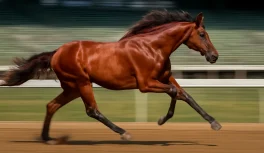
In every equestrian culture, there’s a figure that becomes something larger than a rider. In Chile, that figure is the huaso. As central to Chilean identity as the gaucho is to Argentina or the cowboy to the American West, the huaso represents a way of living bound to the land, the cattle, and above all, the Chilean Criollo horse. To understand the huaso is to understand why the Chilean Criollo is far more than a breed — it’s a national symbol.
Who Is the Huaso?
The huaso is Chile’s mounted rural worker — a horseman who developed, over centuries, a distinct set of traditions, techniques, and dress that have become inseparable from Chilean cultural identity. The word’s origin is debated: it may derive from the Quechua wásu (a rough man of the fields) or from colonial Spanish. What matters is what the word represents.
During the colonial era, the huaso was the ranch hand of the great haciendas — the man responsible for moving cattle, guarding property, and doing the hard physical work of the countryside. Over time, the figure became more layered: the huaso also came to represent the rural landowner, the horse breeder, and the keeper of campesino tradition.
Today, the Chilean government recognizes the huaso as Intangible Cultural Heritage, and the figure appears in national celebrations, parades, and — most importantly — the Chilean rodeo.
The Huaso’s Dress: A Code of Identity
The huaso’s attire is immediately recognizable and charged with meaning:
- Chupalla — a wide-brimmed straw hat that protects against the Chilean sun, crafted by hand from local plant fibers
- Manta or chamanto — a hand-embroidered cape with colorful geometric patterns that identify the wearer’s region of origin; the chamanto is the formal version, reserved for festivals and competitions
- Huaso pants — typically dark and straight-cut, worn with leather boots and silver spurs
- Silver spurs — a Chilean artisan tradition; huaso spurs are pieces of silversmithing passed from father to son, representing the rider’s status and connection to the land
- Wooden stirrups — the traditional Chilean stirrup is wide, carved from wood, and unlike any metal stirrup used in other equestrian cultures
Every element has function and history. To dress as a huaso before entering the media luna is a ritual act — a connection to generations of riders who did the same before.
What Role Does the Chilean Criollo Play in the Huaso’s Life?
The horse is not merely a work tool for the huaso — it’s a life partner. That relationship begins early: Chilean breeders typically select foals young, follow their development closely, and begin training with patience built over years.
The Chilean Criollo is the natural choice for practical and cultural reasons:
- Endurance for ranch work — the Chilean landscape is demanding, with elevations ranging from sea level to over 6,500 feet
- Reliable temperament — the huaso needs a horse that responds well under pressure, especially in the rodeo
- Arena agility — the collera requires horse and rider to function as a single unit
For the huaso, riding a good Chilean Criollo isn’t a status symbol — it’s competence. The horse is judged by what it does, not by what it looks like.
Huaso and Rodeo: An Inseparable Partnership
The Chilean rodeo is the huaso’s most public stage. In the media luna, he demonstrates the quality of his breeding program, his training methods, and his partnership with the horse. A strong collera — huaso and Criollo working in synchronized silence — is the culmination of years of dedicated work.
For many Chilean breeders, competing at the Campeonato Nacional de Rodeo in Rancagua is a life goal. Victory means more than a trophy: it confirms that the selection work paid off, that the Criollo chosen is genuinely functional, and that the huaso tradition continues.
In Chile’s rural communities, the rodeo is far more than sport. It’s the moment when entire communities gather, families of generations of breeders reconnect, and rural pride expresses itself with full force.
The Huaso in Global Equestrian Culture
The huaso has his counterparts across the Americas and beyond: the gaucho in Brazil and Argentina, the cowboy in the United States, the charro in Mexico, the vaquero in Colombia. All share the same essence — a civilization born on horseback that built its identity around that partnership.
What distinguishes the huaso is the precision and depth of tradition. A chamanto may take months to produce by hand. Silver spurs are artisan pieces passed through families. Training methods follow centuries-old protocols that have been refined, never replaced.
That depth of cultural practice makes the huaso one of the richest expressions of equestrian heritage in the Americas — and transforms every Chilean rodeo from a sporting event into something that carries the weight of centuries.