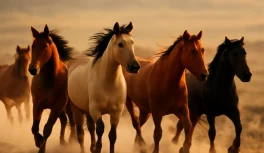
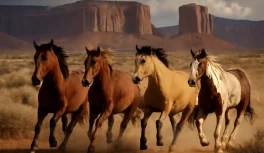
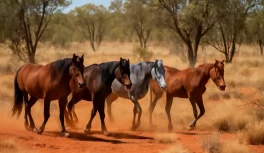
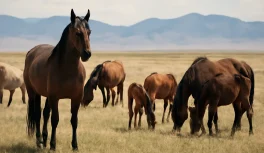
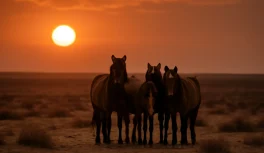
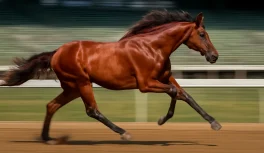
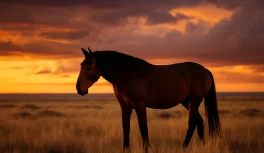
The story of wild mustang conservation is one of the most complex, most well-intentioned, and most contested involving animals on public land. For decades, the debate has shifted between legal protection, population management, land use, and natural resources — with no side offering answers that satisfy everyone. That complexity is exactly why the topic is worth understanding clearly.
The Law That Created the Current Framework
The Wild Free-Roaming Horses and Burros Act, passed in the United States in 1971, was a victory for the animal protection movement of that era. For the first time, wild horses and burros on federal land received legal protection, recognized as “living symbols of the pioneer spirit of the West.”
The law designated the Bureau of Land Management (BLM) and the Forest Service as responsible for managing these animals — including maintaining populations in balance with available resources within designated Herd Management Areas (HMAs).
The problem: the law prohibited commercial slaughter but created a management system that, decades later, faces a serious logistical and financial paradox.
The Population Paradox
Free-roaming horses, without significant natural predators and with federal protection, grow rapidly. Natural herd reproduction rates can reach 15 to 20 percent per year — meaning a population can double within a few years without intervention.
When a HMA’s population exceeds the carrying capacity calculated by the BLM, horses are removed and held in off-range corrals, awaiting adoption or long-term federal care.
The cost of these facilities is substantial — tens of millions of dollars per year just for horses in off-range holding. And the number of animals in holding has historically far exceeded the number adopted.
Population Management Methods
Removal
The most widely used method: helicopter roundup operations bring horses to holding facilities. It’s the fastest in volume and the most controversial in execution: advocacy groups point to animal stress, injuries during operations, and the separation of established social bands.
Fertility Control (PZP)
A growing alternative: field injections of a fertility control vaccine (PZP — porcine zona pellucida) administered to mares on the range. It reduces births without capture, separation, or holding. It requires regular herd access and logistical effort, but is the preferred option of many animal protection groups.
Adoption and Incentive Programs
Each adopted horse is one fewer animal in holding facilities. Programs like the Mustang Makeover and the BLM Adoption Incentive Program work to increase the number of owners — including financial incentives for new adopters.
Land Use Conflicts
The BLM manages tens of millions of acres of public land across the American West — and those same lands are used by ranchers (through grazing permits), mining and energy operations, and recreational users.
Livestock on permitted grazing leases occupies, in many HMAs, numbers far exceeding those of wild horses. Mustang advocacy groups point to this disparity as central: debates about “excess” horses often occur in contexts where the impact of permitted livestock is substantially greater.
Ranchers, in turn, argue that horse populations exceed planned levels and impact resources — water and forage — needed for the sustainable operation of their permitted grazing.
This isn’t a story of villains and heroes. It’s a conflict among multiple legitimate users of the same limited resource.
Genetic Preservation: A Standard Beyond Population Counts
It’s not just how many mustangs exist — but which populations are being maintained. Some herds carry colonial Iberian genetic heritage that exists nowhere else in the world. Losing these populations through undifferentiated management pressure would be an irreversible loss.
Modern genetic research helps identify which groups carry greater historical value and deserve differentiated protection — like the Kiger Mustangs of Oregon or the Pryor Mountain herd.
What Advocates Are Pushing For
Organizations like the American Wild Horse Campaign (AWHC) and Front Range Equine Rescue advocate for:
- Expanded field fertility control (PZP) as a replacement for removals
- Revision of HMA carrying capacity calculations
- Reduction of livestock subsidies as part of a long-term solution
- Maintenance of genetically diverse herds as cultural heritage
What You Can Do
Anyone who cares about wild mustangs can contribute:
- Support credible advocacy organizations
- Participate in responsible adoption programs — every adopted mustang frees space in the system
- Follow and engage with relevant legislation
- Understand the debate well enough not to oversimplify it