Imagine spending a whole morning in the saddle, winding through woods, across creeks, and down dirt roads, and stepping off without that beat-up feeling. That promise is what makes Tennessee Walking Horse trail riding a favorite with pleasure riders in many countries. In this guide, you will discover why the breed’s gait goes so far on long rides, how to condition your horse, what gear to bring, and how to care for your horse before, during, and after every outing.
Why Does the Tennessee Walking Horse Excel on Long Trails?
The secret is the gait. The running walk is a four-beat, lateral, gliding gait in which the horse always keeps one hoof on the ground. Instead of the up-and-down of the trot, the rider feels continuous, fluid forward motion. After a few hours on the trail, the difference is already noticeable; over a full day, it is enormous.
Efficiency is another advantage. The running walk covers ground at a comfortable speed, faster than an ordinary walk, without asking the horse for the effort of a sustained canter. That is why Tennessee Walking Horse trail riding is so popular with equestrian travelers and riders who take multi-day trips.
Stamina Built on Farm Work
The breed was born of practical work. Tennessee farmers needed horses that could cover large properties for hours without tiring the rider or themselves. That background shaped horses with good stamina and a willingness for steady work, qualities that now translate into performance on the trail.
Sure Footing on Varied Terrain
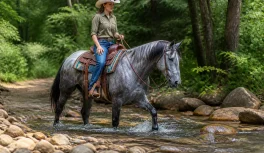
Well-trained gaited horses usually move confidently uphill, downhill, and over uneven ground. In Tennessee Walking Horse trail riding, the breed’s calm temperament means it tends to read the terrain carefully rather than rush. That does not replace the rider’s judgment: on very steep, rocky, or slippery stretches, slow down and, if necessary, dismount and lead your horse on foot.
Conditioning: Your Horse Needs to Train, Too
No horse, however hardy its breed, should tackle a long trail without conditioning. Just as a runner does not start with a marathon, a horse headed for serious Tennessee Walking Horse trail riding needs a gradual increase in workload.
A sensible progression includes:
- A walking base: weeks of moderate-length rides at the walk to strengthen tendons, ligaments, and hooves.
- Introducing the gait: stretches of running walk alternated with walking.
- Adding duration: increasing time bit by bit while watching how the horse recovers.
- Varying the terrain: gentle climbs, descents, and different footing.
- A dress rehearsal: a ride close to the planned length a few days before the main trip.
Watch for signs such as heavy breathing that lasts too long, excessive sweating, reluctance to keep going, or changes in the gait. When in doubt, call your veterinarian. Riders should prepare as well: stretching, core strengthening, and a few shorter outings help you enjoy the ride.
What Gear Do You Need for Trail Riding?
The right gear is what separates an enjoyable ride from a day of discomfort. When gearing up for Tennessee Walking Horse trail riding, a few items deserve extra attention.
A Comfortable, Well-Fitted Saddle
On long rides, any pressure point becomes a problem. The saddle should fit the horse’s back, distribute weight evenly, and be comfortable for the rider. For Tennessee Walking Horse trail riding, many owners prefer saddles with generous wither clearance and freedom for the shoulders, which favors the gait. A quality saddle pad completes the setup.
Bridle, Reins, and Bit
Choose a sturdy, comfortable bridle with a mild bit suited to the horse’s level of training. Many trail riders use a halter-bridle combination, which makes it easy to tie the horse during breaks without removing the bit.
Horseshoes or Hoof Boots?
It depends on the terrain, the individual horse’s hooves, and your farrier’s advice. Conventional shoes offer good protection on rocky, abrasive ground. Hoof boots are an alternative for barefoot horses, put on only when it is time to ride. What matters most is that shoeing is simple, functional, and focused on comfort, and that trimming is up to date before any long ride.
Must-Have Items
- a certified helmet and boots with a heel;
- saddlebags with water, snacks, and sunscreen;
- a first-aid kit for both rider and horse;
- a hoof pick;
- a halter and lead rope;
- a charged cell phone and, if possible, a map or GPS;
- a lightweight rain jacket.
How to Plan a Long Ride
Good planning is part of staying safe. Before you head out, study the route: distance, elevation changes, water sources, rest spots, and alternative routes in case something goes wrong. Check the weather forecast and avoid the hottest hours of the day in warm climates.
Set a realistic pace for Tennessee Walking Horse trail riding. A Tennessee Walker can hold its gait for a long time, but alternating the running walk with the walk helps conserve energy. Schedule regular stops so your horse can rest and drink and you can check tack and hooves.
Never ride alone in unfamiliar areas. Tell someone your route and expected return time. On multi-day rides, confirm in advance where your horse will spend the night and whether a safe paddock, water, and hay will be available. A horse that is well rested from one day to the next performs much better on the following leg.
If you are looking for inspiration for your next route, check out these horseback riding trails around the world that every horse lover needs to experience.
Hydration for Horse and Rider
A working horse loses a lot of water and electrolytes through sweat, especially in the heat. Offer water whenever you pass a clean source and let your horse drink calmly. On long rides or hot days, ask your veterinarian about electrolytes.
Hardy as it is, the Tennessee Walker feels the heat like any other horse. A simple test helps you monitor hydration: gently pinch the skin on the neck. If it is slow to flatten back into place, the horse may be dehydrated. Dry gums are another warning sign. Riders should follow the same logic and drink water often, even before feeling thirsty.
Care Before, During, and After the Ride
Before
Before a day of Tennessee Walking Horse trail riding, take your time getting your horse ready the evening before and that morning. Groom carefully, pick out the hooves, and check for wounds, swelling, or tenderness. Inspect all your tack: stitching, buckles, cinch or girth, and stirrups. A solid daily horse care routine makes it easier to notice any change.
During
Retighten the cinch after the first few minutes, since it tends to loosen. At rest stops, loosen it slightly, offer water, and clean the hooves. Pay attention to changes in the gait, which may point to a stone in a hoof or some discomfort.
After
At the end of a day of Tennessee Walking Horse trail riding, your horse deserves the same attention it got at the start. Slow the pace over the final stretch so the horse arrives calm and breathing normally. Remove the tack, check the back, legs, and hooves, and hose off or brush away the sweat. Offer water and let your horse rest somewhere quiet. Over the following days, watch for stiffness or swelling.
Group Trail Riding Etiquette
Group rides are fun, but they call for good trail manners:
- Keep a safe distance from the horse in front of you, enough to stay out of kicking range.
- Call out before changing pace so you do not set off a chain reaction.
- Respect the slowest rider: the group moves at the pace of its least experienced pair.
- Horses that kick often wear a red ribbon in the tail; give them plenty of room.
- Leave no trash and respect private property and protected areas.
- Pass other trail users courteously, dropping to a walk around hikers and cyclists.
On mixed-breed group rides, keep in mind that Tennessee Walking Horse trail riding moves faster than most: a gaited horse can easily pull away from horses moving at the walk. Agree on the pace with everyone before you set out.
Quick Answer: Is the Tennessee Walking Horse Good for Trail Riding?
Yes. Tennessee Walking Horse trail riding works so well because the breed’s running walk, a low-impact four-beat gait, lets you cover long distances in comfort. The breed combines stamina, a calm temperament, and sure footing on varied terrain, as long as the horse is properly conditioned and well equipped.
Comfort That Turns the Trail Into Pure Enjoyment
Choosing Tennessee Walking Horse trail riding means choosing hours in the saddle with less fatigue and more scenery. With proper conditioning, the right gear, and respect for your horse’s limits, every ride becomes a memorable experience. To compare other options, see also the best horse breeds for trail riding and equestrian tourism around the world.