The Chinese zodiac is one of the oldest continuously used astrological systems in the world. With more than two thousand years of documented history, it has shaped marriage decisions, the naming of children, business planning, and national calendars across civilizations that extend far beyond China’s borders. And at the center of this system, one animal holds a singular position: the horse.
But to understand why the Horse matters, you first need to understand how the zodiac works — and who the other eleven animals are that share the cycle with it.
How Did the Chinese Zodiac Begin?
The origin of the Chinese zodiac is steeped in mythology, and the most popular story is the legend of the Great Race called by the Jade Emperor. According to the myth, the emperor decided to choose twelve animals to mark the years and summoned them to a race: the first to arrive would earn a permanent place in the calendar.
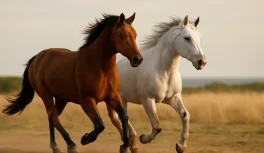
The Rat arrived first through cunning — it asked for a ride on the Ox’s back and leaped ahead just before the finish. The Ox came in second, the Tiger third. The Rabbit arrived fourth, the Dragon fifth (despite the ability to fly, it stopped to help other animals along the way). The Snake came sixth, hidden in the Horse’s legs. The Horse placed seventh — it would have arrived sooner, but the Snake leaped from its hooves and startled it.
Goat, Monkey, and Rooster arrived together, having negotiated among themselves. The Dog came in eleventh, having stopped to play in the water. And the Pig, who had fallen asleep along the way, arrived last in twelfth.
This is a fable, not a historical record. But it captures something genuine about the personalities each sign represents — and about the Horse in particular: it came close to the front, lost ground to an unexpected distraction, and landed in a position that reflects both its potential and its vulnerability to disruption.
The Twelve Animals and Their Core Traits
Each of the twelve animals represents a distinct psychological and energetic archetype:
Rat — Intelligent, adaptable, strategic. Arrives first not through strength but through creativity. Tends toward accumulation and can be calculating.
Ox — Patient, persistent, reliable. Works harder than anyone, complains less than anyone. Can be stubborn, but rarely fails what it commits to.
Tiger — Brave, impulsive, protective. Acts before thinking, but acts with conviction. Leads through example and energy, not calculation.
Rabbit — Diplomatic, intuitive, refined. Avoids conflict with skill and finds elegant solutions. Can seem distant but observes more than it shows.
Dragon — Charismatic, ambitious, magnetic. The only mythical sign in the zodiac — and it carries the weight of that privilege. Can become arrogant when grandeur is not tempered by humility.
Snake — Wise, mysterious, calculating. Thinks before acting, acts with precision. Can be possessive and hard to read, but rarely misses its mark.
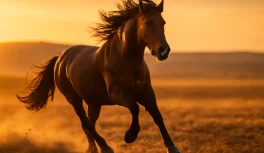
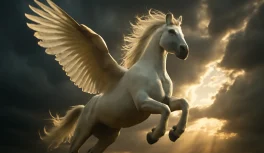
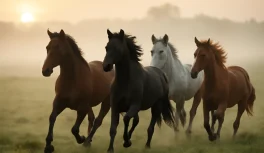
Horse — Energetic, free, charismatic. Lives in motion, loves the company of others, but needs space. Genuine passion combined with genuine impatience.
Goat — Creative, empathetic, sensitive. Thrives in harmonious environments and loses energy in conflict. Offers emotional support with rare generosity.
Monkey — Intelligent, versatile, witty. Solves problems with ease and humor. Can underestimate what doesn’t excite it — and create trouble out of boredom.
Rooster — Detail-oriented, organized, communicative. Loves to be noticed and rarely lets an error pass. Can be overly critical, but is the most reliable when it comes to execution.
Dog — Loyal, honest, protective. Defends what it believes in even when it costs something. Prone to anxiety, but never abandons those it loves.
Pig — Generous, honest, good-natured. Believes in the goodness of people and is often surprised when they fail. Lives fully, without reservation.
Why Does the Horse Hold a Unique Place in the Cycle?
The seventh animal in a twelve-sign cycle might not seem like a special position at first glance. But in Chinese tradition, seven carries its own significance, and the Horse as the seventh element of the zodiac places it at the exact transition point between two groups of six.
The first six animals — Rat, Ox, Tiger, Rabbit, Dragon, Snake — represent, in varying ways, accumulation, preparation, and inward reflection. The last six — Horse, Goat, Monkey, Rooster, Dog, Pig — are the animals of expression, manifestation, and life lived outward.
The Horse opens that second half. It is the first sign of externality — where energy that has been gathered begins to move, to express itself, to meet the world. This positioning is not symbolic accident: the Horse represents the cycle’s inflection point, the moment when introspection gives way to action.
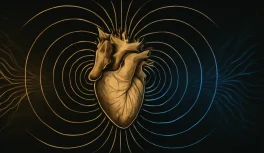
Beyond that, in Taoist cosmology and in applications of the zodiac to traditional Chinese medicine, the Horse is associated with the heart — the organ that moves blood, distributes energy, and sustains life. This association deepens the sign’s meaning beyond personality: the Horse as the vital principle of the cycle.
How Does the Twelve-Year Cycle Work in Practice?
The Chinese zodiac is not only a personality system — it is a calendar. Each year is marked by one of the twelve animals in rotation, and the arrival of each animal brings a specific energy that, in traditional belief, shapes the general tone of the period.
A Horse Year (such as 2014, and the next in 2026) tends to be marked by acceleration, mobility, and change. It is considered favorable for launching projects, making journeys, and pursuing new opportunities — and less favorable for patient accumulation and calculated waiting.
But the system goes further than the twelve-year cycle. There is also the Month of the Horse (typically June in the solar calendar) and the Hour of the Horse (between 11 a.m. and 1 p.m. in the Chinese hour system). The overlap of a Horse Year, Month, Day, and Hour creates a four-pillar map (bazi) used in Chinese astrology for deep personality and destiny analysis.
Someone born in a Horse Year, Month, Day, and Hour holds what the tradition calls “four pure pillars” — a concentration of energy that manifests in very specific ways and is considered both an extraordinary gift and a considerable challenge.
What Makes the Chinese Zodiac Different From Western Astrology?
Unlike Western astrology, which positions the sign according to birth month and solar position, the Chinese zodiac uses the lunar year of birth as its starting point. The Moon, which governs the Chinese calendar, represents cycles of withdrawal and expression — a different rhythm from the solar calendar.
The result is a system that emphasizes the collective as much as the individual: each year affects everyone, not only those born under that sign. And the sixty-year cycle — produced by the combination of twelve animals with five elements — creates a longer temporality, in which each person lives perhaps two or three complete cycles, each representing a different level of maturity and understanding.
The Horse, within this expanded system, is the seventh animal in a cycle of twelve, the first of expression, the one associated with the heart and vital movement. It is not the most exuberant sign — that title belongs to the Dragon. It is not the most persistent — that is the Ox. But it is, perhaps, the most alive. And in Chinese cosmology, vitality is the foundation of everything.