Trail riding has a quality that quickly filters out the unprepared: time. A real trail doesn’t last two hours — it lasts eight, twelve, or two full days. The rider needs a horse that moves for hours without tiring, handles varied terrain, hydrates and eats during the ride, and arrives at day’s end still willing. And the rider needs a gait that doesn’t destroy their back and hips in the first few hours.
That’s why gaited breeds dominate the world of long-distance trail riding. When it comes to Mangalarga vs Paso Fino trail riding, the comparison goes beyond saddle comfort: it involves endurance, terrain versatility, athletic ability, and what happens when the horse is tired after six hours on the trail.
What Does a Good Trail Horse Require?
Before comparing the breeds, it helps to understand what separates a trail horse from a show horse. On long trails and endurance rides, the demands are:
Cardiovascular and muscular endurance: The horse must maintain gait for hours with efficient energy consumption.
Soundness of legs and feet: Irregular terrain — rock, mud, roots, slopes — stresses joints and tendons. Horses with poor conformation develop problems faster.
Gait maintenance under stress: A horse that “breaks” (transitions to trot or canter) when tired, startled, or on steep descent forces the rider to work constantly.
Docility and focus: On trail, the horse encounters unpredictable situations — wildlife, water crossings, vehicles. A nervous, reactive animal endangers the rider.
Metabolic efficiency: Horses that need large amounts of feed to maintain condition are harder to manage on long rides with limited stops.
The Mangalarga Marchador on Trail: Built for This
The Mangalarga Marchador is possibly the most highly regarded trail breed in South America. The Prova de Marcha em Resistência — endurance rides of 60–190 miles over 24–72 hours of natural terrain — is the breed’s supreme test, and Mangalargas pass it consistently.
Endurance: The Mangalarga’s conformation was shaped by centuries of Brazilian fieldwork — cattle drives, farm routes, long hauls. Well-conformed horses maintain condition on moderate feed over long rides.
Terrain: The Mangalarga was developed in the hills and fields of Minas Gerais — rugged terrain with rock, mud, steep climbs and descents. This heritage is in the modern horse: solid joints, compact hooves, natural balance on difficult ground.
Gait maintenance on varied terrain: The Mangalarga maintains its gait naturally on varied terrain. The marcha picada especially — with its constant triple-support — is stable even on irregular ground.
Climate: Adapted to the full range of Brazilian climates — from northeastern heat to southern temperate — the Mangalarga handles climate variation well.
Weakness on trail: On extremely rocky, steep descents, the sloping hindquarter conformation can be slightly disadvantageous. And the marcha batida produces a mild lateral sway that some riders find fatiguing on very long rides — something the marcha picada resolves, but the rider must actively seek a picada-gaited horse.
The Paso Fino on Trail: Versatility with Conditions
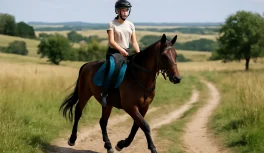
The trail Paso Fino — especially in paso corto — is a different animal from the show Paso Fino. Riders who know the breed only from formal shows are often surprised to discover the same horse can complete serious endurance trail rides consistently.
Smoothness on long rides: Here the Paso Fino has an undeniable advantage. The paso corto is one of the most efficient gaits for long-distance trail riding: covering ground at reasonable speed (8–12 mph) with virtually no vertical impact on the rider. On eight-hour rides, the difference for the rider is measurable — less muscle fatigue in the back and hips.
Metabolic efficiency: The Paso Fino is a smaller horse with an efficient metabolism — it needs less feed per kilogram than larger breeds to maintain condition under moderate work.
Docility and focus: Well-tempered Paso Fino horses are attentive and cooperative. On trail, they maintain focus on terrain without overreacting to stimuli.
Gait maintenance: A well-trained Paso Fino tends to maintain paso even when tired or on difficult terrain — not because the horse doesn’t feel fatigue, but because the lateral gait is the breed’s instinctive motor pattern.
Weaknesses on trail: The smaller size can be a disadvantage in extremely boggy terrain or passages requiring brute force (such as steep climbs with significant load). And the Paso Fino in paso corto, while smooth, tends to have less power output than the Mangalarga’s march — on high-demand endurance events requiring sustained speed, the Mangalarga has an edge.
Colombian Paso Fino horses — larger-framed with greater stride extension — generally perform better on high-demand trails than Puerto Rican show-type horses.
Direct Comparison: Trail Scenarios
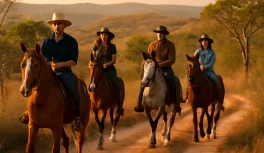
Weekend trail (12–25 miles, mixed terrain): Both breeds perform excellently. The rider will notice more comfort from the Paso Fino in paso corto — less physical effort. The Mangalarga will be easier to source (especially in Brazil) and tends to have more predictable temperament in groups.
Endurance ride (60–190 miles over 2–3 days): The Mangalarga has the edge in raw endurance and acceptance of extreme terrain. Well-bred Colombian Paso Finos are competitive, but still less tested in formal endurance events than the Mangalarga.
Rocky, mountainous terrain: Technical draw — both have good hoof quality and natural balance. The Mangalarga has a longer track record on Brazilian mountain terrain.
Trail riding for a rider with back or hip issues: Paso Fino, without question. The smoothness of the paso corto makes a real difference for physically sensitive riders.
Which to Choose for Trail Riding?
The pragmatic answer: if you’re in Brazil and ride for pleasure or compete in national events, the Mangalarga Marchador is the more accessible choice — more events, more breeders, more specialist veterinary support, and an active community.
If you prioritize maximum saddle comfort and are willing to seek out a Paso Fino breeder in Brazil (particularly in the South and Southeast), the Paso Fino delivers a trail experience that riders who try it rarely trade away.
Both are excellent. The choice is one of priorities.