Two American breeds, two legendary gaits, and one question that splits riders down the middle: which one should you choose? The Tennessee Walking Horse vs Missouri Fox Trotter debate comes up in forums, trail riding groups, and barn-aisle conversations around the world, because both breeds promise exactly what so many riders want: comfort in the saddle, a friendly temperament, and the willingness to go for hours. In this comparison, you will learn how they differ in origin, gait, size, and temperament, and find out which one better fits your goals.
Two Breeds Born in the Heart of America
Before weighing Tennessee Walking Horse vs Missouri Fox Trotter, it helps to know where each one came from. Both horses emerged in neighboring rural regions in the 19th century to solve similar problems: covering long distances in comfort and safety.
Tennessee Walking Horse: The Farm Horse of Middle Tennessee
The Tennessee Walking Horse was developed in Middle Tennessee by crossing various saddle and gaited horses brought by settlers. Farmers wanted a horse that could carry them for hours as they inspected their fields, without wearing them out. The breed gained an official registry in the first half of the 20th century and has since spread around the world as a pleasure horse.
Missouri Fox Trotter: The Horse of the Ozark Mountains
The Missouri Fox Trotter was born in the Ozark Mountains, a rugged region spanning Missouri and Arkansas. Settlers needed sure-footed horses that could handle rocky, uneven ground and still help with cattle work and family transportation. The breed association was formed in the mid-20th century. For the full story, read about the history of the Missouri Fox Trotter and its roots in the Ozarks.
Running Walk vs. Fox Trot: What Is the Difference Between the Gaits?
This is the heart of the Tennessee Walking Horse vs Missouri Fox Trotter debate. Both breeds have smooth, comfortable four-beat gaits, but the mechanics are different.
The Tennessee Walking Horse Running Walk
The running walk is a lateral four-beat gait: the horse moves the legs on one side and then the other, in separate, evenly timed beats. One hallmark is the overstride: the hind feet land beyond the prints left by the front feet, in a long, gliding motion. The head keeps time with a characteristic nod. For the rider, it feels like floating.
The Missouri Fox Trotter’s Fox Trot
The fox trot is a broken diagonal four-beat gait. The classic description helps you picture it: the horse appears to walk with its front legs and trot with its hind legs. The hind feet slide into the tracks of the front feet, which absorbs impact and keeps the back steady. The result is a very secure gait, especially on uneven ground, that the rider feels as a gentle rocking motion with no jarring.
What Changes in Practice?
The running walk tends to feel like a longer, more expansive glide, while the fox trot is described as more “settled” and solid. Both are comfortable. When it comes to gait, Tennessee Walking Horse vs Missouri Fox Trotter is often a personal choice: try both breeds before deciding, ideally on the same day and over the same kind of terrain. To see where they fit among other gaited horses, check out our guide to smooth-gaited horse breeds around the world.
Comparison Table: Tennessee Walking Horse vs Missouri Fox Trotter
| Criterion | Tennessee Walking Horse | Missouri Fox Trotter |
|---|---|---|
| Origin | Middle Tennessee (USA) | Ozark Mountains, Missouri and Arkansas (USA) |
| Signature gait | Running walk (lateral, four-beat) | Fox trot (broken diagonal, four-beat) |
| Feel in the saddle | Long, fluid glide | Steady, stable rocking |
| Approximate size | Medium to tall | Medium |
| Temperament | Calm, gentle, cooperative | Calm, docile, sensible |
| Main strength | Comfort over long distances | Sure footing on rough terrain |
| Most common use | Pleasure, trail, long rides | Trail, pleasure, ranch work |
| Good for beginners? | Yes, if well trained | Yes, if well trained |
Size and Build
In the Tennessee Walking Horse vs Missouri Fox Trotter matchup, size is a noticeable difference, though not a dramatic one. The Tennessee Walker tends to be a little taller and longer-lined, with a long, elegant neck. The Missouri Fox Trotter tends to be medium-sized, compact, and muscular, built for balance on rough ground.
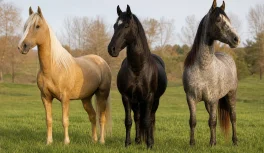
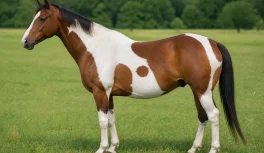
That difference may matter to very tall riders, who sometimes feel better proportioned on a Tennessee Walker, or to riders who want to mount and dismount easily, who may appreciate the Fox Trotter’s more modest size. In both cases, coat color varies widely and should not decide the Tennessee Walking Horse vs Missouri Fox Trotter question: conformation, correct legs, and healthy hooves matter far more than color.
Which Breed Has the Better Temperament?
Neither “wins” here, and that is good news. In the Tennessee Walking Horse vs Missouri Fox Trotter temperament contest, both breeds are famous for their docility. The Tennessee Walking Horse is described as gentle and eager to please. The Missouri Fox Trotter has a reputation as a sensible, quiet horse, much loved by families.
What really defines each horse’s behavior is the individual: training, handling, age, and experience. A well-started horse of either breed tends to be an excellent companion. If you are looking for a horse the whole family can enjoy, you may like our article on the Missouri Fox Trotter as a family horse.
Trail and Pleasure Riding: Which One Has the Edge?
Both breeds are trail stars, but each one shines in a different setting.
When the Tennessee Walking Horse Stands Out
On long routes with open stretches, dirt roads, and relatively even ground, the running walk lets you cover a lot of distance in comfort. For riders who enjoy rides of several hours at a steady pace, the Tennessee Walker is a natural choice.
When the Missouri Fox Trotter Stands Out
On mountain trails with climbs, descents, rocks, and roots, the fox trot proves its worth. The breed was literally shaped by this kind of terrain, and sure footing is one of its greatest strengths. It is no surprise that it is so popular for long-distance trail riding, as our article on the Missouri Fox Trotter on the trail explains.
In practice, a well-conditioned horse of either breed handles both kinds of terrain well. On the trail, the Tennessee Walking Horse vs Missouri Fox Trotter outcome comes down to details and the rider’s preference. Gradual conditioning, a well-fitted saddle, good hoof care, and water breaks make more difference at the end of the day than the breed you choose.
Which Breed Is Best for Whom?
To settle the Tennessee Walking Horse vs Missouri Fox Trotter dilemma, start by looking at your own riding routine. Choose the Tennessee Walking Horse if you:
- want maximum smoothness over long distances;
- like a taller horse with big, ground-covering movement;
- ride mostly on open terrain and country roads;
- want a calm partner for pleasure and recreational riding.
Choose the Missouri Fox Trotter if you:
- ride often on mountainous, uneven terrain;
- prefer a medium-sized, compact horse;
- place a high value on sure footing;
- want a versatile horse for both pleasure riding and ranch work.
Quick Answer: Which Is Better, the Tennessee Walking Horse or the Missouri Fox Trotter?
Neither breed is better at everything. In the Tennessee Walking Horse vs Missouri Fox Trotter comparison, the Tennessee Walker usually has the edge in smoothness and reach over long distances, while the Fox Trotter stands out for its sure footing on rough terrain. Both are calm and comfortable; the best choice depends on your goals and the kind of trails you ride.
Common Mistakes When Comparing the Two Breeds
Riders researching Tennessee Walking Horse vs Missouri Fox Trotter often fall into a few traps:
- Choosing based only on how the gaits are described in print: nothing replaces the feel from the saddle. Ride both breeds.
- Overlooking the individual horse: a poorly trained horse of either breed will disappoint.
- Skipping the pre-purchase veterinary exam: it applies in both cases, no exceptions.
- Ignoring your own riding style: terrain, frequency, and length of your rides should guide the decision.
Conclusion: It Depends on Your Goals
In the end, the Tennessee Walking Horse vs Missouri Fox Trotter showdown has no absolute winner. What it does have is the right horse for each rider. If your dream is hours of smooth gliding on open roads, the Tennessee Walking Horse is hard to beat. If your trails climb up and down mountains, the Missouri Fox Trotter may be your ideal partner. Either way, you get a comfortable, calm gaited horse that is easy to fall in love with.