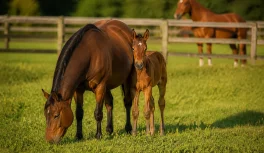
A pasture is not a paddock you fence off and walk away from. It is a managed ecosystem that must be planned, maintained, and monitored to function — because what a horse grazes affects its weight, metabolic health, parasite burden, and long-term soundness. A well-managed pasture provides forage, movement, social opportunity, and mental stimulation. A poorly managed one contributes to colic, laminitis, chronic parasite overload, and nutritional gaps that no supplement will fully compensate. The difference is almost entirely in how it’s managed.
This guide covers how much space horses need and why, which grasses work and which create problems, how to use rotational grazing to improve forage quality and reduce parasites simultaneously, what toxic plants to identify and eliminate, and how to build the fencing and water infrastructure that keeps horses safe.
How Much Space Does a Horse Actually Need?
Space requirements depend on forage quality, climate, and the horse’s workload, but these benchmarks are the practical starting point:
- High-quality, actively managed pasture: 1.2–2.5 acres (0.5–1 ha) per horse
- Average-quality pasture: 2.5–5 acres (1–2 ha) per horse
- Dry lot or exercise paddock without significant forage: size based on movement needs, not forage calculations
These numbers assume productive growing season conditions. In regions with extended dry seasons, hard winters, or drought years, even a generous acreage will require hay supplementation during non-productive months.
The critical grazing minimum is 4 inches (10 cm) of grass height. When pasture drops below this level, horses should be moved to allow recovery. Horses grazing below 4 inches consume significantly more soil and manure-contaminated material — direct contributors to sand colic and elevated parasite burden. Most desirable grass root systems also sit just below this depth; chronic overgrazing kills the stand and forces expensive reseeding.
Choosing the Right Grasses
Not all grasses suit horses equally well. The key concerns in pasture species selection are digestibility, non-structural carbohydrate (NSC) content (linked to laminitis risk in susceptible horses), palatability, and regional adaptability.
Bermudagrass (Coastal, Tifton, Common Bermuda): One of the most widely used horse grasses across the South and Southeast. Good fiber content, moderate energy density, relatively low in fructans — well-suited for horses prone to metabolic conditions. Works for both pasture grazing and hay production.
Kentucky bluegrass: Widely used in the Midwest and Northeast. Dense stand, good palatability, lower summer productivity in heat.
Timothy: Excellent quality hay grass and pasture component. Moderate energy and protein, highly digestible, low NSC — a good choice for easy keepers and metabolic horses.
Orchardgrass: High productivity and palatability, good for horses in active work requiring higher caloric intake.
Perennial ryegrass: Very high nutritional quality but use with caution. Ryegrass accumulates fructans during rapid growth periods — particularly cool, cloudy weather followed by bright sun — significantly raising laminitis risk in susceptible horses. Management requires close monitoring of body condition and limiting access during high-risk weather windows.
Mixed grass-legume pastures: A moderate clover or birdsfoot trefoil component (10–25% of stand) adds protein and palatability without the issues of a legume-dominant sward. Keep alfalfa below 20–30% for adult horses in light work; excess legume intake adds unnecessary protein load.
Grasses to avoid or use with caution:
Sorghum and sorghum-Sudan hybrids: Produce prussic acid (hydrogen cyanide) when stressed by drought, frost, or overgrazing. Avoid entirely as horse pasture.
Endophyte-infected tall fescue: A significant concern across the Southeast and Mid-Atlantic. The endophyte fungus (Neotyphodium coenophialum) produces ergot alkaloids causing vasoconstriction — particularly dangerous for pregnant mares, causing placental thickening, prolonged gestation, difficult foaling, reduced milk production, and foal death. Use only certified endophyte-free or novel endophyte varieties in any pasture accessible to broodmares.
Johnsongrass: Also produces prussic acid under stress conditions. Found as a weed species in many southeastern pastures.
Rotational Grazing: Better Forage, Fewer Parasites
Rotational grazing — dividing the total pasture into three to four paddocks and cycling horses through them systematically — is the most effective low-cost management strategy available to any horse owner. The benefits operate on two levels simultaneously.
Forage recovery: When a paddock rests for 30–45 days, grasses recover full leaf area before the next grazing cycle. The result is consistently higher-quality forage, stronger root systems, better water infiltration, and longer stand life. Continuous grazing of a single paddock progressively degrades the desirable species while weeds colonize the open ground. Rotational management is the single most important step toward sustainable pasture productivity.
Parasite load reduction: Most equine internal parasites (cyathostomins, large strongyles) have direct life cycles — eggs deposited in manure on the pasture surface hatch into infective larvae that horses ingest while grazing. Cyathostomin larvae cannot survive on open pasture for more than approximately three weeks without a host. Paddocks rested for 30–45 days between grazing cycles lose most of their infective larval population before horses return. Research consistently demonstrates that horses managed on rotational systems carry lower fecal egg counts than horses on continuous pasture, all else equal.
Combined with targeted selective deworming based on fecal egg counts, rotational grazing creates a management environment that reduces parasite burden without depending entirely on chemical control — which is increasingly important as anthelmintic resistance expands.
Toxic Plants: Know What Is Growing in Your Pasture
Horses on inadequate or overgrazed pasture will eat plants they would normally avoid. Some of those plants are seriously dangerous.
Oleander (Nerium oleander): One of the most acutely toxic plants for horses. A small amount of fresh or dried leaves can cause fatal cardiac arrhythmia. Common as a landscape and fence-line planting throughout the South and Southwest — inspect any fence line adjacent to residential or commercial property.
Black walnut (Juglans nigra): Juglone present in hulls, bark, and roots causes acute laminitis within hours of exposure. Never use black walnut shavings for bedding under any circumstances. Never pasture horses near fallen walnut trees or windrows of fallen hulls.
Bracken fern (Pteridium aquilinum): Chronic consumption — usually only when other forage is scarce — causes progressive thiamine deficiency and aplastic anemia. Found along woodland edges and in poorly managed pastures with thin forage cover.
Red maple (Acer rubrum): Wilted or dried red maple leaves contain gallic acid compounds that cause severe hemolytic anemia. Most cases follow storm damage bringing down branches into paddocks. Remove promptly.
Yellow star thistle and Russian knapweed: Cause nigropallidal encephalomalacia (“chewing disease”) — progressive, irreversible neurological damage from prolonged cumulative exposure. Primarily a western US concern.
Poison hemlock and water hemlock: Both found near water sources, drainage areas, and fence lines. Both acutely toxic in small quantities.
Walk your pasture regularly — at minimum quarterly — and learn to identify the toxic plants common to your region. Your local county extension office or land-grant university extension service can help with plant identification and management recommendations.
Safe Fencing: What Works and What to Never Use
Fencing for horses must contain the animal without injuring it. Horses are large, fast, and reactive — under stress they will run through barriers that would stop other livestock. Fencing appropriate for cattle is not necessarily safe for horses.
Electric fence: A psychological barrier that horses quickly learn to respect after initial contact. Single-strand high-tensile electric wire or polytape with proper insulators and an adequate energizer is cost-effective for large pastures and paddock systems. Requires consistent maintenance — a break anywhere in the circuit disables the fence entirely, and horses test unfenced boundaries.
No-climb horse wire (small-mesh woven wire): Small mesh openings prevent hooves and legs from becoming trapped. Very safe when properly installed with a top board or electric wire to prevent horses from leaning on and stretching the mesh. Higher installation cost but excellent durability.
Post-and-board (wood or high-impact polymer): Safe, highly visible, traditional appearance. Higher material and maintenance cost than wire options. Four-board height is standard for most horses.
Multi-strand smooth high-tensile wire: Safe when installed with correct strand spacing (not tight enough for a hoof or leg to pass through) and adequate tension. Requires good visibility — horses can fail to see smooth wire until contact.
Barbed wire: never, under any circumstances. A horse that hits barbed wire at any significant speed can sustain catastrophic lacerations — deep, ragged wounds to legs, chest, and neck that may require euthanasia. This is not a borderline recommendation. Barbed wire has no place in any horse management situation.
V-mesh (sheep and goat wire) or chain link: Openings allow hoof and leg penetration; horses attempting to free a trapped leg cause severe self-injury. Do not use.
Minimum fence height: 4 feet (1.2 m) for most breeds and disciplines; 5 feet (1.5 m) for larger breeds, stallions, or horses known to challenge fencing.
Infrastructure: Water, Shade, and Soil Health
Water: Fresh, clean water must be available at every point in the paddock rotation. A horse that must travel more than 200–300 feet to reach water will voluntarily reduce intake — and reduced water consumption is a direct risk factor for impaction colic. Check troughs daily; algae growth in warm weather becomes significant within days and can cause horses to stop drinking. Automatic float-valve troughs simplify management but must be checked daily for valve failure.
Shade: Access to shade is a welfare requirement in any climate with periods of significant heat and sun. Natural shade from established trees is ideal; a run-in shed with adequate interior space works where trees are limited. Horses with consistent shade access show lower rates of heat stress and voluntary drinking reductions during summer compared to horses in unsheltered paddocks.
Soil health: Pasture quality ultimately reflects the health of the soil underneath it. A soil test — inexpensive through most county extension offices, typically under $20 — provides pH, organic matter, phosphorus, potassium, calcium, and magnesium levels. Most equine pasture grasses grow best at a soil pH between 5.5 and 6.5; lime applications correct excess acidity over one to two growing seasons. Periodic nitrogen, phosphorus, and potassium applications maintain productivity in established stands without requiring reseeding.
One important caution: pastures with high accumulated manure loads over years can develop excess soil phosphorus. High soil phosphorus competitively inhibits zinc and copper uptake by grasses, which can contribute to secondary zinc and copper deficiencies in horses grazing those stands. Periodic soil testing catches this imbalance before it becomes a health issue.