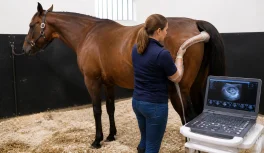
Most first-time horse owners think about legs, hooves, and feed. Teeth tend to come last — right up until the horse starts dropping balls of half-chewed hay on the ground, losing weight despite adequate rations, resisting the bit with no identified lameness, or flinching when touched around the muzzle. At that point, an equine dental professional arrives, opens the horse’s mouth with a speculum, and shows the owner what has been quietly progressing for months: enamel points sharp enough to lacerate the cheek with every bite, a gap between two molars packed with fermenting feed residue, a wolf tooth pressing directly against the bit site.
Equine dental care is not a luxury item or an advanced topic reserved for competition horses. It is routine maintenance with direct and measurable consequences for digestion, body condition, behavior, and quality of life.
How Equine Teeth Work
Horses have hypsodont teeth — a design that evolved specifically for animals grinding coarse, abrasive forage for most of their waking hours over a lifespan of decades. Unlike human teeth, which are fixed at a permanent length once erupted, equine teeth have a long reserve crown embedded in the jawbone that erupts progressively throughout the horse’s life to replace the surface worn away by grinding. A five-year-old horse with a full adult dentition has a substantial reserve of tooth structure that will emerge slowly over the following 20-plus years.
An adult horse carries:
- 12 incisors (6 upper, 6 lower): The front cutting teeth used to clip grass and hay at the source. Their angle and wear pattern change predictably with age and have long been used to estimate a horse’s age — “don’t look a gift horse in the mouth” reflects exactly this practice.
- 24 cheek teeth (12 premolars and 12 molars, 6 per quadrant): The grinding battery responsible for processing fibrous forage into digestible particles. These do the essential work of equine digestion.
- Wolf teeth (Pm1): Small vestigial premolars appearing just in front of the upper first cheek teeth. Not present in all horses, but common. A wolf tooth positioned in the path of bit contact causes consistent, sharp pain with every rein signal and is routinely extracted in young horses before training begins.
- Canine teeth (tushes): Present in most male horses and in some mares. They sit in the interdental space — the bar — between incisors and cheek teeth. Long canines can interfere with proper bit placement.
The occlusal (grinding) surfaces of the cheek teeth are not flat — the upper jaw is inherently wider than the lower, creating an angled grinding surface. As the surfaces wear unevenly, they develop enamel points: sharp ridges on the outer edges of the upper cheek teeth and the inner edges of the lower cheek teeth. These points cut the cheeks and tongue with every chew.
Why Problems Develop in Domestic Horses
The domestic horse’s diet is fundamentally different from the diet that shaped equine dental anatomy. Wild horses spend 12–16 hours daily grazing varied, abrasive, fibrous forage in wide lateral jaw movements that produce even, uniform wear across the full cheek tooth surface. Domestic horses on hay, pellets, and limited turnout use smaller chewing movements, process less abrasive material, and develop uneven wear patterns faster.
The result: virtually all horses in domestic management develop enamel points to some degree. Left unaddressed, the points lacerate soft tissue, alter the chewing pattern, reduce forage particle size at swallowing, and ultimately reduce digestive efficiency in ways that appear in the feed bucket, on the scale, and in ridden performance.
An equally important reality: horses are long-lived animals. A well-managed horse may live 25–35 years. The finite reserve of crown structure means that horses in their late teens and beyond experience progressive dental changes — shorter functional surfaces, loosening teeth, eventual tooth loss — requiring dietary adaptations to maintain adequate nutritional intake as the dentition declines.
The Most Common Dental Problems
Enamel points (hooks and sharp edges): The most prevalent dental problem in adult horses. Sharp ridges along the cheek teeth lacerate the cheeks and tongue with every chewing motion. Causes: quidding (dropping partially chewed balls of forage), difficulty chewing, weight loss, bit resistance, and foul breath.
Diastemata: Abnormal spaces between adjacent teeth that trap and pack feed. Packed feed ferments and causes localized periodontal inflammation, bone loss, progressive pain, and fetid breath. The horse may develop a pronounced one-sided chewing preference, visibly dropping feed from the affected side.
Periodontal disease: Progressive inflammation and bone resorption around the tooth roots. More common in older horses. Causes pain, tooth loosening, and eventual tooth loss in advanced cases.
Wolf tooth interference: A wolf tooth in bit-contact position causes sharp, consistent pain with every rein cue. Affected horses show head tossing, evasion of contact, one-sided resistance, and refusal to bend correctly. Extraction reliably resolves the issue.
Long canine teeth: In male horses, canines that grow beyond the interdental space create a mechanical obstacle to proper bit seating and can cause pressure-related discomfort.
Infundibular caries: Cavity formation in the cup-shaped infundibular structures of the upper cheek teeth. Progressive if untreated and can lead to tooth fracture in advanced cases.
Retained deciduous caps: The deciduous (baby) teeth shed on a predictable schedule between ages 2.5 and 5. When a cap fails to shed normally, it traps the erupting permanent tooth below, causing pain, malalignment, and soft tissue damage.
Signs That Your Horse Has a Dental Problem
Horses rarely stop eating when dental pain develops. They adapt — chewing differently, favoring one side, tilting the head, swallowing poorly processed fiber. This means problems can advance significantly before owners notice anything obvious. Signs to recognize:
Related to eating:
- Quidding — balls or wads of partially chewed hay or grass falling from the mouth, found in the feed area or on the ground
- Progressive weight loss with no reduction in appetite or feed quantity
- Undigested feed in the manure (whole grain kernels, long fiber strands)
- Apparent preference for softer feeds or reluctance to eat coarser hay
- Excessive salivation during meals
- Persistent foul smell from the mouth
Related to work and behavior:
- Head tossing or bit evasion with no identified lameness, saddle fit issue, or muscular cause
- Difficulty accepting or maintaining consistent contact on the bit
- Resistance on one rein significantly greater than the other
- Asymmetrical chewing — dropping feed consistently from one side of the mouth
- Sensitivity or flinching when the nose, muzzle, or jaw is touched or handled
Any consistent change in how a horse eats or how it moves under saddle that does not have an obvious physical explanation warrants a dental examination as part of the diagnostic process.
How Often to Schedule a Dental Exam
Frequency depends on the horse’s age and dental history:
Young horses (ages 2–5): Semi-annual or annual exams during the primary dentition transition period. The replacement of deciduous teeth with permanent teeth proceeds on a known schedule — incisors at 2.5, 3.5, and 4.5 years; premolars beginning around 2.5 years — and professional monitoring catches retained caps and malalignment before they cause lasting problems. Wolf teeth, when present, are typically extracted during this period before training begins.
Adult horses (ages 6–18): Annual examination with floating (smoothing of enamel points) as needed. Annual preventive maintenance is the standard of care for horses in this age range.
Senior horses (18 and older): Semi-annual examination. Dental changes accelerate in older horses, and the consequences of missed problems — rapid weight loss, pain-driven anorexia, inability to process forage — are more serious because older horses have less physiological reserve and recover more slowly.
Horses in active training or with documented dental history may benefit from more frequent professional assessment; discuss the appropriate interval with your equine dental practitioner.
What the Procedure Involves
Equine dental work requires training and specialized equipment that routine physical examination does not. Both veterinarians with postgraduate equine dental training and certified equine dental technicians are qualified to perform preventive dental maintenance.
A complete dental examination proceeds as follows:
1. Sedation: Most horses are sedated for dental work — light chemical restraint that keeps the horse standing safely while allowing thorough examination and instrument work without distressing the animal or creating safety risk for the practitioner. Working unsedated in a horse’s mouth produces incomplete examinations and higher risk for everyone involved.
2. Speculum placement: A dental speculum (mouth gag) opens the mouth and holds it open while providing access to the entire cheek tooth arcade. Without a speculum, the caudal (back) molars are physically inaccessible to examination or treatment.
3. Systematic examination: The practitioner visually and manually assesses all teeth for enamel points, irregular wear patterns (step mouth, wave mouth), hooks, diastemata, loose teeth, fractured teeth, and periodontal pockets.
4. Floating: Using motorized or hand rasps, the practitioner reduces enamel points and corrects irregular surfaces. Motorized floating is faster; skilled hand floating allows finer tactile control of pressure and surface geometry.
5. Additional procedures: Wolf tooth extraction, fractured tooth removal, or other indicated procedures may be completed during the same visit when appropriate.
Dental Health and Performance: The Connection Is Real
Equine sports medicine research is unambiguous: horses with significant, unresolved dental pathology show reduced feed conversion efficiency, behavioral changes under saddle, and whole-body postural effects that extend well beyond the mouth. Jaw pain creates compensatory muscle tension in the poll, neck, and back that alters stride mechanics, limits lateral flexibility, and degrades collection and contact quality in ways that closely mimic soundness problems.
Horses that undergo floating after extended periods with unaddressed enamel points frequently show visible improvement in contact acceptance, softness through the back, and willingness to work within two to four weeks of treatment. The physical cause of the tension has been removed; the compensatory patterns the horse developed gradually resolve.
Feeding Horses With Dental Problems
Horses with advanced dental disease — particularly older horses with significant wear, multiple loose teeth, or tooth loss — cannot efficiently process long-stem hay. They chew superficially, swallow poorly reduced fiber, and absorb substantially fewer nutrients than the quantity of feed offered would suggest. This explains the common scenario of an older horse losing weight on an apparently adequate hay ration: the teeth are no longer doing the job they need to do.
Dietary adaptations that maintain adequate nutrition in dentally compromised horses:
Soaked hay cubes or chopped hay (chaff): Small-particle forage requires less grinding effort. Soaking further softens the particles, making them manageable even for horses with acute oral pain or significantly worn teeth.
Wetted long-stem hay: Soaking hay in water for 30–60 minutes before feeding softens the fibers and makes chewing easier for horses with active dental pain, as a bridge while the underlying issue is addressed.
Soaked beet pulp: An excellent source of soluble fiber and moderate energy for horses unable to process hay adequately. Must always be fed fully soaked — dry beet pulp shreds expand significantly in the stomach and have caused choke and colic. Wet beet pulp is safe, highly digestible, and very palatable to most horses.
Senior complete feeds: Commercially formulated with more digestible fiber sources, higher caloric density, and higher protein quality to compensate for the reduced digestive efficiency characteristic of older horses. Some senior feeds are designed to be fed without hay for horses with very limited dental function.
Any dietary modification in a dentally compromised horse should be made with veterinary guidance and with regular body condition reassessment to confirm the plan is sustaining adequate nutrition.
Treating the horse’s mouth is treating the horse. Oral health is not a footnote to equine care — it is central to the horse’s ability to extract nutrition from feed, accept work with comfort, and maintain quality of life across the full arc of its lifespan.