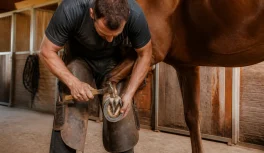
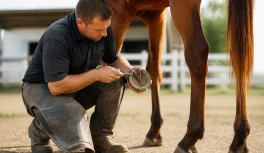
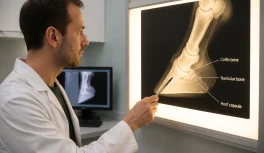
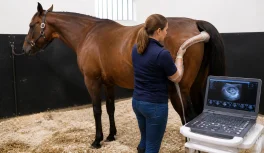
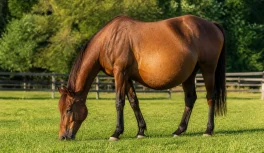
The idea of a horse without shoes can seem strange to anyone who grew up seeing horses always shod. But the barefoot movement — as the practice of keeping horses unshod came to be known — is neither a recent trend nor a radical position. It is an approach supported by studies in equine biomechanics and by a deeper understanding of how the hoof functions when it is at its best.
The question is not whether barefoot is better or worse than conventional shoeing. The question is: for which horse, in which conditions, and with which management?
What Happens to a Barefoot Horse’s Hoof?
The equine hoof is a living, dynamic structure. When shod, part of its natural function is modified — the expansion and contraction of the hoof with each step, which acts as a shock-absorption mechanism, is partially restricted by the nailed metal shoe.
In a well-managed barefoot horse, the hoof completes its full cycle: when it contacts the ground, it expands slightly; as it lifts, it retracts. This movement acts as a hydraulic pump that drives the return of venous blood from the limb to the heart — a function known as the hoof mechanism.
Horses living freely that cover long distances over varied terrain develop naturally hard, well-formed, highly functional hooves. The domestic barefoot horse can reach a similar condition — but requires management conditions that allow that development.
Barefoot Is Not Simply Removing the Shoes
This is the most misunderstood point of the barefoot movement. Pulling the shoes off a horse that has always been shod, without any preparation, can result in pain, excessive sensitivity, and even lameness — especially if the animal lives on unsuitable footing.
The transition to barefoot takes between 3 and 12 months, depending on the horse and the conditions. During this time, the hoof needs to adapt: the sole will thicken, the frog will strengthen, and the hoof wall will develop density and resilience that shod hooves typically do not build.
What Makes the Transition Easier?
Varied footing: horses that have access to different ground textures — sand, rock, grass, packed earth — develop stronger hooves than animals living exclusively on soft pasture or rubber stable mats.
Constant movement: a healthy hoof needs circulation. Horses that move regularly, whether in a large paddock or through daily work, have healthier hooves than animals confined to small stalls without exercise.
Balanced diet: deficiencies in biotin, zinc, methionine, and other nutrients directly affect hoof quality. During the transition, a nutritional evaluation can be valuable.
Regular specialized trimming: the barefoot hoof requires frequent trimming by a professional trained in barefoot methodology — which differs from pre-shoeing preparation. The goal is not merely to level the hoof, but to encourage the correct development of internal structures.
Which Horses Do Best Without Shoes?
Generalizing is risky — every horse is different. But some profiles tend to thrive without shoes:
Low-to-moderate impact horses: animals used for trail riding, light farm work, or recreational riding on soft terrain have physical demands that a well-developed hoof can meet without metal protection.
Horses recovering from certain conditions: some hoof diseases — including certain presentations of navicular syndrome — respond well to the barefoot approach. Improved circulation and natural hoof function can be part of the treatment.
Foals and young horses: many breeders choose not to shoe young horses until the hoof is fully developed — typically from age three or four onward. This allows the structures to form without the restriction of metal.
Horses with genetically strong hooves: there is enormous individual variation in hoof quality. Animals with naturally hard hooves, good soles, and developed frogs have a clear advantage in the barefoot transition.
Which Horses Still Need to Be Shod?
Barefoot has real limits, and ignoring them in the name of a philosophy causes the animal to suffer:
High-performance horses on hard surfaces: horses that train and compete in arenas for show jumping, racehorses, endurance horses on rocky trails — these animals need protection that a natural hoof rarely offers at an adequate level.
Animals with severe conformation issues: horses with very irregular conformation often depend on corrective shoeing to work without pain. Barefoot cannot compensate for some structural imbalances the way a custom-fitted shoe can.
Horses on predominantly hard or abrasive footing: an animal that works daily on concrete, stone, or coarse sand without a long, well-managed transition will likely have hooves inadequate for the wear.
Horses under heavy workloads: the physical demand can simply exceed what a natural hoof can absorb, even after a successful transition.
What Does the Research Say About Barefoot Horses?
Studies in equine biomechanics have shown that a well-developed barefoot hoof has better shock absorption than a shod hoof under many conditions. The hydraulic pump function of the intact hoof improves limb circulation. And the frog — which often hangs suspended without ground contact in many shod horses — regains function and resilience when the horse works without shoes.
On the other hand, studies with high-performance horses have shown that the right shoe provides protection and support that a natural hoof cannot replicate under conditions of extreme work.
The consensus among the most balanced researchers is that there is no single answer — and that the choice must be based on the specific animal, its history, its use, and the conditions in which it lives.
Is My Horse a Barefoot Candidate?
Some practical questions to start the evaluation:
- Does the horse have a history of excessive hoof sensitivity or disease related to shoeing?
- What type of terrain does the horse live and work on?
- What is the intensity of the work performed?
- Does the current hoof have good wall, sole, and frog quality?
- Does the owner have the ability to manage a multi-month transition with professional oversight?
If the answers point to a horse in moderate work, with reasonably good hoof quality, on varied terrain — a conversation with an experienced barefoot farrier is well worth having.