The equipment list facing a new horse owner can look genuinely intimidating before the first horse arrives. Halters, saddles, bridles, blankets, grooming kits, boots, first aid supplies — the range of items in any equestrian catalog is wide, and the price tags are wider. The important clarification is this: you do not need all of it before day one, and some of it you may never need depending on your discipline and situation.
This guide separates what is genuinely essential from what is optional, explains what each item does, and helps you spend where it matters rather than where it doesn’t.
Ground Handling: The First Things You Need
Before any riding equipment, before any tack, you need to be able to safely catch, lead, and secure your horse on the ground. Three items make that possible.
Halter: The foundational piece of horse equipment. A halter fits over the horse’s head and provides the attachment point for a lead rope, allowing you to lead and tie the horse for any handling purpose. Leather halters are traditional and durable, and they carry an important safety advantage: leather breaks under extreme pressure. If a horse panics while tied in a leather halter, the leather gives before a leg fractures or a cervical vertebra is damaged. Nylon halters are more affordable and widely available; a nylon halter with a breakaway leather crown piece offers a reasonable safety compromise.
Fit is critical and non-negotiable. A halter that is too tight restricts breathing and causes pressure sores at the nose and cheekbone. One that is too loose can snag on fencing, feeders, or other protrusions and trap the horse in a dangerous entanglement. The noseband should sit two finger-widths below the bony prominence of the cheekbone; the throatlatch should allow a fist’s clearance.
Lead rope: The rope that clips to the halter ring and allows you to lead or secure the horse. Standard length is 8–10 feet (2.5–3 m). The hardware matters: use a bolt snap or panic snap rated for horse use. A standard carabiner is not appropriate — it can jam under load and become impossible to release in an emergency. A properly rated panic snap releases with one hand even under full tension.
Safety tie or cross-ties: A safety tie is a length of breakaway cord placed between the tie ring and the lead rope, designed to snap before the horse fractures a leg in a pull-back panic. Cross-ties — two ropes attaching to the halter rings on either side from fixed overhead points — are standard in grooming areas and barn aisleways. Both setups require solid attachment points; never tie a horse to thin fence rails, stall doors, or anything that can fail or be pulled loose from a wall.
The Grooming Kit: The Functional Minimum
A workable daily grooming kit does not require expense or elaborate contents. The essentials:
Rubber curry comb: Loosens dried dirt, shed hair, and dried sweat in circular motions over the muscular areas of the neck, barrel, shoulder, and hindquarters. Do not use over the spine, bony face, or lower legs.
Dandy brush (stiff bristles): Sweeps the debris loosened by the curry comb off the coat surface. Effective across the whole body.
Body brush (soft bristles): Smooths and polishes the coat, distributes natural oils, removes fine dust. Safe for the face and lower legs.
Mane and tail comb or wide-toothed brush: Detangles without excessive breakage. Work from the tips up toward the roots, not the other way.
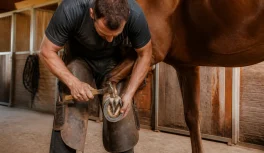
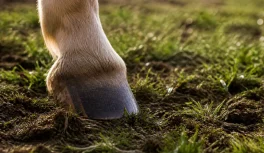
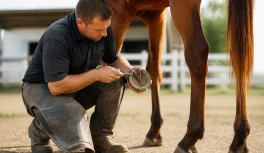
Hoof pick: Non-negotiable. Clean and inspect all four hooves every single day — not just before rides, every day — to catch thrush, heat, or developing problems before they cause lameness.
Two sponges, permanently designated and never swapped: One for cleaning around the eyes and nostrils. One for the dock and genital area. Color-code them and store them separately.
Sweat scraper: Removes excess water after bathing or sweat after hard work. A simple flexible rubber or metal blade saves significant drying time.
Optional items worth acquiring once you have the basics and understand your horse’s needs: a bath glove (faster lathering), a finishing brush for coat polish, mane and tail detangler spray (especially for coarse or thick tails), and hoof oil for horses with dry or brittle hooves.
Feeding and Water Equipment
If you are not at a full-service boarding facility with built-in feeding infrastructure, you will need:
Slow-feeder hay net: Suspends hay and forces the horse to extract it through a small mesh, extending grazing time, reducing boredom, and more closely mimicking continuous natural grazing behavior. Horses that eat loose hay piled on the ground consume it far too quickly — often in 20–40 minutes — leaving many idle hours without forage, which elevates colic and ulcer risk. Slow-feeder nets are one of the most cost-effective management tools available.
Wall-mounted feed bin or corner manger: For concentrates, supplements, or senior feeds. A fixed feeder at approximately chest height is significantly safer than a bucket on the ground — ground-level buckets get kicked, stepped in, and tipped; they are also more likely to collect manure contamination.
Waterer: Either an automatic trough with a float valve (fills automatically as water is consumed) or a large tub or stock tank filled and cleaned manually. The essential requirement is capacity and cleanliness. An adult horse needs 6–13 gallons (25–50 liters) of fresh water per day, considerably more in heat and during strenuous work. Check automatic waterers daily — float valves fail silently, and a horse without water for 24 hours is at immediate colic risk.
Manure fork and wheelbarrow: Daily removal of manure from stall, run-in shed, and paddock is a basic sanitation requirement. Accumulated manure increases ammonia concentration (respiratory irritant), provides fly breeding habitat, and concentrates parasite eggs in the horse’s living space.
First Aid Kit: Build It Before You Need It
Every horse owner needs a first aid kit assembled and ready before an emergency occurs — not assembled reactively during one. The kit does not need to be elaborate, but the essentials must be there and within reach.
Rectal thermometer: Normal equine rectal temperature is 99–101.5°F (37.2–38.5°C). Any sustained reading above 102°F (38.9°C) warrants a call to your veterinarian. A digital thermometer with a clip and string (attached to the horse’s tail to prevent it being sucked in) is standard.
Stethoscope: Learn to use it. Normal resting heart rate in a healthy adult horse is 28–44 beats per minute. A resting heart rate above 60 bpm indicates pain or distress and is a clinical emergency. The stethoscope is also used to monitor gut sounds during suspected colic — normal borborygmi (digestive gurgling) should be present in all four abdominal quadrants; silence in any quadrant is a serious finding.
Saline solution: For flushing wounds. Sterile saline is ideal; if unavailable, clean tap water is better than nothing.
Sterile gauze pads and cotton bandage: For wound coverage and wound bandaging.
Self-adhesive bandage wrap (Vetwrap or equivalent): Conforms to irregular leg surfaces, stays in place without adhesive, removes without pulling hair. A staple of any equine first aid kit.
2% chlorhexidine solution or povidone-iodine (Betadine): For wound antisepsis. Important: dilute before applying to open tissue. Full-strength iodine is cytotoxic and delays healing; dilute povidone-iodine to a pale tea color before wound irrigation.
Wound ointment: Triple antibiotic ointment or a product formulated for equine wound management.
Syringes and needles: For administering medications as directed by your veterinarian. Do not acquire or use injectable medications outside of direct veterinary guidance — improper drug use in horses can mask symptoms, cause fatal reactions, or create drug-detection complications in competition horses.
Your veterinarian’s contact information posted visibly — not stored only in a phone that may have a dead battery when you need it. On a laminated card in the kit and on the stall door.
Shelter and Comfort Equipment
Winter blanket: Required for horses that are body clipped (coat removed for winter training) and for horses in climates with sustained cold and wet conditions. Two basic types: a waterproof turnout rug for outdoor use and a stable blanket (fleece or quilted) for indoor stabling. Fit is critical — a blanket that slides backward creates withers sores and chest rubs; one that is too tight restricts shoulder movement and causes pressure points. Check fit at minimum weekly and after any roll.
Fly sheet and fly mask: In warm-weather climates, insect pressure (flies, gnats, mosquitoes, no-see-ums) causes real daily stress and serves as a vector for disease transmission including West Nile Virus and Equine Infectious Anemia. A well-fitted fly sheet covers the barrel, flanks, and much of the neck; a fly mask protects the eyes, face, and ears. Both require daily removal and inspection — fly sheets can conceal developing wounds and rubs.
Protective boots: Bell boots (protect the heel bulbs and coronary band from overreaching) and splint boots or brushing boots (protect the cannon bone and inside of the fetlock from self-inflicted interference injuries) are commonly used for horses in regular work. When properly fitted, they reduce injury risk during exercise without restricting natural movement. Left on too long or fitted incorrectly, they cause pressure sores — remove after exercise and check the skin underneath.
Riding Equipment: Where to Invest
For the rider, a certified safety helmet is the first purchase — not optional under any circumstances. Helmets certified to ASTM F1163 or ASTM F1163-15 (US standard) or EN 13384 (European standard) provide measurable protection in falls. A bicycle helmet does not. An uncertified equestrian helmet does not.
For the horse, the saddle is the highest-consequence equipment purchase from a welfare perspective. An ill-fitting saddle creates pain with every stride — pain that shows up as resistance, girthing behavior, shortened stride, and unwillingness that gets misidentified as behavioral problems. Before purchasing, have any saddle professionally fitted to your specific horse, understanding that a horse’s back changes with condition and age and fit should be rechecked annually.
A bridle and appropriately sized bit for the horse’s training level, a well-fitted saddle pad, and properly adjusted stirrups complete the riding baseline. Everything else — martingales, specialized pads, schooling aids, spurs — can be added as experience, discipline, and the individual horse’s needs genuinely warrant them.
Caring for Your Equipment
Equestrian equipment maintained well lasts decades. Leather items — saddles, bridles, halters, reins — are a meaningful financial investment worth protecting.
Clean leather after any wet or heavily sweated use with a leather cleaner before storage. Apply leather conditioner every 2–4 weeks; dry leather cracks and becomes brittle under load, which is a safety issue, not just an aesthetic one. Never dry leather near a heat source or in direct sunlight — UV and excess heat degrade the fiber structure. Store saddles on proper racks to maintain their shape; saddles stored on their sides or stacked flatten panels and distort tree geometry over time.
Nylon and synthetic equipment — grooming kit items, synthetic halters, blankets — should be washed with mild soap, rinsed thoroughly, and dried completely before storage. Storing damp equipment promotes mold, degrades synthetic fibers, and creates unpleasant odors the horse will notice.