There is something almost universal about the relationship between horses and cinema. Even before Hollywood had a name, the first experiments with moving images already captured horses in motion — photographer Eadweard Muybridge, in 1878, created his most famous sequence precisely to answer a question about the equine gallop. It was the beginning of a love story between the camera and the horse that continues to this day.
The best horse movies are not simply films about animals. They are stories about freedom, loyalty, resilience, and the silent bond that forms between humans and horses — a bond that spans centuries and still moves any audience. Whether you have never seen one of these films or want to revisit old classics, this guide brings together the most remarkable productions: from historical drama to animation, from thoroughbred racing to the battlefield.
Why Do Horse Films Move Us So Deeply?
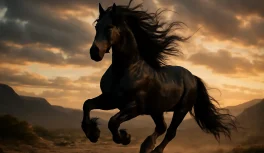
There is something in the horse that the camera captures in a unique way: the combination of strength and vulnerability, of speed and sensitivity. A horse in full gallop is one of the most cinematic images that exist — and when a narrative adds a human relationship to that animal, the result tends to be unforgettable.
Psychologists who study audience emotional response note that horses on screen activate the same empathy mechanisms as babies and young children: they are powerful yet dependent creatures, capable of suffering and of trusting. When a film explores that vulnerability honestly, audiences respond with genuine emotion.
That is why films like War Horse, Seabiscuit, and Spirit reach audiences who have never sat on a horse in their lives.
The Classics That Defined the Genre
War Horse (2011) — directed by Steven Spielberg
Based on Michael Morpurgo’s children’s novel and the hit National Theatre stage production, War Horse follows Joey, a horse sold to the British army during World War I, and Albert, the young man who raised him and goes to the front lines to find him. Spielberg films the war with epic grandeur — and the horse at the center of the chaos as a symbol of innocence preserved amid devastation. It is one of the most emotionally honest films ever made about the relationship between humans and horses.
The Horse Whisperer (1998) — directed by Robert Redford
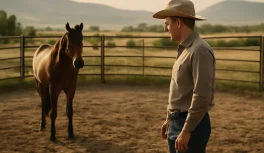
Grace and her horse are both traumatized after a serious accident. Grace’s mother, in desperation, seeks out Tom Booker — a “horse whisperer” living on a ranch in Montana. What seems to be a mission to heal the horse becomes a story of human healing: trauma, love, and new beginnings. Robert Redford directs and stars with precision, and the film introduced the mainstream public to the real concept of horse whisperers — trainers who communicate with horses through behavior and body language, not force.
The Black Stallion (1979) — directed by Carroll Ballard
After a shipwreck, a boy and a spirited Arabian purebred are stranded on a deserted island. The friendship that develops there, built in silence and patience, is the soul of the film. The Black Stallion features one of the most beautiful opening hours ever filmed — almost dialogue-free, with Caleb Deschanel’s cinematography transforming the relationship between boy and horse into visual poetry. An absolute classic of equestrian cinema.
Flicka (2006) — directed by Michael Mayer
A contemporary adaptation of Mary O’Hara’s novel My Friend Flicka. Katy, a sixteen-year-old girl, lives on her father’s Wyoming ranch and encounters a wild dark mare she names Flicka — “pretty girl” in Swedish. The relationship between the two is both mirror and metaphor: both seek freedom in a world that tries to domesticate them. Tim McGraw plays the father with restraint and truth, and Wyoming’s scenery delivers landscapes worth the watch on their own.
Animation That Became a Classic: Spirit
Spirit — Stallion of the Cimarron (2002) — DreamWorks Animation
Spirit tells the story of a wild mustang that resists capture by the American army and finds freedom through friendship with a young Lakota warrior named Little Creek. Without speaking a single word — the horse-protagonist only whinnies and breathes — the film builds a character with more emotional depth than many human protagonists. Hans Zimmer and Bryan Adams’s soundtrack and the animation blending traditional 2D with CGI made Spirit a generational phenomenon. Decades later, it still makes children and adults cry at the final scene.
When True Stories Are Bigger Than Fiction
The two most powerful horse films about champion racehorses are based on real stories — and reality, in both cases, surpassed any screenwriter.
Seabiscuit (2003) — with Jeff Bridges, Chris Cooper, and Tobey Maguire
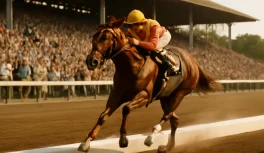
The 1930s. The Great Depression has devastated the United States. A bankrupt millionaire buys a small, nervous, knock-kneed horse that no one took seriously. With an experienced trainer and a jockey almost blind in one eye, Seabiscuit becomes the horse of the year 1938 — and a symbol of hope for a nation in crisis. Nominated for 7 Academy Awards, it remains one of the most perfectly balanced sport-history-emotion films ever made.
Secretariat (2010) — directed by Randall Wallace
In 1973, Penny Chenery — a housewife with no racing experience — inherits the family stud farm and discovers she has a horse unlike anything that had ever existed. Secretariat won the American Triple Crown with a margin of time no other horse has matched to this day. With Diane Lane as Penny, the film is inspiring without being mawkish — and the horse is filmed with a grandeur that does justice to the legend.
Dreamer (2005) — with Kurt Russell and Dakota Fanning
Based on the true story of Mariah’s Storm, a racing mare that survived a catastrophic injury, Dreamer tells the story of a trainer and his daughter who rescue an injured horse from euthanasia and rehabilitate her to compete. The most accessible of the true-story equestrian films — emotionally resonant without being manipulative.
Wild Horses and the Search for Freedom
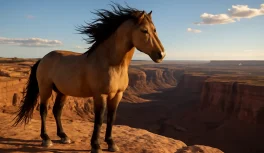
An undercurrent connects several of the best equestrian films: the horse as a symbol of freedom. In Spirit, it is literal — the mustang who refuses to be broken. In The Black Stallion, it is the deserted island where the horse exists outside the human world. In Flicka, it is the mare no fence can contain.
Cinema returns to this theme because it resonates with something deep: the wild horse represents what cannot be fully owned — and precisely because of that, when it chooses to be with you, that is the greatest form of trust that exists.
Other Films Worth Adding to Your List
- Black Beauty (1994) — the adaptation of Anna Sewell’s classic novel, narrated by the horse himself
- The Black Stallion Returns (1983) — the sequel, with young Alec traveling to the Arab world to find his stolen horse
- Hidalgo (2004) — based on Frank Hopkins’s story, an American rider in an endurance race across the Arabian desert with his mustang
- National Velvet (1944) — with a young Elizabeth Taylor, one of the first great equestrian films of classic Hollywood
Which to Watch First?
- Historical emotion: start with War Horse or Secretariat
- Family with young children: Spirit is perfect
- Teenagers: Flicka or Dreamer
- Racing fans: Seabiscuit or Secretariat
- Art cinema: The Black Stallion (1979) is unparalleled
- Introduction to equine behavior: The Horse Whisperer
What all of them share is that none treats the horse as scenery. In each one, the animal is a character — with personality, history, and its own emotional arc. And that is why horse movies remain, generation after generation, some of the most moving that cinema has ever produced.