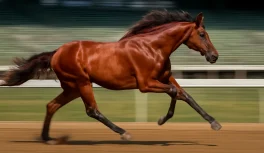
Hollywood has a longer history with horses than most people think. Before sound, before color, before CGI — there were westerns, and westerns needed riders. The working relationship between actors and horses began in the earliest days of cinema, and something about that relationship has always had a way of outlasting the production.
The Hollywood actors who love horses are, more often than not, the ones who arrived at equestrian life through the work itself. A film role required months of riding. The role ended. The horse connection didn’t.
Viggo Mortensen: The Man Who Kept the Horses
No actor is more closely associated with horses in contemporary Hollywood than Viggo Mortensen — and the story behind that connection is worth knowing.
During the production of The Lord of the Rings, Mortensen spent months working closely with the horses used on set, including a gray horse named Uraeus who carried him through some of the trilogy’s most demanding sequences. When filming wrapped, Mortensen didn’t want to walk away. He bought Uraeus. He then adopted two other horses from the same production — animals that would otherwise have faced uncertain futures.
For Mortensen, horses aren’t props or performance accessories. They’re relationships with continuity. He has described the process of building trust with a horse during a production as something that fundamentally changes the actor: you learn to be present in a way that filmmaking, for all its emotional demands, rarely requires. The camera can capture what you show it. The horse only responds to what’s actually there.
What Did The Lord of the Rings Do to Viggo Mortensen’s Relationship With Horses?
It turned a professional skill into a personal commitment. The months of preparation and daily contact with horses during that production created bonds that Mortensen chose to maintain after the work was done. That decision — to keep animals whose usefulness to a film production had ended — says more about his equestrian identity than any interview quote.
In Hidalgo (2004), he went further, riding on location in real desert conditions and becoming personally involved in the care of the horse cast throughout the production. When filming ended, that horse was also adopted.
William Shatner: From the Bridge of the Enterprise to a Quarter Horse Ranch
William Shatner — Captain Kirk of Star Trek, one of the most recognizable faces in science fiction — built one of the most respected quarter horse breeding operations in the United States. It’s a contrast so stark it functions almost as its own punchline, and yet the commitment has been completely serious for decades.
Shatner’s interest began in his youth in Montreal and grew steadily with his career. He founded the Hollywood Charity Horse Show, an annual event at his farm that combines competitive equestrian classes with fundraising for children’s charities. The event draws breeders and riders from across the country and has become a genuine fixture on the equestrian calendar — not a celebrity vanity project, but a real institution within the horse world.
For a man who spent most of his career playing characters inhabiting the far future — spaceships, interstellar diplomacy, technologies centuries away — the commitment to horses and land represents a deliberate counterweight that he sought out and maintained over a lifetime.
Bo Derek: From the Beach to the Fight for Wild Horses
Bo Derek became an iconic figure of American cinema in the late 1970s and 1980s, but her most sustained public work has been advocacy for wild horses. A rider since childhood, Derek has testified before the U.S. Congress on mustang management policy and worked with equine welfare organizations for decades.
What distinguishes her from other celebrity horse lovers is the advocacy dimension. She didn’t just keep horses on a private ranch — she took the passion into policy spaces, using her public profile to draw attention to issues most celebrities would never engage with. When American wild horse populations are discussed in legislative hearings, she has been at the table.
Jennifer Lopez and the Barn Away From the Spotlight
Jennifer Lopez is publicly associated with glamour at maximum scale — Las Vegas residencies, awards shows, real estate in Manhattan. But she keeps horses and rides regularly, away from the cameras and the coverage.
For someone who has lived under the level of public scrutiny that Lopez has navigated for thirty years, riding offers something specific that very few activities can: a context in which her fame is simply irrelevant. The horse has never seen her perform. It cannot be charmed, impressed, or managed. What she brings to the barn is either useful or it isn’t, and the horse responds accordingly.
What Happens on Set That Never Ends
A recurring pattern in these stories: the intense proximity imposed by film production creates bonds that outlast the production itself. Months of working daily with a specific horse — learning its temperament, developing a communication language, navigating its fears and your own — leave a mark that doesn’t disappear when the director calls “wrap.”
For actors, there’s also a professional dimension. The ability to ride confidently and communicate genuinely with horses opens doors in Hollywood that money and connections can’t easily substitute. Westerns, period productions, adventure films — they all require actors who actually know what they’re doing in the saddle. The actors who develop that skill rarely abandon it, because they realize that what happened to them goes well beyond a technical training.
Mortensen described it better than most: the horse changes the actor before it changes the character. What remains afterward — after the shoot, after the role, after the premiere — is the relationship.