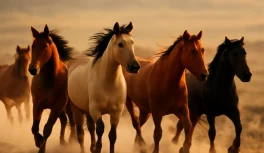
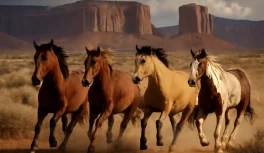
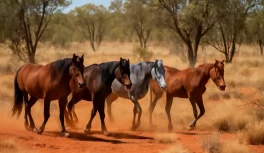
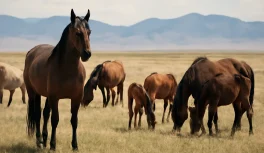
The spiritual meaning of horses has endured across thousands of years and dozens of cultures without losing an ounce of its force. From the winged Pegasus to the white horse of the Apocalypse, from Native American vision quests to the archetypes of Carl Jung — no animal has accumulated more symbolic weight in the human spiritual imagination. This article explores what the horse represents in the spiritual world, why that symbolism persists, and what it reveals about the deep bond between humans and horses.
The Horse as a Universal Archetype
In virtually every major spiritual and mythological tradition on earth, the horse occupies a singular position — not as a mere beast of burden or vehicle of transport, but as a creature that inhabits the boundary between the human world and the divine, between the physical and the invisible.
Carl Jung identified the horse as one of the most recurrent archetypes in the collective unconscious. Across his studies of dreams and symbolic imagery, Jung observed that the horse consistently represents the instinctual forces of the psyche — raw energy that can be guided but never fully tamed. It is no accident that the words “spirit” and “horse” have intertwined across so many languages and cultures. In Latin, spiritus and equus share the same semantic field of vital force.
Why Is the Horse the Most Universally Spiritual Animal?
The answer lies in a paradox unique to horses: they are faster than humans, stronger than humans, and yet capable of an emotional connection with people that no other large animal matches so readily. A creature that could outrun and overpower us — and yet chooses partnership. That paradox — the powerful that chooses to yield, the free that chooses the bond — is the essence of the horse’s spiritual symbolism.
The Horse in the World’s Great Spiritual Traditions
In Hinduism, the horse occupies one of the most elevated positions in the sacred pantheon. Uchchaihshravas, the eight-legged white horse born from the Cosmic Ocean during the Samudra Manthan (the churning of the sea of milk), is considered the king of all horses and the mount of the gods. Even more significant is Kalki — the tenth and final avatar of Vishnu — who will come at the end of the current cosmic cycle riding a white horse to restore the dharma, the cosmic order.
The Ashvamedha, the royal horse sacrifice, was the most powerful ritual in Vedic kingship — a ceremony lasting over a year that symbolized the expansion of royal power to wherever the horse could roam. The horse was, literally, the instrument of divine sovereignty.
Why Does the Horse Appear as a Sacred Messenger in Islam?
In the Arabic tradition and in Islam, the horse carries the mark of the sacred. The Prophet Muhammad reportedly said that all good fortune was tied to the forelock of a horse. Al-Buraq — the miraculous steed that carried the Prophet during the Night Journey (Isra and Mi’raj) from Mecca to Jerusalem and up through the seven heavens — is described as a white creature with the body of a horse and the wings of an eagle, a being that inhabits the threshold between the earthly and the celestial.
In the Celtic traditions of Europe, the horse was the guardian of the passage between the world of the living and the Otherworld. The goddess Epona, worshipped across ancient Gaul and adopted by the Romans, presided over horses, fertility, life, and death. Celtic horses were sacrificed in coronation rituals — a new king would symbolically “marry” the spirit of the horse to legitimize his authority over the land.
The Horse in Shamanism and Indigenous Traditions
In Siberian shamanism and throughout the cultures of the Central Asian steppes, the horse was the primary vehicle for the shaman’s spiritual journey. During trance, the shaman “rides” to the upper and lower worlds — using the horse as portal and guide. Shamanic drums in Turkic and Mongolian languages are often called “horses” because they serve the same function: carrying the shaman’s soul between worlds.
The Horse as Sacred Being in Native American Tradition
For many Indigenous peoples of the Americas — especially after the reintroduction of horses by Iberian settlers in the 16th century — the animal rapidly became a being of profound spiritual power. The Lakota Sioux called the horse Sunkawakan — “sacred dog” — and understood it as a gift from the Thunder Beings.
In the tradition of the medicine wheel and vision quests, the horse symbolizes freedom, the power of movement, and the capacity to transcend physical limitations. A horse that appears in a vision signals that the seeker has received power to act in the world.
Horse Color and Its Spiritual Significance
In virtually every tradition, the color of a horse adds additional layers of meaning:
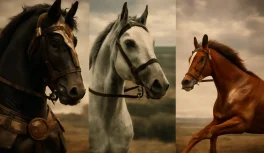
White — purity, illumination, divine power. The white horse is the mount of gods, prophets, and triumphant heroes. Pegasus, Sleipnir, Kalki, the first Horseman of the Apocalypse — all white.
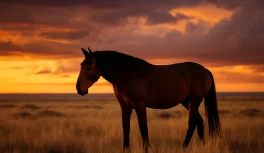
Black — mystery, transformation, the realm of the unconscious. The black horses of Hades, the Dullahan of Irish mythology, the Horseman of Famine in the Apocalypse. Not inherently malevolent — often representing necessary passage, the transformation that can only happen in the dark.
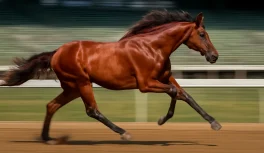
Red/Chestnut — war, passion, vital energy, warrior power. The Horseman of War in the Apocalypse rides a red horse.
Pale/Greenish-grey — the darkest equine symbolism of all. The Horseman of Death rides a pale horse — the color of decomposition, of inevitable endings.
What Does a Horse’s Color Reveal in Dreams and Spiritual Visions?
In dream interpretation traditions, the color of the horse amplifies the message. A white horse points toward spiritual guidance, the right path, blessing. A black horse signals deep transformation in progress — unconscious energy being released. A bay or chestnut horse points toward work, discipline, and achievement through sustained effort.
The Spiritual Meaning of the Horse in the Contemporary World
Today, the spiritual meaning of the horse has found new channels. Jungian psychology continues to read the horse as a symbol of unconscious forces — particularly the libido in its broadest sense: life energy in motion.
Equine-assisted therapy — known internationally as Equine-Assisted Therapy or EAT — has empirically rediscovered what spiritual traditions asserted for millennia: that the presence of a horse produces a transformative effect on the human emotional state. The rhythmic movement of an equine activates neurological patterns that facilitate presence, emotional openness, and regulation of the nervous system.
Why Do So Many People Report Spiritual Experiences Near Horses?
Researchers and therapists consistently observe that horses respond to the human emotional state with a precision that surprises even skeptics. As highly sensitive prey animals, they process body language and emotional signals with an acuity that no common domesticated animal can match.
For many people, being truly “seen” by a horse — having one’s interior state reflected by this animal without judgment — is described as an experience that approaches the sacred. The reason the horse has persisted as a spiritual symbol across millennia and radically different cultures is simple: because the experience of being with a horse is genuinely extraordinary. And the extraordinary, always, touches the spiritual.