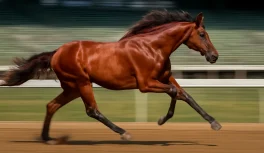
At the intersection of extreme wealth and equestrian passion, the billionaires who breed horses occupy a singular position. These are people who could acquire anything, fund anything, build any legacy they chose — and they directed a significant portion of their time and resources toward animals that pay no dividends, don’t scale, and aren’t impressed.
What that choice reveals about them is, arguably, more interesting than any public biography.
Why Do Billionaires Choose Horses?
The most honest answer is that horses are one of the few domains where money alone doesn’t buy results.
A billionaire can hire the world’s best trainers, acquire the finest bloodlines, build the most advanced facilities available — and still produce mediocre horses, or fail to develop the relationship that turns an equine into a genuine partner. Money removes obstacles. It doesn’t create the bond. That has to be earned.
What Can’t Wealth Accomplish in the Equestrian World?
Almost everything that matters most. You can’t pay a horse to trust you. You can’t negotiate the timeline of a relationship built through consistent presence. You can’t shortcut the years it takes to develop a communication precise enough to mean something in a competition ring or on a trail.
For people accustomed to their resources resolving most problems, that particular limit has genuine appeal. The horse is, perhaps, the most expensive acquisition that is completely indifferent to your net worth.
Bill Gates and Jennifer Gates: Investment in a Family Identity
Bill Gates became one of the most committed supporters of international show jumping through his daughter Jennifer, who turned equestrian sport into a professional vocation rather than a sideline. The facilities the Gates family maintains for her competitive career are among the most sophisticated in the United States.
What distinguishes the Gates case from a billionaire simply funding an expensive hobby is the trajectory. Jennifer did not inherit a horse-adjacent lifestyle — she built a serious competitive career in show jumping, training full-time and competing against riders who have been in the saddle since childhood. The investment followed the passion, not the other way around. Her father, for his part, now follows the international circuit with the engagement of someone who has learned to understand what he’s watching.
Sheikh Mohammed bin Rashid Al Maktoum: Building a Global Thoroughbred Empire
Sheikh Mohammed, ruler of Dubai and Vice President of the UAE, built one of the most influential thoroughbred breeding operations in the history of the sport through Godolphin — a global racing and breeding enterprise operating simultaneously across multiple continents.
The Godolphin philosophy is explicit: the operation breeds to race, to honor a tradition, and to develop the sport — not primarily to sell. The result is one of the most successful racing operations in recent decades, with wins in English and Irish Classics, the Kentucky Derby, the Arc de Triomphe, and major races in Australia and Asia.
For Sheikh Mohammed, horses are inseparable from both personal identity and the cultural mission of positioning Dubai as a center of excellence in any arena it enters. The Arabian horse is a historical symbol throughout the Middle East — its connection to Emirati culture runs far deeper than any modern racing enterprise.
Paul Allen: Horses as Part of a Broader Curiosity
Paul Allen, co-founder of Microsoft, was known for an intellectual appetite that extended well beyond technology: oceanography, space exploration, archaeology, arts patronage, football and basketball ownership. Equestrian life was part of that larger landscape of applied curiosity. He maintained horses on his properties and supported equestrian initiatives with the same consistency he brought to projects in other domains.
His case illustrates a pattern that recurs among billionaires and horses: the equestrian passion rarely exists in isolation. It’s almost always embedded in a broader worldview — a curiosity about what mastery looks like in domains that resist automation and industrial scaling.
The Aga Khan: Horse Breeding as Cultural Stewardship
His Highness the Aga Khan IV — spiritual leader of the world’s Ismaili Muslims and one of the most significant philanthropic figures of the twentieth century — maintains one of the most respected pure-bred horse operations in the world. His breeding program has produced Classic winners in Europe over multiple decades, guided by a philosophy that seeks specific bloodlines combining speed, stamina, and temperament.
For the Aga Khan, horses carry meaning that extends beyond sport into cultural inheritance. The equestrian tradition within Islamic history places the horse as companion, symbol, and responsibility. The breeding program is, in that context, also a form of custodianship — maintaining something of historical and spiritual value that predates the sport itself.
What the Barn Offers That the Boardroom Doesn’t
There’s a convergence in how serious billionaire horse people describe the experience: what keeps them committed is precisely what can’t be purchased.
The recognition of a horse that has come to trust its caretaker isn’t available for sale. It’s built through repeated presence, patience, and a behavioral consistency that accepts no shortcuts. A win in a major race isn’t secured by the quality of the facilities — it depends on genetics, training, health, and a degree of chance that no operation, however sophisticated, can fully control.
For people who built their lives through systems that work by means of domination, planning, and capital, that irreducible zone of uncertainty is — paradoxically — a relief. Horses remind billionaires of something they already knew but tend to forget: that some things in the world do not respond to the size of the check.