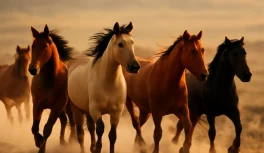
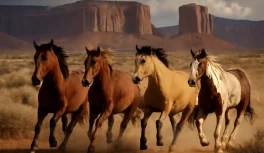
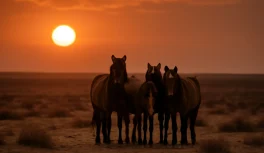
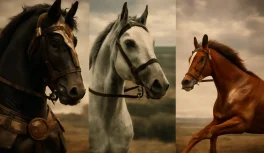
The bond between royal families and horses didn’t begin as a hobby or a sport. For most of recorded history, it was a matter of power — military, political, and symbolic. A monarch who rode well demonstrated mastery over the forces that shaped the world. Equestrian portraits of kings and queens weren’t decorative; they were statements of authority in the clearest visual language available.
What’s remarkable isn’t that the connection existed. It’s that it survived everything that made it obsolete. Mechanized armies, automobiles, aircraft — none of it ended the relationship between royal families and horses. If anything, the bond became more personal as it became less functional.
The British Royal Family: Devotion Across Generations
The House of Windsor offers the most extensively documented example of any royal family’s relationship with horses in the modern era.
Queen Elizabeth II may have been the most famous horse person of the twentieth century. She attended horse racing events until the final months of her life — not as a patron appearing for official duties, but as someone who knew the bloodlines of her horses from memory, studied the training programs with genuine expertise, and found in the racing world a context where her knowledge was valued independently of her title. She bred successful racehorses, understood pedigrees in technical depth, and followed the work of her trainers with the attention of someone who had learned the craft, not inherited a preference.
What Made Queen Elizabeth II’s Relationship With Horses So Unusual?
She treated it as knowledge, not just passion. Most people who love horses love them. The Queen studied them. The distinction matters: she could discuss breeding programs with leading trainers as a peer, not as a patron who needed things explained. That level of earned expertise — maintained across nine decades — is genuinely rare at any level of society.
Princess Anne pushed the competitive dimension further than anyone in the family’s history. She became the first member of the British royal family to compete in the Olympic Games, representing Great Britain in three-day eventing at the 1976 Montreal Games. She finished fourth in the individual standings. She also served as president of the International Equestrian Federation for eight years. Her involvement in the sport was never ceremonial — it was substantive, technical, and measured against the same standards applied to every other competitor.
King Charles III played polo seriously for decades. Polo is not a social sport with horses — it requires horses specifically bred and trained for the game, tactical understanding developed over years, and a quality of riding that doesn’t accommodate passengers. Charles was a real player, not a figure performing the sport for cameras.
Princess Haya: From the Royal Court to the Olympic Arena
Princess Haya bint Al Hussein, daughter of King Hussein of Jordan, built one of the most impressive individual trajectories in the intersection of royalty and equestrian sport. A competitive rider from a young age, she represented Jordan in show jumping at the 2004 Athens Olympics. She then served as president of the Fédération Equestre Internationale from 2006 to 2014.
Her FEI presidency was substantive. During her tenure, she advanced animal welfare standards, expanded equestrian sport in developing nations, and professionalized processes that directly affect the horses competing at international level. The work was not ceremonial. She arrived with technical knowledge and a genuine agenda and pushed both forward.
Why Is Princess Haya’s FEI Leadership Significant?
Because she had both the authority to change rules and the competence to know which rules needed changing. That combination — institutional power and field expertise — is rare. Most people in leadership positions in international sport governance have one or the other. She had both.
The Jordanian Royal Family and the Arab Horse
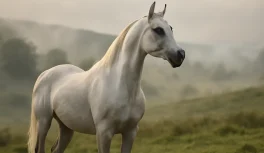
The Jordan royal family’s relationship with horses runs deeper than any living individual’s passion — it extends into the cultural and historical identity of the entire region. The Arabian horse, which shaped the development of virtually every light horse breed in the Western world, is inseparable from the history of the tribes of the Middle East. The royal families of the Arab world are historical custodians of that heritage.
King Abdullah II of Jordan maintains the breeding of pure Arabian horses at the royal stables, representing not just a family passion but a responsibility to preserve a genetic and cultural legacy that predates the modern state by centuries.
Why the Connection Survived Modernization
When mechanized armies made military horses obsolete and automobiles replaced horse-drawn carriages as the dominant symbol of wealth and power, it would have been reasonable to expect royal families to quietly phase out their equestrian identity. The opposite happened.
For families who live inside permanent protocol and public representation, horses offer something increasingly rare: the experience of genuine, unmediated relationship. The stable is one of the few places where a king or queen can exist without the weight of representation. The horse responds to them as a person in their presence — not as a title, not as an institution, not as a symbol.
There is also the matter of tradition itself. Royal families understood long before most institutions that what survives political transformation is what connects to something older and deeper than any ideology. The equestrian tradition does exactly that — it reaches back to the foundation of the relationship between humans and horses, which is older than any crown.
And then there is the fact that every serious rider confirms: once you develop a genuine relationship with a horse, its presence in your life creates an anchor that very few other things can replace.