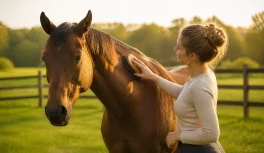
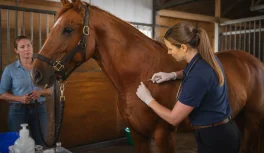
Grooming is often framed as a matter of appearance — a clean horse is a well-kept horse. That framing undersells what a thorough grooming session actually is: your most reliable daily health assessment tool. The 20 minutes you spend running a brush across your horse’s coat and a hoof pick through each foot are the same 20 minutes in which you find the wound that appeared overnight, the tendon running warm, the skin lesion that started two days ago, or the hoof developing thrush before it becomes painful.
If you only observe your horse from across a paddock, you will miss things. If you groom consistently and with attention, you will catch them early — and early detection is the difference between a quick phone call to your veterinarian and an expensive emergency visit.
What Grooming Actually Does
Beyond cleanliness, regular grooming achieves four things that directly affect your horse’s health and your relationship with the animal.
Circulation stimulation. The mechanical pressure of curry combing and brushing increases blood flow to the skin and underlying muscle tissue, similar to the effect of massage.
Coat health. Distributing the natural sebum oils produced by the skin throughout the coat maintains the moisture balance that gives a healthy horse its natural sheen — one that no commercial coat spray can replicate.
Parasite and skin condition detection. Daily physical contact with the coat surface lets you catch external parasites (lice, mites), rain rot, ringworm, sweet itch, and early fungal or bacterial skin infections before they establish or spread.
Trust and communication. Horses have long memories and strong social bonds. A horse handled gently, consistently, and daily builds a relationship with its handler that makes every subsequent interaction — veterinary procedures, farriery, trailering, tacking up — measurably easier and safer.
The Grooming Kit: What Each Tool Does
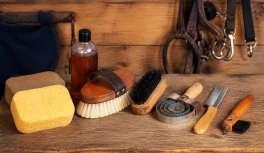
A complete working grooming kit for daily use includes:
Rubber curry comb: Used in firm circular motions over the muscular areas of the neck, shoulder, barrel, and hindquarters. Loosens dried dirt, shed hair, and dried sweat from the coat. Do not use on bony prominences (spine, hip bones, face) or sensitive lower leg areas where the skin is thin.
Dandy brush (stiff natural or synthetic bristles): Used with short, flicking strokes to sweep away the debris loosened by the curry comb. Effective across the whole body, including areas too sensitive for the curry comb.
Body brush (soft bristles): The finishing brush. Used with longer, sweeping strokes in the direction of hair growth to smooth the coat, distribute oils, and remove fine dust invisible to the curry comb. Safe for the face and lower legs.
Mane and tail comb or wide-toothed brush: For detangling mane and tail without causing unnecessary hair breakage. Always work from the bottom up — starting at the ends and working toward the roots — to avoid tearing. Applying a detangler or conditioner spray beforehand reduces breakage in coarser coats.
Hoof pick: The single non-negotiable item in any grooming kit. Every hoof, every day, without exception — including days the horse is not ridden. Work from heel to toe, cleaning debris from the collateral grooves and frog clefts. Never force the pick into the frog tissue itself.
Two sponges — permanently designated, never swapped: One sponge for cleaning around the eyes and nostrils. A separate sponge — stored separately, ideally in a different color — for cleaning the dock (under the tail) and genital area. Cross-contamination between these areas is a bacterial hygiene issue.
Sweat scraper: A flexible rubber or metal blade used to remove excess water from the coat after bathing or to remove sweat after strenuous work before toweling or blanketing.
The Correct Grooming Sequence
The order of tools is not arbitrary — it follows a logical progression from loosening to smoothing:
1. Curry comb — loose; circular motion on muscular areas 2. Dandy brush — sweep; short flicking strokes across the body 3. Body brush — smooth; long strokes in hair direction 4. Mane and tail comb — detangle; working bottom-up 5. Sponges — clean face (one sponge) and dock area (the other) 6. Hoof pick — clean and inspect all four feet
Done thoroughly, this takes 15–25 minutes. Done with attention, it also gives you a complete daily physical inventory of the horse’s condition from nose to tail.
Daily Hoof Care: The Non-Negotiable
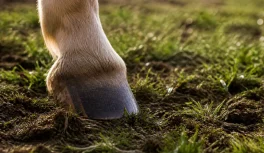
“No hoof, no horse” has been repeated in equine management for generations. It remains accurate. Hooves require daily picking not because they become dirty — though they do — but because daily inspection is how you catch problems before they become lameness emergencies.
When picking each hoof, inspect for:
Thrush: A bacterial infection (Fusobacterium necrophorum) of the soft tissue in the hoof’s collateral grooves and frog cleft, identified by a dark, foul-smelling discharge. Mild thrush responds quickly to daily picking, clean and dry footing, and topical treatment. Left unaddressed, it invades the sensitive laminar tissue and causes lameness.
Heat in the hoof wall: Hold the back of your hand against the wall of each hoof. Some warmth after exercise is normal. Heat in a resting horse — especially uneven heat between feet — suggests inflammation: early laminitis, abscess, or bruising.
Abnormal odor: A sweet or fruity odor beyond the typical thrush smell can indicate canker, a more serious proliferative tissue disease requiring veterinary treatment.
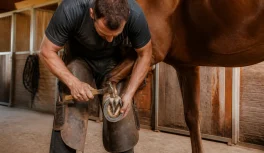
Loose shoes or risen clinches (for shod horses): If a nail is working loose or a shoe is sprung, farrier attention is needed before the next ride. A partially sprung shoe can be ripped off with traumatic consequences.
Bathing: When, How Often, and How
Most horses in normal management do not need frequent full baths. In summer, twice weekly for horses in regular work is reasonable. In winter, full bathing should be minimized — wet skin takes time to dry, and a horse left damp in cold, windy conditions risks hypothermia and skin infection.
When bathing:
- Use shampoo formulated specifically for horses. Human shampoo and dish soap strip the coat’s natural oils and disrupt the skin’s pH balance, leading to dryness and increased susceptibility to fungal infection.
- Thoroughly wet the coat before applying shampoo. Work in sections, lathering well and rinsing completely. Shampoo residue left in the coat causes persistent skin irritation and a dull, chalky appearance.
- Use the sweat scraper to remove the bulk of the water before toweling.
- Walk the horse dry or apply a cooler blanket in cooler weather. Never tie a wet horse in a cold draft.
- Pay particular attention to the fetlock area. Moisture accumulating in the skin folds at the back of the pastern creates the conditions for pastern dermatitis (also called “scratches” or “mud fever”) — a painful skin infection that can be difficult to resolve once established. Dry the fetlock thoroughly after every bath and after work in wet conditions.
Seasonal Adjustments
Summer: More frequent bathing for horses in regular work. Monitor skin folds — under the belly, between the hindlimbs, under the mane, behind the elbows — for fungal skin infections (ringworm, rain rot). Warm, humid conditions allow these to spread rapidly. Fly sheets and masks reduce reliance on chemical insect repellents and lower the stress associated with heavy fly pressure.
Winter: Reduce full baths. The winter coat provides insulation that a soaked coat temporarily destroys. Actively part the coat and run your hands across the skin during grooming — rain rot and lice infestations frequently develop under thick winter coats and go undetected until the condition is well advanced. A body clipped horse (coat removed for training purposes) will need appropriate blanketing to compensate for the lost insulation.
What to Monitor During Every Grooming Session
Each session is an opportunity to detect health changes before they escalate:
- New skin wounds, scabs, or areas of unexplained hair loss
- Swelling or heat along tendons — run both hands down each leg from knee and hock to coronary band; you are feeling for asymmetry between legs
- Eye or nasal discharge (clear serous discharge may be normal; yellow, green, or bloody discharge warrants veterinary attention)
- Enlarged lymph nodes under the jaw — a sign of respiratory infection or early strangles
- Persistent flinching or sensitivity when you touch specific areas of the back, neck, or hindquarters — consistent one-sided sensitivity may indicate musculoskeletal pain worth investigating
The horse observed closely every day is the horse whose problems are found early. That is not a coincidence — it is the direct result of consistent, attentive daily contact.