Few aspects of horse ownership carry more practical weight than nutrition. Get the basics right, and your horse maintains healthy weight, energy, and a sound digestive system. Get them wrong — even with the best intentions — and you’re looking at colic, laminitis, chronic weight loss, or behavioral problems that trace directly back to what, how much, and when you’re feeding.
This guide covers the principles governing equine nutrition, the practical numbers you need to feed confidently, what foods are dangerous, and how to read your horse’s body condition to know whether the diet is actually working.
The Foundation: Why Roughage Comes First
Horses are not designed to eat grain. They are hindgut fermenters built for continuous grazing on fibrous, relatively low-energy forage — the kind of diet their digestive system evolved to process over millions of years.
The equine digestive tract is structured around this reality: a small stomach designed to never be fully empty, a large small intestine, and a massive hindgut where microbial fermentation breaks down fiber into volatile fatty acids the horse uses for energy. This system works efficiently when forage moves through it continuously. When it doesn’t — when a horse goes more than four to six hours without roughage — the acid-producing stomach begins causing problems (ulcers), the hindgut microbiome destabilizes, and the risk of colic and laminitis climbs.
The practical rule: roughage — pasture grass, hay, or a combination — should represent 60–80% of total diet, with a minimum intake of 1.5–2% of body weight in dry matter per day. For a 1,100-lb (500 kg) horse, that’s 16–22 lbs (7.5–10 kg) of dry hay daily. This is not a supplement to other feed. It is the diet.
How Much Hay and What Kind?
The type of hay matters as much as the quantity. Common options across the United States:
Timothy: Classic horse hay, moderate energy and protein, highly digestible. Excellent for most adult horses in moderate work or at rest.
Orchardgrass: Higher energy and protein than Timothy, palatable, a good choice for horses with elevated caloric needs.
Bermudagrass (Coastal, Tifton, Common): Widely used in the South and Southeast. Good fiber content, lower non-structural carbohydrates than some grass hays, suitable for horses prone to metabolic conditions.
Alfalfa (legume hay): Higher protein (15–20%), higher calcium, very digestible. Appropriate for growing horses, lactating mares, and horses in heavy training. Not appropriate as a primary hay for mature horses in light work or pasture retirement — excess protein and calcium create unnecessary metabolic load.
Mixed grass-legume blends: Practical and nutritionally balanced when alfalfa content stays below 30–40% for most adult horses.
Quality matters more than variety. Good hay is green to golden-green (not brown or gray), smells fresh and clean, is free of mold and dust, and has a leafy structure rather than thick, stemmy bales. Before feeding any new batch, break open a flake and smell it. Moldy hay is not a minor inconvenience — it can cause aspergillosis, liver damage, respiratory disease, and acute colic.
Understanding Concentrates
Concentrates — grain, commercial pellets, and formulated feeds — exist to add calories, protein, and specific nutrients that roughage alone cannot provide under high-demand conditions. They are not a substitute for forage. They supplement it.
A horse in light work or on good pasture typically needs no concentrates at all. The animals that genuinely benefit are those in heavy training, young horses building muscle, mares nursing foals, and hard keepers who cannot maintain weight on forage alone.
When concentrates are warranted:
- Feed a maximum of 4.4–5.5 lbs (2–2.5 kg) per meal
- Wait at least 30 minutes after exercise before feeding concentrates
- Feed a minimum of 2 meals per day if using concentrates — never one large meal
- Always provide hay before concentrates to prime digestive function
Starch overload — more concentrates than the small intestine can absorb before they reach the hindgut — is a direct trigger for hindgut acidosis, colic, and laminitis. The per-meal limit exists for precisely this reason.
Foods That Can Kill Your Horse
Some common foods and plants are seriously toxic to horses. These are the most important to know:
Oleander (Nerium oleander): Extremely toxic in tiny amounts. Causes cardiac arrhythmia and rapid death. A common landscape plant throughout the South and Southwest — check any fence line adjacent to residential areas.
Black walnut (Juglans nigra): Hulls, bark, and roots contain juglone, which triggers acute laminitis within hours of exposure. Never use black walnut shavings for bedding. Never pasture horses under or near black walnut trees.
Bracken fern (Pteridium aquilinum): Chronic consumption causes thiamine deficiency and bone marrow suppression. Found in overgrazed pastures and along wooded edges.
Avocado: All parts — fruit, skin, pit, leaves — contain persin, which causes respiratory distress in horses.
Nightshade family (Solanum species, including green potatoes and unripe tomatoes): Contain solanine, a glycoalkaloid that causes neurological and digestive toxicity.
Moldy or spoiled feed: Any feed showing mold, off-smell, unusual heat, or abnormal texture should be discarded. The cost of replacement is trivially small compared to the cost of mycotoxin-related illness.
The 7–14 Day Rule for Any Diet Change
The hindgut microbiome is a community of billions of bacteria, protozoa, and fungi adapted precisely to your horse’s current diet. When you change what you feed — switching hay types, introducing a concentrate, starting spring pasture access — you are introducing substrates the existing microbial population is not prepared to process.
Rapid dietary changes kill portions of the hindgut microbiome, flood the hindgut with unfermented substrate, and trigger acidosis. The result can be colic or laminitis within 24–72 hours.
The rule is simple and should be treated as inviolable: any significant dietary change should be introduced gradually over 7–14 days. Start with a small portion of the new feed alongside the existing diet and increase incrementally every two to three days.
Spring pasture transitions deserve particular attention. Fresh spring grass is high in fructans (fermentable sugars), and the move from winter hay to lush spring turnout is one of the most common triggers for pasture-associated laminitis. Limit initial turnout to 30–60 minutes daily for the first several days, increasing gradually over two to three weeks before allowing unrestricted access.
Mineral Needs and the Salt Block
A plain white salt block provides sodium and chloride, which is useful but not sufficient on its own. Horses also need phosphorus, calcium, copper, zinc, manganese, cobalt, and selenium — and the amounts required vary by region, forage type, and individual health status.
A mineralized salt block (typically brown or gray, not white) provides a broader mineral profile and serves as a reasonable baseline supplement for most horses in standard management. In regions with selenium-deficient soils — common across much of the Pacific Northwest and parts of the Northeast — targeted selenium supplementation under veterinary guidance may be necessary.
If you’re uncertain about mineral balance, a forage analysis (hay or pasture sample tested by a laboratory) gives you an accurate picture of what the diet provides and where the gaps are. This is more useful than guessing and more cost-effective than supplementing without data.
Reading Your Horse’s Body Condition
Body condition scoring (BCS) is a standardized 1–9 scale that assesses fat deposits over the neck, withers, ribs, loin, tailhead, and behind the shoulder. A healthy adult horse in normal management typically falls in the 4–6 range:
- Score 4: Faint outline of ribs visible; neck, withers, and shoulder not obviously thin
- Score 5: Ribs cannot be seen but are easily felt with light hand pressure; back is level; no visible fat deposits, no hollows
- Score 6: Ribs felt with firm pressure but a soft fat layer covering them; slight crease developing along the topline
Scores below 4 indicate the horse needs more calories. Scores above 6 — especially horses approaching 7 or 8 — carry elevated metabolic risk: insulin dysregulation, laminitis, and Equine Metabolic Syndrome are all associated with excess body condition.
Check body condition monthly and adjust feed proactively. Horses gain and lose weight slowly, and waiting until the problem is visually obvious means you’re already weeks behind the curve.
Signs Something Is Wrong With the Diet
The following changes in a horse receiving apparently adequate feed warrant investigation:
- Unexplained progressive weight loss on unchanged rations
- Significant weight gain on a previously stable diet
- Abnormal manure consistency — too loose, too dry, or containing whole undigested grain
- Recurring episodes of colic, especially after feeding
- Coat that is dull, brittle, or slow to shed in spring
- Reduced voluntary water intake, especially in cold weather
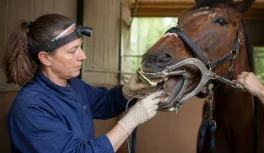
Any of these can indicate a dietary imbalance, dental problem, parasite burden, metabolic condition, or another underlying health issue. A systematic veterinary evaluation will identify the cause.
The horse that thrives long-term is the horse whose nutritional needs are met consistently, thoughtfully, and with respect for the physiology evolution designed. Start with roughage. Supplement selectively. Change slowly. Observe constantly.