Picture receiving a completely untouched mustang — no human contact, no name, no handling history — and having 100 days to turn it into a partner capable of competing alongside experienced riders. That’s the central challenge of the Mustang Makeover, one of the most emotionally charged and politically meaningful equestrian competitions in existence.
What Is the Mustang Makeover?
The Mustang Makeover is a competition organized by the Mustang Heritage Foundation (MHF), a nonprofit working in partnership with the Bureau of Land Management (BLM).
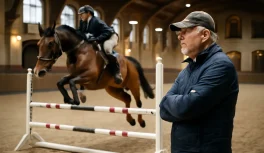
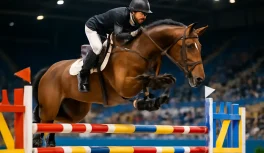
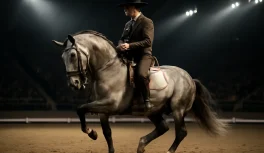
The basic format: professional or amateur riders receive a BLM mustang — feral, untouched — and have approximately 100 days to work with the animal. At the end, they compete in various disciplines depending on the event: working cow horse, reining, trail class, jumping, polo, cutting, and even liberty performances.
After the competition, every horse goes to auction — creating an adoption pathway that combines visibility with a powerful emotional narrative.
Where Did the Makeover Come From?
The Mustang Heritage Foundation was established in 2001 with the mission of increasing public awareness and finding homes for mustangs. The Extreme Mustang Makeover — the full name of the flagship competition — held its first event in 2007 and grew rapidly.
Today, the format has expanded: there are regional events, youth events, and discipline-specific versions. The competition has received national coverage in the US and growing international attention from equestrian communities.
The 100-Day Rule: Why That Timeline?
100 days is long enough to show genuine transformation — and short enough to be a real challenge. An experienced trainer can, within that window, take an untouched mustang to a functional level in some discipline, but the outcome depends on the horse, the trainer, and the consistency of the work.
The window is also educational: the audience following the process — in person or through social media — watches in real time what’s possible with method, patience, and relationship. This demystifies the idea that the mustang is untrainable and creates informed buyers at the auction.
What Happens in Those 100 Days?
Each trainer develops their own methodology, but the general sequence follows standard gentling progression:
Weeks 1–3: Establishing safety — approach, accepting presence, first touch.
Weeks 3–6: Halter and leading — the horse learns to move alongside a human with confidence.
Weeks 6–10: Desensitization — objects, sounds, unexpected movements, saddle and weight.
Weeks 10–14: Discipline-specific work — tailored to the event the trainer has chosen.
Final week: The presentation — the moment the audience sees what four months of work produced.
Pace varies significantly. Younger, more curious horses progress faster in initial gentling. Older horses or those with prior negative experiences need more time in the early phases.
What the Competitions Reveal
The Makeover is a showcase of what’s possible — and of what’s honest. Over the years, it has shown:
- Mustangs performing reining at a level comparable to purpose-bred horses
- Mustangs performing liberty work with surprising sensitivity
- Eight-year-olds presenting mustangs in youth classes
- Horses that arrived completely feral and within 100 days were performing as rope horses
It has also shown what doesn’t work: trainers who rush arrive at the competition with anxious, tense, or inconsistent horses — and that difference in quality is visible to any experienced eye in the audience.
The Auction and the Second Chance
At the end of each event, all horses go to auction. This is where the Makeover completes its cycle: the horse that arrived without a name or a story is now an animal with identity, context, and a buyer who watched it work.
Many Makeover horses have been adopted by families who followed the journey on social media and arrived at the auction already decided. The narrative creates connection — and connection creates homes.
How to Get Involved
Riders interested in competing can register through the Mustang Heritage Foundation website. There are categories for different experience levels.
People interested in adopting can follow horses throughout the training period via trainers’ social media and participate in the auction in person or online.
Spectators and supporters can attend the final events — open to the public — and contribute through donations to the MHF.
Why the Makeover Matters Beyond Sport
Every horse that enters the Makeover is one fewer animal in BLM holding. Every adoption at the end of the auction is one less space needed in an off-range facility. And every spectator who watches a mustang’s transformation walks away with a different perspective on the animal.
In 100 days, the Makeover doesn’t just change the horse. It changes everyone watching.