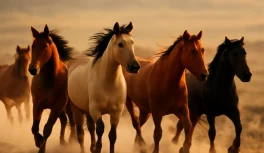
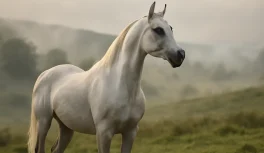
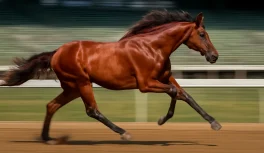
The white horse in spiritual tradition is, across virtually every culture that has documented its symbolism, the highest expression of equine sacred meaning. If the horse represents power, speed, and freedom, the white horse amplifies those attributes to the realm of the holy — becoming the mount of gods, prophets, and heroes who exist beyond ordinary human scale.
This article explores why white was chosen — not by accident — as the color of the divine horse, and what that symbolism carries across traditions as distinct as Hinduism, the Christian Apocalypse, Greek mythology, and modern epic literature.
Why Is White Associated with the Sacred Across So Many Cultures?
Before examining specific white horses, it helps to understand the principle that unites them. In color psychology and symbolic anthropology, white represents the totality of visible light — not absence, but synthesis. In a spiritual context, it evokes purity (the absence of contamination), transcendence (beyond the mundane), and divine visibility (what can be recognized from a distance, without ambiguity).
Pure white horses are genetically uncommon. A white animal appearing among a herd of bays or chestnuts was immediately marked as different, exceptional. Ancient civilizations interpreted rarity as a signal of the sacred — and a rare being that was also powerful was naturally a candidate for divine presence.
Why Do Nearly All the World’s Gods Ride White Horses?
A white mount signals to the observer that the rider transcends the human condition. The color eliminates ambiguity: no shadow, no visible impurity. White is what needs no explanation — it is self-evident. When Zeus, Vishnu, the Prophet Muhammad, or Christ are depicted on white horses, the color reinforces the message that the power being displayed is not human power.
Kalki and Devadatta: The White Horse of the End Times
In Hinduism, the most powerful image of the spiritual white horse is Kalki, the tenth avatar of Vishnu. Kalki will come at the end of the Kali Yuga — the current cosmic cycle of moral decay — riding a white horse named Devadatta. In some versions of the myth, Kalki himself transforms into a white horse to complete his mission.
His role is to destroy corrupt rulers and restore the dharma — the cosmic order. The white horse here does not represent gentle peace or soft kindness: it represents purifying power, the force that eliminates corruption with surgical precision. Devadatta’s whiteness does not signal softness, but absolute clarity — the complete absence of doubt or hesitation in fulfilling a divine purpose.
Al-Buraq: The Prophet’s Mount on the Ascent to Heaven
In Islam, Al-Buraq is the being that transported the Prophet Muhammad during the Isra and Mi’raj — the Night Journey from Mecca to Jerusalem and then the ascent through the seven heavens. Described as white, winged, and of a size between a donkey and a mule, Al-Buraq inhabits the space between the human and the divine — literally between earth and sky.
In each leap, Al-Buraq covered the distance the eye could see — a speed that is not physical but an ability to exist in multiple places simultaneously. The white color reinforces the sacred nature of the being: clean, without blemish, worthy of carrying the Prophet into the divine presence.
Why Does the Spiritual White Horse Always Carry Divine Messengers?
The function of messenger between worlds is central to white horse symbolism. Where humans cannot go alone — heaven, the future, the realm of the dead, the presence of the divine — the white horse serves as vehicle. It is what makes the impossible possible: the connection between the mortal and the eternal.
The White Horse in the Apocalypse
In the Book of Revelation (Rev 6:2), the first of the four horsemen rides a white horse. His identity has been debated for two thousand years: is he Christ, the Antichrist, Conquest, or Victory? The ambiguity is intentional — the white horseman represents a force beyond human comprehension that precedes the calamities of the following seals.
In the final vision of Revelation (Rev 19:11–14), Christ returns riding a white horse called Faithful and True, with the armies of heaven also on white horses. The white horse is the vehicle of final judgment — not chaotic destruction, but the restoration of divine justice. The symmetry is powerful: the text begins with an ambiguous white horseman and ends with the revelation of what true white power actually means.
Shadowfax: The Literary Synthesis of the Spiritual White Horse
In J.R.R. Tolkien’s mythology of Middle-earth, Shadowfax — Lord of all Horses of the Third Age — is the only horse Gandalf ever rode, and only because Shadowfax chose to accept the wizard. Silver-white, faster than the eye could follow, Shadowfax understood the speech of Men yet rarely allowed any ordinary person to approach.
Tolkien modeled Shadowfax consciously on traditions of mythic horses — especially Sleipnir and the horses of the Valar. The white color, the supernatural speed, and the quality of free choice (never dominated, only allied) make Shadowfax the literary synthesis of the spiritual white horse. When Gandalf returns as Gandalf the White after his death and transformation, riding Shadowfax is an inseparable part of signaling his spiritual elevation.
What Does the Shared Whiteness of Shadowfax and Gandalf Communicate to the Reader?
The corresponding whiteness of wizard and horse is not narrative coincidence — it is symbolic language. Both underwent spiritual transformation, both transcend the plane of mortals, both exist to serve a purpose that surpasses individual interest. Their shared white is the mark of a shared sacred mission.
Historical White Horses as Sacred Beings
Throughout human history, real white horses were treated as sacred beings with striking consistency. The Uffington White Horse — a schematic figure 374 feet (114 m) long carved into a chalk hillside in Berkshire, England, dating to around 1000 BCE — is the oldest equine monument in Europe and remains without a definitive explanation of its ritual purpose.
In India, albino white horses were kept in temples and could not be returned to work after participating in rituals. In Japan, white horses were presented to Shinto shrines as offerings to the deities — the jinme, the divine horse, is still part of traditional rituals at the country’s major shrines.
In medieval Europe, kings and emperors were depicted almost invariably on white horses in paintings and tapestries — the white color functioned as an instant visual marker of authority and the ruler’s divine legitimacy.
The White Horse in Dreams and Spiritual Visions
In dream interpretation traditions — both psychological and spiritual — a white horse in a dream is one of the most favorable symbols:
- Correct spiritual orientation — being on the right path
- Purified strength — power available without its destructive side
- Divine message — something important is being communicated
- Positive transition — a change that elevates rather than destroys
Jung interpreted the white horse as a symbol of the ego in a state of integration with the self — mastery without suppression, the highest form of a healthy psyche.
Why Does the White Horse Tend to Appear in Dreams at Moments of Decision?
Psychologists observe that archetypal symbols of power and clarity tend to emerge in dreams when the psyche is processing major decisions. The white horse specifically appears when a person is aligning internal resources — as if the unconscious were signaling that the forces needed to move forward are already available.